
Volcanic Tremors vs. Earthquakes: Spotting the Subtle Differences

Welcome to Volcano Explorers, where we unravel the mysteries of Earth's fiery giants. Ever felt a rumble beneath your feet and wondered if it was a quake or something more... volcanic? Dive in as we explore the subtle, yet crucial, differences between volcanic tremors and earthquakes. Can you tell the difference? Let's find out...
- Understanding Seismic Activity: Volcanic Tremors and Earthquakes
- What is a Volcanic Tremor? Defining Volcanic Seismic Activity
- What is an Earthquake? Defining Tectonic Seismic Activity
- Key Differences Between Volcanic Tremors and Earthquakes: A Detailed Comparison
- Recognizing Volcanic Tremors: Identifying Volcanic Seismic Signals
- Recognizing Earthquakes: Identifying Tectonic Seismic Signals
- The Role of Seismic Monitoring in Volcano Monitoring and Prediction
- Differentiating Between Volcanic Tremors and Earthquakes: Practical Applications
- Conclusion: Understanding the Nuances of Volcanic Tremors and Earthquakes
- Frequently Asked Questions
- Final Reflection: Listening to the Earth's Rumbles
- Unearth Your Inner Volcanologist!
Understanding Seismic Activity: Volcanic Tremors and Earthquakes
Introduction to Seismic Events: A Comparison
Seismic events, disturbances that cause vibrations in the Earth's crust, are a common occurrence in volcanically and tectonically active regions. Among these events, volcanic tremors and earthquakes stand out as significant phenomena, each providing unique insights into the Earth's dynamic processes. While both are forms of ground shaking and are recorded by the same instruments, seismographs, they originate from fundamentally different sources and exhibit distinct characteristics.
Earthquakes are typically associated with the sudden release of stress along tectonic faults, often occurring far from volcanic activity. In contrast, volcanic tremors are intimately linked to the movement of magma, gases, and hydrothermal fluids within and beneath volcanoes. Recognizing the subtle differences between volcanic tremors and earthquakes is crucial for understanding the underlying geological processes and for effective hazard assessment, particularly in areas prone to volcanic eruptions.
The Importance of Distinguishing Between Volcanic Tremors and Tectonic Earthquakes
The ability to differentiate between volcanic tremors and tectonic earthquakes is paramount for several critical reasons, especially in regions with active or potentially active volcanoes. Firstly, correctly identifying the source of seismic activity directly impacts hazard assessment. If seismic signals are misinterpreted, it can lead to either a false alarm, causing unnecessary panic and economic disruption, or, more dangerously, a failure to recognize the signs of an impending volcanic eruption.
For instance, mistaking volcanic tremor for a distant earthquake could lead to a delayed or inadequate response to an escalating volcanic crisis. Secondly, distinguishing these seismic events allows volcanologists to gain a better understanding of the internal processes within a volcano. Volcanic tremors can provide valuable real-time information about magma movement, pressure changes, and the overall state of a volcanic system.
This data is essential for forecasting volcanic eruptions and mitigating their potential impact on surrounding communities. Finally, accurate differentiation is vital for resource allocation and public safety. Knowing whether seismic activity is tectonic or volcanic dictates the appropriate emergency response measures, evacuation protocols, and public awareness campaigns needed to protect lives and infrastructure.
What is a Volcanic Tremor? Defining Volcanic Seismic Activity
Origin and Characteristics of Volcanic Tremors
Volcanic tremor is a continuous, rhythmic seismic signal associated with volcanic activity. Unlike the sharp, impulsive energy release of an earthquake, volcanic tremor is characterized by sustained ground vibrations that can last from minutes to hours, or even days and weeks during periods of heightened volcanic unrest. The origin of volcanic tremor lies within the volcanic edifice itself, stemming from various subsurface processes.
These processes typically involve the movement of magma, volcanic gases, and hydrothermal fluids within the volcano's plumbing system. The seismic waves generated by volcanic tremor are generally lower in frequency compared to tectonic earthquakes, often falling in the range of 0.5 to 5 Hertz.
This lower frequency contributes to the characteristic "rumbling" or "humming" sensation sometimes reported during strong volcanic tremor events. Furthermore, volcanic tremors tend to attenuate more rapidly with distance than tectonic earthquake waves, meaning they are usually most intensely felt and recorded closer to the volcano.
Types of Volcanic Tremors: Harmonic Tremor vs. Discrete Events
Within the broader category of volcanic tremors, seismologists often distinguish between different types based on their waveform characteristics and likely sources. Harmonic tremor is perhaps the most distinctive type, characterized by a nearly monochromatic waveform, meaning it oscillates at a very dominant, consistent frequency. This type of tremor is often attributed to resonance within fluid-filled conduits in the volcanic system, akin to the sound produced by blowing across the top of a bottle.
The sustained, rhythmic nature of harmonic tremor can be a strong indicator of fluid movement, such as magma ascent or gas release. In contrast to harmonic tremor, discrete volcanic tremor events are shorter in duration and may exhibit more impulsive or irregular waveforms.
These events can be associated with a range of processes, including rock fracturing due to pressure changes, small explosions, or even landslides within the volcanic edifice. Analyzing the different types of volcanic tremors provides a more nuanced understanding of the complex dynamics occurring beneath the surface of a volcano.
What Causes Volcanic Tremors? The Science Behind Volcanic Seismic Signals
The generation of volcanic tremors is a complex process driven by various dynamic phenomena occurring within and beneath a volcano. A primary source is the movement of magma within the volcanic plumbing system. As magma rises from depth, it exerts pressure on the surrounding rocks, causing them to deform and fracture. This fracturing, along with the turbulent flow of magma itself, generates seismic vibrations.
Another significant contributor is the release and movement of volcanic gases. Magma contains dissolved gases, which exsolve and expand as the magma ascends to shallower depths where pressure is lower. The forceful escape of these gases through vents and fractures, particularly during degassing or explosive eruptions, can produce sustained tremor signals.
Additionally, interactions between hot magma and groundwater or hydrothermal systems can generate tremors. The rapid heating and vaporization of water, leading to steam explosions or hydrothermal circulation, can also induce seismic vibrations. The precise characteristics of volcanic tremor, such as its frequency content and amplitude, can provide clues about the dominant source mechanism and the state of the volcanic system.
What is an Earthquake? Defining Tectonic Seismic Activity
Origin and Characteristics of Earthquakes
An earthquake is a sudden and often violent shaking of the ground caused by the release of energy stored in the Earth's lithosphere. The vast majority of earthquakes are tectonic in origin, resulting from the movement and interaction of Earth's tectonic plates. These plates are constantly moving, albeit slowly, and stress accumulates along their boundaries, particularly at faults, which are fractures in the Earth's crust where movement occurs.
When the accumulated stress exceeds the strength of the rocks, it is released abruptly in the form of seismic waves that radiate outward from the earthquake's focus, the point of rupture within the Earth. The point directly above the focus on the Earth's surface is called the epicenter.
Earthquakes are characterized by their magnitude, a measure of the energy released, and their intensity, a measure of the shaking felt at a particular location. Unlike volcanic tremors, earthquakes are typically short-lived events, lasting from a few seconds to, in rare cases, a few minutes for the largest magnitude earthquakes.
Types of Earthquakes: Tectonic, Volcanic, and Induced Seismicity
While tectonic earthquakes are the most common and often the most powerful, earthquakes can also be categorized based on their origin. Volcanic earthquakes, as the name suggests, are associated with volcanic activity. They are often smaller in magnitude and occur more frequently in volcanic regions compared to tectonic earthquakes in non-volcanic areas. Volcanic earthquakes can be caused by magma movement, faulting related to volcanic deformation, or explosions.
Induced seismicity refers to earthquakes caused by human activities, such as reservoir impoundment, mining, geothermal energy production, and hydraulic fracturing (fracking). These induced earthquakes are generally smaller in magnitude and localized to areas of human activity. Understanding the different types of earthquakes is crucial for accurately interpreting seismic data and for hazard assessment in various geological settings. While this article focuses on differentiating volcanic tremors from tectonic earthquakes, recognizing volcanic earthquakes is also important in a volcanic context.
What Causes Earthquakes? The Science Behind Tectonic Plate Movement
The fundamental cause of most earthquakes is plate tectonics. The Earth's lithosphere is divided into several large and smaller plates that are in constant motion, driven by convection currents in the Earth's mantle. At plate boundaries, these plates interact in three main ways: they can collide (convergent boundaries), move apart (divergent boundaries), or slide past each other horizontally (transform boundaries). Most earthquakes occur at these plate boundaries, particularly at convergent and transform boundaries where significant stress builds up. At convergent boundaries, where plates collide, one plate may subduct, or slide beneath, the other. The process of subduction can generate very large, deep earthquakes. At transform boundaries, like the San Andreas Fault in California, plates slide past each other, and friction along the fault can cause stress to accumulate. When this stress overcomes the frictional resistance, the fault ruptures, releasing energy in the form of seismic waves, resulting in an earthquake.
Key Differences Between Volcanic Tremors and Earthquakes: A Detailed Comparison
Frequency and Amplitude: Seismic Wave Characteristics
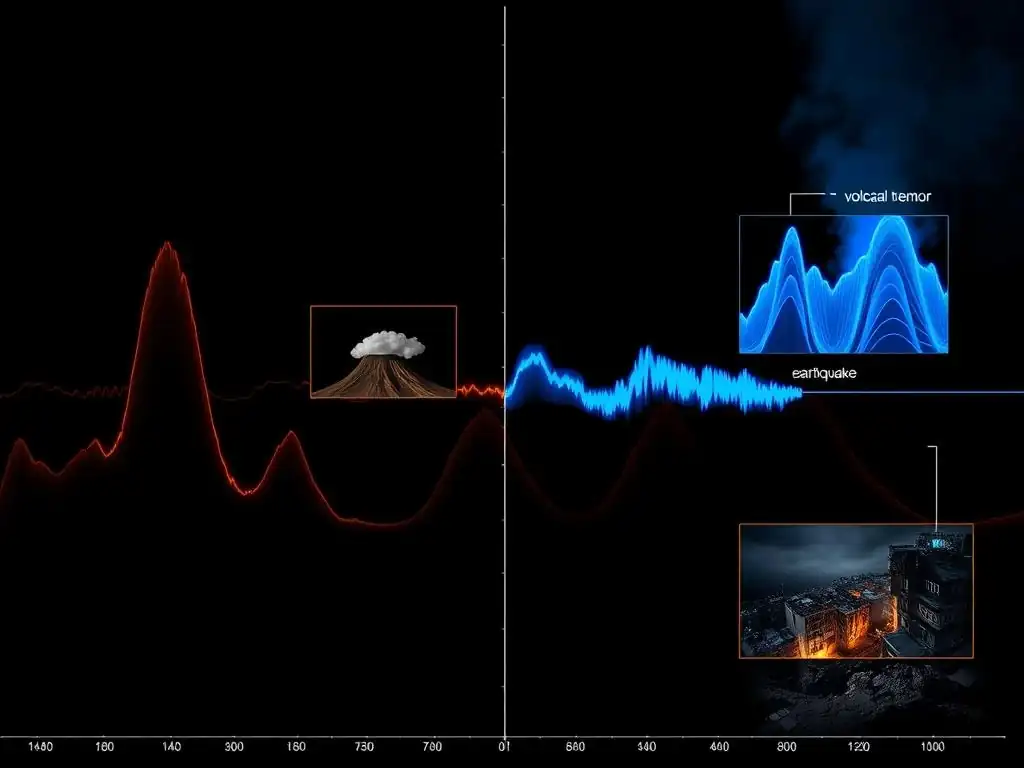
One of the most significant differences between volcanic tremors and earthquakes lies in the frequency and amplitude of their seismic waves. Earthquakes, especially tectonic earthquakes, typically generate a broader range of frequencies, including higher frequencies, and can have large amplitudes, particularly for high magnitude events. The sharp, impulsive onset of an earthquake results in a rapid build-up of amplitude.
In contrast, volcanic tremors are generally characterized by lower frequencies, often below 5 Hz, and tend to have lower amplitudes compared to earthquakes of similar duration. The onset of volcanic tremor is usually gradual, with the amplitude building up slowly and then decaying gradually.
This difference in frequency and amplitude reflects the different source mechanisms: the sudden, brittle fracture associated with earthquakes versus the sustained fluid movement and resonance associated with volcanic tremors. Seismologists analyze the frequency content of seismic signals using techniques like Fourier analysis to help differentiate between these two types of events.
Duration: How Long Do Volcanic Tremors and Earthquakes Last?
Duration is another key differentiator between volcanic tremors and earthquakes. Earthquakes are typically relatively short-lived events. Even a large magnitude earthquake rarely lasts for more than a few minutes at any given location. The shaking intensity usually rises rapidly to a peak and then decays quickly. Volcanic tremors, on the other hand, can persist for much longer durations.
They can last from minutes to hours, days, or even weeks, especially during periods of volcanic unrest leading up to or during an eruption. Prolonged volcanic tremor is a hallmark of ongoing volcanic processes, such as magma movement or sustained gas release. The extended duration of volcanic tremor provides a crucial temporal signature that helps distinguish it from the transient nature of earthquakes. Monitoring the duration of seismic activity is therefore an important aspect of volcanic surveillance.
Location and Depth: Pinpointing the Source of Seismic Activity
The location and depth of seismic events are also crucial in distinguishing between volcanic tremors and earthquakes. Earthquakes, particularly tectonic earthquakes, can occur at a wide range of depths, from shallow crustal depths to hundreds of kilometers deep in subduction zones. They can also occur far from volcanoes, along major tectonic faults. Volcanic tremors, in contrast, are almost always shallow, originating within or immediately beneath the volcanic edifice.
Their source depths are typically within the upper few kilometers of the crust, reflecting their association with shallow volcanic processes. Locating the source of seismic events using seismograph networks is a fundamental step in distinguishing between volcanic and tectonic activity. If seismic events are consistently located beneath or near a volcano, especially at shallow depths, it strongly suggests a volcanic origin. Conversely, events located far from volcanoes and at greater depths are more likely to be tectonic earthquakes.
Waveform Analysis: Identifying Distinct Seismic Signatures
Waveform analysis is a powerful tool used by seismologists to differentiate between volcanic tremors and earthquakes based on the shape and characteristics of the recorded seismic waves. Earthquake waveforms typically exhibit a clear P-wave (primary wave) and S-wave (secondary wave) arrival, followed by surface waves. P-waves are compressional waves and are the fastest seismic waves, while S-waves are shear waves and travel slower.
The time difference between P-wave and S-wave arrivals can be used to estimate the distance to the earthquake source. Volcanic tremor waveforms, in contrast, often lack clear P and S wave arrivals, particularly for harmonic tremor. The waveforms are more emergent, meaning they build up gradually rather than starting abruptly.
They often exhibit a more sinusoidal or oscillatory character, especially in the case of harmonic tremor. Advanced waveform analysis techniques, such as spectral analysis and polarization analysis, can further enhance the ability to discriminate between volcanic tremors and earthquakes by highlighting subtle differences in their seismic signatures.
Recognizing Volcanic Tremors: Identifying Volcanic Seismic Signals
Seismic Monitoring Techniques for Detecting Volcanic Activity
Effective detection and analysis of volcanic tremors rely on a network of seismic monitoring instruments deployed around volcanoes. These networks typically consist of seismographs, which are sensitive instruments that detect and record ground motion. Seismographs can be deployed in various configurations, including local networks surrounding a specific volcano and regional networks covering broader volcanic areas.
Data from these seismographs are transmitted in real-time to monitoring centers where volcanologists can analyze the seismic signals. Modern seismic monitoring systems often incorporate broadband seismometers, which are sensitive to a wide range of frequencies, allowing for the detection of both low-frequency volcanic tremors and higher-frequency volcanic earthquakes. In addition to seismographs, other geophysical instruments, such as tiltmeters and GPS stations, can complement seismic data by measuring ground deformation, which can also be associated with volcanic activity.
Using Seismographs to Analyze Volcanic Tremors
Seismographs are the primary tools for recording and analyzing volcanic tremors. When volcanic tremor occurs, the ground vibrations are detected by seismographs and converted into electrical signals, which are then recorded digitally. The recorded data, known as seismograms, provide a visual representation of the ground motion over time.
Volcanologists analyze seismograms to identify the presence of volcanic tremor, determine its duration, amplitude, frequency content, and temporal evolution. By analyzing data from multiple seismographs in a network, they can also locate the source region of the tremor and track its migration within the volcano. Advanced signal processing techniques are often applied to seismograms to enhance the tremor signal, remove noise, and extract key parameters that are indicative of volcanic processes.
Interpreting Seismic Data: Recognizing Volcanic Tremor Patterns
Interpreting seismic data to recognize volcanic tremor patterns involves looking for specific characteristics in seismograms. Continuous, low-frequency seismic signals that persist for extended periods are strong indicators of volcanic tremor. Harmonic tremor, with its distinct monochromatic waveform, is particularly recognizable. Volcanologists also look for changes in tremor amplitude and frequency over time.
Increasing tremor amplitude or shifts in dominant frequency can indicate changes in volcanic activity, such as magma ascent or increasing gas pressure. Patterns of tremor occurrence, such as cycles of tremor intensity or the onset of tremor swarms, can also provide valuable insights into the state of the volcano. Comparing current seismic data with historical records of volcanic activity and tremor patterns at the same volcano, or at other volcanoes with similar characteristics, is crucial for informed interpretation and hazard assessment.
Recognizing Earthquakes: Identifying Tectonic Seismic Signals
Seismic Monitoring Techniques for Detecting Tectonic Activity
Detecting and monitoring tectonic earthquakes relies on similar seismic monitoring techniques as used for volcanoes, but often on a larger scale. Regional and global seismic networks are used to monitor tectonic activity across vast areas. These networks consist of seismograph stations strategically placed around the globe to detect earthquakes occurring anywhere on Earth.
Data from these global networks are processed by organizations like the USGS (United States Geological Survey) and international agencies to locate earthquakes, determine their magnitudes, and assess potential tsunami risks. For regions with high tectonic earthquake hazard, denser local networks are often deployed to provide more detailed monitoring and rapid earthquake information. These networks are crucial for earthquake early warning systems and for understanding regional tectonic processes.
Using Seismographs to Analyze Earthquakes
Seismographs are equally essential for recording and analyzing earthquakes. When an earthquake occurs, seismographs record the arrival of different seismic waves – P-waves, S-waves, and surface waves. By analyzing the arrival times of these waves at multiple seismograph stations, seismologists can determine the location of the earthquake's focus and epicenter.
The amplitude of the recorded seismic waves is used to calculate the earthquake's magnitude, typically using the Richter scale or moment magnitude scale. Seismograms also provide information about the type of faulting that caused the earthquake, which helps in understanding the tectonic setting and earthquake mechanisms. Rapid analysis of seismograms is critical for issuing earthquake alerts and assessing potential damage.
Interpreting Seismic Data: Recognizing Earthquake Patterns
Interpreting seismic data to recognize earthquake patterns involves analyzing the spatial and temporal distribution of earthquakes. Earthquakes often occur along well-defined zones that correspond to tectonic plate boundaries and major fault systems. Mapping earthquake epicenters reveals these seismically active zones.
Earthquake catalogs, which are databases of earthquake events, are used to study earthquake patterns over time. Seismologists look for patterns like earthquake swarms, sequences of earthquakes occurring in a localized area over a relatively short period, and mainshock-aftershock sequences, where a large earthquake (mainshock) is followed by numerous smaller earthquakes (aftershocks). Analyzing earthquake recurrence intervals, which are the average time between large earthquakes on a particular fault, is important for long-term earthquake hazard assessment.
The Role of Seismic Monitoring in Volcano Monitoring and Prediction
How Volcanic Tremors Can Indicate Impending Eruptions
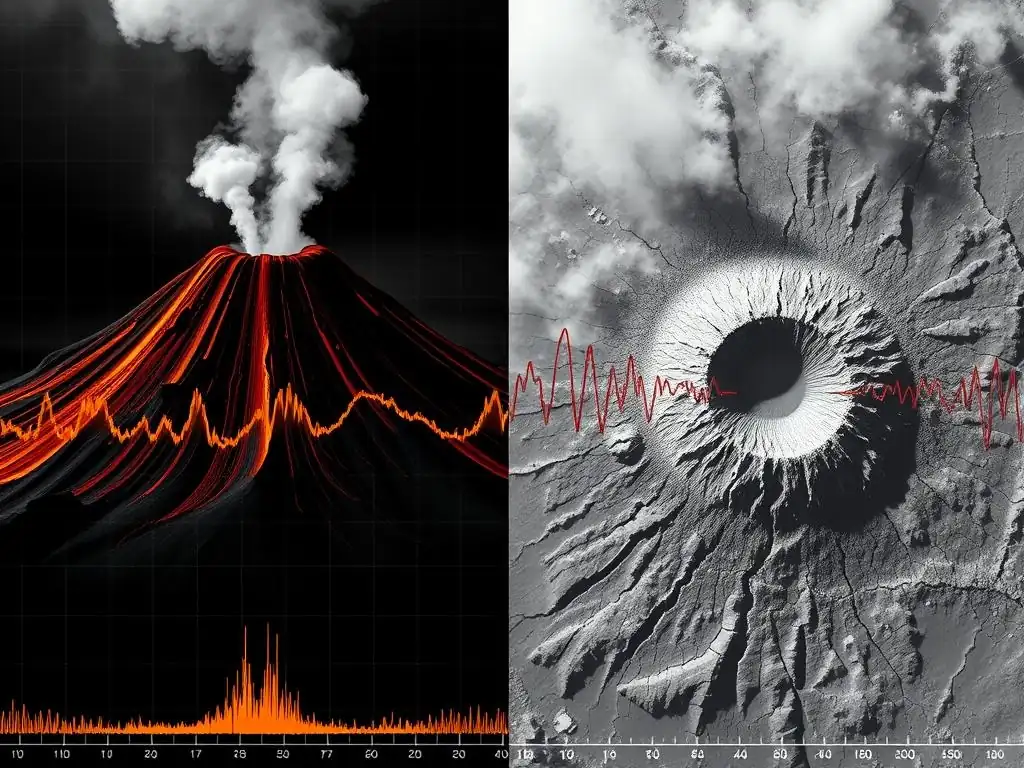
Volcanic tremors play a critical role in volcano monitoring and eruption prediction. Changes in volcanic tremor characteristics can often precede volcanic eruptions, making them valuable precursors. An increase in tremor amplitude, a shift to higher tremor frequencies, or changes in tremor patterns can indicate that a volcano is becoming more restless and that an eruption may be imminent.
For example, an increase in tremor amplitude could signify increased magma pressure or an acceleration of magma ascent towards the surface. Changes in tremor frequency might reflect changes in the properties of the magma or the geometry of the volcanic conduits. By continuously monitoring volcanic tremor and analyzing its evolution, volcanologists can gain crucial insights into the internal state of a volcano and improve eruption forecasts.
Using Seismic Data for Early Warning Systems
Seismic data, particularly volcanic tremor and volcanic earthquake information, are fundamental components of volcano early warning systems. Real-time seismic monitoring allows for the rapid detection of changes in volcanic activity that may signal an impending eruption. When seismic activity exceeds pre-defined thresholds or exhibits patterns indicative of escalating unrest, early warning systems can automatically trigger alerts.
These alerts can be disseminated to civil authorities, emergency responders, and the public, providing valuable time to prepare for and mitigate the impacts of a volcanic eruption. Early warning systems often integrate seismic data with other monitoring data, such as ground deformation, gas emissions, and thermal anomalies, to provide a more comprehensive assessment of volcanic risk and improve the accuracy and reliability of eruption forecasts.
Case Studies: Analyzing Seismic Activity Before and During the 2010 Eyjafjallajökull Eruption
The 2010 eruption of Eyjafjallajökull volcano in Iceland provides a compelling case study of how seismic activity, particularly volcanic tremor, can be used to monitor and understand volcanic processes. Prior to the eruption, seismic activity at Eyjafjallajökull began to increase several months in advance, with a noticeable escalation in the weeks leading up to the initial eruption on March 20, 2010. This pre-eruptive seismic activity was characterized by an increase in the frequency and intensity of volcanic earthquakes and the onset of volcanic tremor.
During the eruption itself, sustained volcanic tremor was recorded, reflecting the ongoing magma ascent and effusion. Analysis of the seismic data from Eyjafjallajökull provided valuable insights into the timing and evolution of the eruption, highlighting the importance of seismic monitoring for understanding and managing volcanic crises. The eruption also demonstrated the challenges of interpreting complex seismic signals and the need for integrated monitoring approaches.
Differentiating Between Volcanic Tremors and Earthquakes: Practical Applications
Implications for Volcanic Hazard Assessment
The ability to accurately differentiate between volcanic tremors and earthquakes has significant implications for volcanic hazard assessment. In volcanic regions, understanding the source of seismic activity is crucial for evaluating the potential for volcanic eruptions and associated hazards, such as ashfall, pyroclastic flows, and lahars (volcanic mudflows). Misinterpreting tectonic earthquakes as volcanic tremors, or vice versa, can lead to inaccurate hazard assessments and inappropriate risk management strategies.
For example, failing to recognize increasing volcanic tremor as a precursor to an eruption could result in a delayed or inadequate response, while mistakenly interpreting tectonic earthquakes near a volcano as volcanic unrest could trigger unnecessary evacuations and economic disruption. Accurate differentiation, therefore, is essential for effective volcanic hazard mapping, risk communication, and land-use planning in volcanic areas.
Impact on Public Safety and Evacuation Strategies
Correctly distinguishing between volcanic tremors and earthquakes directly impacts public safety and evacuation strategies in volcanic regions. Volcanic tremors that signal an impending eruption may necessitate evacuations of communities at risk from volcanic hazards. In contrast, tectonic earthquakes, while potentially damaging, do not directly indicate an imminent volcanic eruption.
Therefore, the appropriate response to seismic activity depends critically on whether it is identified as volcanic or tectonic in origin. Clear and timely communication of the nature of seismic events to the public is essential to avoid confusion and ensure appropriate responses. Public education programs that explain the differences between volcanic tremors and earthquakes and the associated hazards can enhance community preparedness and resilience in volcanic areas.
How the USGS Uses Seismic Data to Monitor Volcanoes
The United States Geological Survey (USGS) Volcano Hazards Program utilizes seismic data extensively to monitor volcanoes across the United States and its territories. The USGS operates volcano observatories in regions with active volcanoes, such as Hawaii, Alaska, California, and the Pacific Northwest. These observatories maintain dense seismic networks around volcanoes, continuously recording and analyzing seismic activity.
USGS volcanologists use seismic data to track volcanic tremor, detect volcanic earthquakes, locate seismic sources, and assess changes in volcanic unrest. Real-time seismic data are used to issue volcano alerts and provide timely information to civil authorities and the public about potential volcanic hazards. The USGS's use of seismic data is a prime example of how this information is applied in practice for volcano monitoring, eruption forecasting, and public safety.
Conclusion: Understanding the Nuances of Volcanic Tremors and Earthquakes
The Ongoing Research in Volcanic Seismology
Research in volcanic seismology is a dynamic and evolving field. Scientists are continually working to improve our understanding of the complex processes that generate volcanic tremors and earthquakes, and to enhance our ability to use seismic data for volcano monitoring and eruption prediction. Ongoing research areas include developing more sophisticated techniques for waveform analysis, improving seismic source location methods in volcanic environments, and integrating seismic data with other geophysical and geochemical data to create more comprehensive volcano monitoring systems.
Researchers are also exploring the use of machine learning and artificial intelligence to automatically detect and classify volcanic seismic signals, and to identify subtle patterns that may precede eruptions. These advancements in volcanic seismology are crucial for improving our ability to forecast volcanic eruptions and mitigate their impacts on society.
Resources for Learning More About Volcanic and Tectonic Activity
For those interested in learning more about volcanic tremors, earthquakes, and volcano monitoring, several resources are available. The websites of volcano observatories, such as the USGS Volcano Hazards Program (www.usgs.gov/volcanoes) and the Smithsonian Institution's Global Volcanism Program (volcano.si.edu), offer a wealth of information on volcanoes and seismic activity worldwide. Educational websites like VolcanoExplorers.org provide accessible explanations of volcanic processes and monitoring techniques.
Universities and research institutions often have online resources and publications related to seismology and volcanology. Books and scientific journals dedicated to Earth sciences also provide in-depth information for those seeking a more detailed understanding of these fascinating natural phenomena.
Frequently Asked Questions
What is the primary difference between volcanic tremors and earthquakes?
Volcanic tremors are generally sustained vibrations caused by magma movement or fluid activity within a volcano, while earthquakes are caused by the sudden release of energy in the Earth's crust along fault lines.
How do seismographs detect the difference between volcanic tremors and earthquakes?
Seismographs can differentiate them by analyzing the wave patterns. Volcanic tremors typically produce longer duration and lower frequency waves compared to the sharper, more distinct waves of earthquakes.
What causes volcanic tremors?
Volcanic tremors are often caused by the movement of magma, the expansion of gases, or even the collapse of volcanic structures. They are directly related to volcanic activity.
Are volcanic tremors a reliable predictor of volcanic eruptions?
Yes, an increase in the intensity and frequency of volcanic tremors can often indicate an increased likelihood of an impending volcanic eruption. However, it is not always a guaranteed predictor.
Can earthquakes trigger volcanic eruptions?
Yes, in some cases, large earthquakes can trigger volcanic eruptions. The seismic waves can disrupt the magma chamber or fault lines around the volcano, leading to an eruption.
Final Reflection: Listening to the Earth's Rumbles
The exploration of the subtle differences between volcanic tremors and earthquakes reveals more than just scientific distinctions; it underscores our planet's dynamic and often volatile nature. Understanding these nuances is not merely an academic exercise, but a crucial step in mitigating potential risks and deepening our appreciation for the forces that shape our world. The ability to differentiate between these seismic events is increasingly relevant in a world facing the escalating impacts of climate change and geological instability.
The ongoing study of volcanic tremors and earthquakes has profoundly influenced how we perceive and interact with our environment. This understanding fosters a deeper respect for the Earth's power and the need for proactive measures to protect vulnerable communities. The Earth speaks to all, and though few listen, all are nonetheless affected.
This quote encapsulates the idea that even the most subtle seismic activity carries a message, urging us to pay attention and learn from the Earth's rumblings.
As you reflect on the distinctions between volcanic tremors and earthquakes, consider how this knowledge can inform your own understanding of the world around you. Let the insights gained from this exploration inspire you to become a more informed and engaged citizen, advocating for responsible environmental practices and supporting efforts to enhance disaster preparedness in your community. Listen closely to the Earth's whispers, for they hold the key to a safer and more sustainable future for us all.
Unearth Your Inner Volcanologist!
Thanks for exploring the fascinating world of volcanic tremors and earthquakes! You've gained valuable knowledge to distinguish between these powerful natural forces. Ready to apply your new expertise and contribute to our understanding of these events?
Here are a few ways you can get involved:
- Report your observations! If you live near a volcano and experience unusual seismic activity, carefully document your observations (sounds, ground movement, etc.) and share your findings with your local geological survey or emergency management agency. Your firsthand accounts are incredibly valuable.
- Explore our interactive map showcasing global volcanic activity. See real-time data and learn about volcanoes near you.
- Share this article with friends, family, and fellow earth science enthusiasts! Let's spread awareness and build a community of informed volcano observers.
What subtle signs of an impending volcanic eruption will you watch for? Share your thoughts in the comments below!