
Volcano Photography on a Budget: Capturing Eruptive Beauty Without Breaking the Bank

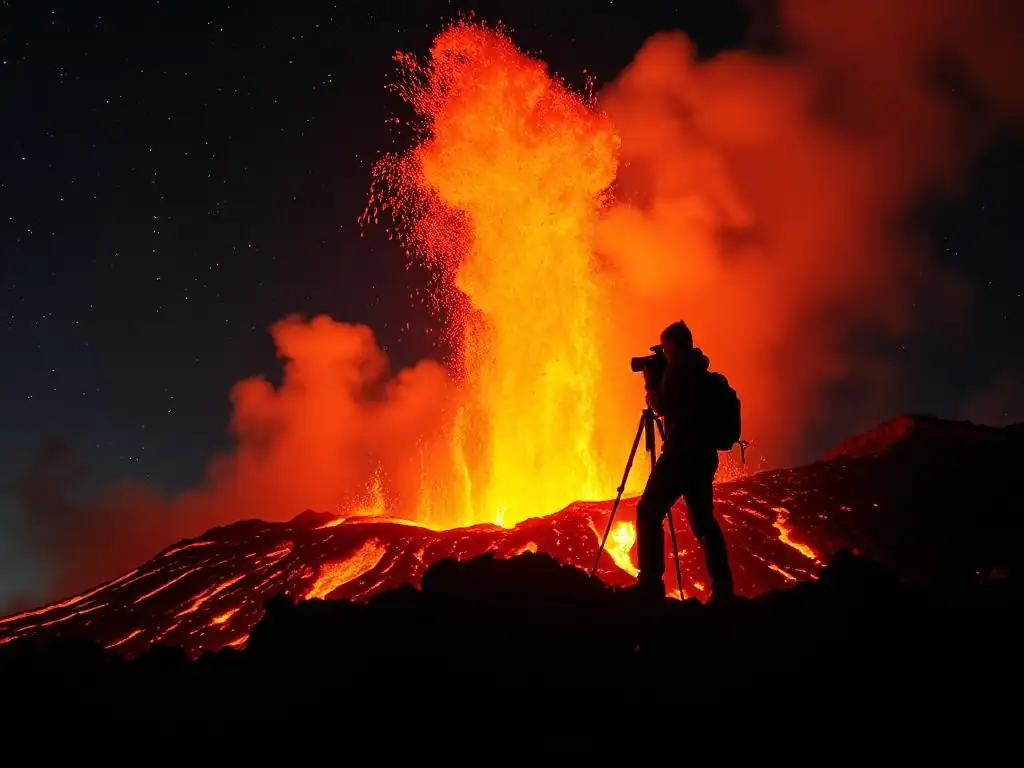
Welcome to Volcano Explorers, where the earth breathes fire and adventure awaits! Ever dreamt of capturing the raw power of a volcano in all its glory? You're in the right place. Dive into our latest article, " Volcano Photography on a Budget: Capturing Eruptive Beauty Without Breaking the Bank," and unlock the secrets to stunning images without emptying your wallet. Prepare to be amazed – the earth's fiery heart is calling, and we'll show you how to answer it beautifully. What eruptive secrets will you uncover?
- Introduction: Affordable Volcano Photography for Aspiring Explorers
- Budget-Friendly Volcano Photography Tips: Essential Techniques
- Affordable Volcano Photography Gear: Maximizing Your Investment
- Post-Processing on a Budget: Enhancing Your Volcano Photos Without Expensive Software
- Case Studies: Inspiring Budget Volcano Photography Examples
- Conclusion: Unleashing Your Inner Volcano Photographer on a Budget
-
Frequently Asked Questions
- How can I take stunning volcano photos without expensive equipment?
- What are some affordable camera options for volcano photography?
- What essential accessories can I get on a budget to improve my volcano photos?
- Are there any free resources available to learn more about volcano photography techniques?
- How can I safely photograph a volcano without spending a lot on specialized gear?
- Final Reflection: Embracing the Fire Within
- Unleash Your Inner Lava Chaser!
Introduction: Affordable Volcano Photography for Aspiring Explorers
Volcanoes, with their raw power and breathtaking beauty, present an unparalleled subject for photographers. The allure of capturing molten lava flows, ash plumes against dramatic skies, and the sheer geological force of nature is irresistible. However, the perception that top-tier volcano photography requires expensive, professional-grade equipment can be daunting, especially for aspiring photographers on a budget. The reality is that capturing stunning images of volcanic landscapes and eruptions is achievable without emptying your bank account. This article is your guide to budget volcano photography, proving that passion, creativity, and smart techniques can be just as powerful as costly gear.
Budget-Friendly Volcano Photography Tips: Essential Techniques
Mastering Composition for Impactful Shots
Composition is the cornerstone of compelling photography, and it's entirely free. Understanding and applying compositional techniques can dramatically elevate your volcano photos, regardless of the equipment you use. The rule of thirds, for example, is a simple yet effective guideline.
Imagine dividing your frame into nine equal rectangles with two horizontal and two vertical lines. Placing key elements of your scene, like the volcano's peak or a lava flow, along these lines or at their intersections creates a more balanced and visually engaging image than simply centering the subject. Experiment with leading lines, using roads, rivers of lava, or ridges to draw the viewer's eye into the frame and towards the volcano.
Framing is another powerful compositional tool that adds depth and context to your volcano photographs. Utilize natural elements like trees, rock formations, or even volcanic arches to frame the volcano. This technique not only adds visual interest but also emphasizes the scale of the volcano within its environment.
For instance, photographing a towering volcano framed by the delicate branches of trees in the foreground can create a striking contrast and a sense of place. Consider varying your perspective; shooting from a low angle can make the volcano appear more imposing, while a high vantage point might offer a panoramic vista of the volcanic landscape. By consciously applying these compositional principles, you can create impactful volcano photos that stand out, even when taken with basic equipment.
Light is Key: Utilizing Natural Light for Dramatic Volcano Photos
Light is arguably the most crucial element in photography, and harnessing natural light effectively is completely free and incredibly powerful. Volcano photography thrives on dramatic lighting, and understanding how to utilize the "golden hour" and "blue hour" can transform your images. The golden hour, the period shortly after sunrise and before sunset, bathes the landscape in a warm, soft, and golden light, ideal for highlighting the textures and colors of volcanic rock and ash. This light creates long shadows that accentuate the contours of the volcano and add depth to your photos.
Conversely, the blue hour, occurring just before sunrise and after sunset, casts a cool, soft, and ethereal blue hue over the scene. This light is perfect for capturing the atmospheric mood of volcanic landscapes, especially around dawn or dusk when steam plumes and volcanic gases might be more visible. Photographing during midday, when the sun is high and harsh, can often result in flat and uninteresting images.
However, even in midday, you can utilize cloud cover to diffuse the light and create softer, more even illumination. Experiment with shooting in different lighting conditions to understand how light affects the mood and impact of your volcano photographs. For example, capturing a lava flow at twilight during the blue hour can result in a surreal and captivating image, showcasing the incandescent glow against the deep blue sky.
Stabilizing Your Shots: Tripods and Alternatives for Sharp Images
Sharpness is paramount in photography, and camera shake is a common culprit for blurry images, especially in low-light conditions or when using longer lenses to capture distant volcanic details. While a sturdy tripod is the ideal solution for maximum stability, budget photographers can explore effective and affordable alternatives. A lightweight, entry-level tripod can be a worthwhile investment, providing a stable platform for sharper images, especially when shooting at slower shutter speeds or capturing time-lapses of volcanic activity.
If a tripod isn't immediately accessible, or if you're aiming to travel light, there are numerous creative alternatives. Utilize your surroundings to your advantage. A sturdy rock, a wall, or even a beanbag filled with rice or beans can provide a surprisingly stable base for your camera. Simply placing your camera on a flat, stable surface and using the self-timer function to minimize camera shake during the shot can significantly improve sharpness.
Another technique is to use your body as a tripod. Brace yourself against a stable object, tuck your elbows in, and hold your breath while taking the shot. These techniques, while not as robust as a tripod, can be incredibly effective for achieving sharper images on a budget, ensuring you capture the crisp details of volcanic landscapes and eruptions.
Protecting Your Gear: Essential Precautions for Harsh Volcanic Environments
Volcanic environments, while visually stunning, can be incredibly harsh on camera equipment. Volcanic ash, fine dust, and corrosive gases pose significant threats to sensitive electronics and lens coatings. Protecting your gear is not just about expensive accessories; simple, budget-friendly precautions can go a long way in safeguarding your equipment. A basic rain cover, even a simple plastic bag or shower cap, can shield your camera from sudden rain showers or ashfall. Ziplock bags are invaluable for protecting lenses and camera bodies when not in use, preventing dust and ash from settling on delicate surfaces.
Carry a microfiber cleaning cloth and a lens cleaning brush in your camera bag. Regularly wipe down your camera body and lenses to remove dust and ash buildup. Be particularly cautious when changing lenses in a dusty environment. Try to do it in a sheltered location or inside a bag to minimize dust exposure to the camera's sensor.
Consider using UV filters on your lenses. While they may not dramatically improve image quality, they act as a protective barrier against scratches and dust, and are much cheaper to replace than a lens element. These simple and inexpensive measures can significantly extend the lifespan of your camera gear and ensure it continues to function reliably in challenging volcanic environments.
Affordable Volcano Photography Gear: Maximizing Your Investment
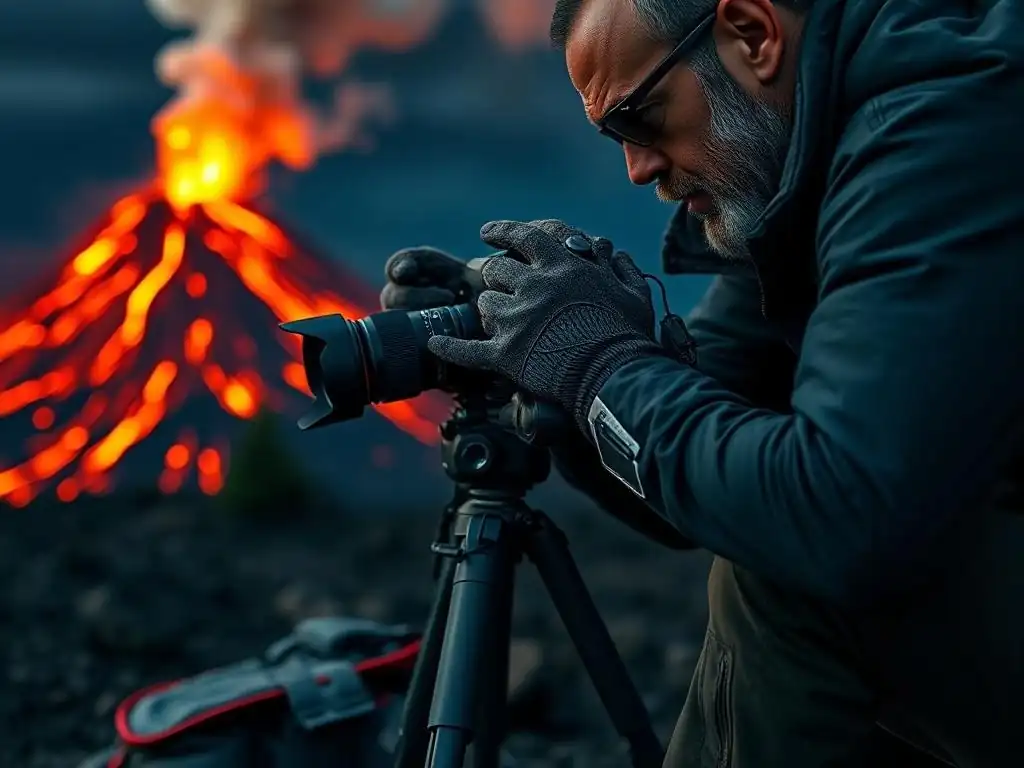
Camera Choices: Entry-Level DSLRs and Mirrorless Cameras
The camera market offers a wide range of options, but for budget volcano photography, entry-level DSLRs and mirrorless cameras provide an excellent balance of performance and affordability. Cameras like the Canon EOS Rebel series (e.g., EOS Rebel T7/2000D, EOS Rebel SL3/250D) or Nikon D3xxx and D5xxx series (e.g., D3500, D5600) are popular entry-level DSLR choices. These cameras offer good image quality, robust build, and a wide selection of affordable lenses. They are more than capable of capturing stunning volcano landscapes and even some eruption details.
Mirrorless cameras have also become increasingly accessible and offer compelling features in the entry-level segment. Models like the Sony Alpha a6000 series (e.g., a6000, a6100) or Fujifilm X-T200, X-A series provide excellent image quality, compact size, and advanced features like in-body image stabilization in some models, which can be beneficial for sharper handheld shots. When choosing between DSLR and mirrorless, consider factors like budget, size preference, and lens availability.
Both types of cameras, in their entry-level forms, are capable of producing high-quality volcano photographs without breaking the bank. The key is to understand your camera's capabilities and limitations and to maximize its potential through good technique and creative vision.
Lens Selection: Versatile Lenses for Capturing Volcanic Landscapes and Eruptions
Lens selection is crucial for volcano photography, but you don't need a bag full of expensive professional lenses to get started. Versatility is key when working on a budget. A kit lens, typically an 18-55mm lens that often comes bundled with entry-level cameras, is a surprisingly capable starting point.
It covers a useful range from wide-angle for landscapes to a standard focal length for general shots. For capturing closer details of volcanic features or distant eruptions, a telephoto zoom lens is beneficial. Lenses in the 70-300mm range, often available at reasonable prices from camera manufacturers and third-party brands like Tamron or Sigma, offer a good reach for volcano photography.
Consider lenses with image stabilization (IS) or vibration reduction (VR) to help minimize camera shake, especially when using longer focal lengths or shooting in lower light. Prime lenses, which have a fixed focal length, can also be excellent budget-friendly options.
A 50mm f/1.8 lens, often referred to as the "nifty fifty," is incredibly affordable and offers excellent image quality and a wide aperture for low-light photography and shallow depth of field effects. While specialized lenses like ultra-wide angles or super-telephotos can be beneficial for certain volcano photography styles, starting with a versatile kit lens and a telephoto zoom lens provides a solid foundation for capturing a wide range of volcanic scenes without overspending.
Essential Accessories: Must-Have Gear for Volcano Photography
Beyond the camera and lens, a few essential accessories can significantly enhance your volcano photography experience without adding substantial cost. Extra batteries are crucial, especially when photographing in remote locations with limited or no access to charging facilities. Volcanic environments can be demanding on battery life, particularly in cold weather.
Carrying at least one or two extra batteries ensures you won't miss capturing a crucial moment due to a depleted battery. Similarly, sufficient memory cards are essential. Choose high-capacity SD cards to avoid running out of space, especially if you plan to shoot in RAW format or capture videos of volcanic activity.
A lens cleaning kit, including a microfiber cloth, lens cleaning fluid, and a blower, is indispensable for maintaining clean lenses in dusty volcanic environments. A basic tripod, as discussed earlier, is highly recommended for sharper images. Consider a lightweight and portable model that is easy to carry on hikes and adventures.
Finally, a comfortable and durable camera bag is essential for protecting and transporting your gear. Look for a bag that is weather-resistant and offers sufficient padding to safeguard your camera and lenses from bumps and impacts. These essential accessories, while seemingly minor, contribute significantly to a smoother and more successful volcano photography experience, and they are all available at reasonable prices to fit within a budget.
Post-Processing on a Budget: Enhancing Your Volcano Photos Without Expensive Software
Free Photo Editing Software: Powerful Alternatives to Paid Programs
Post-processing is an integral part of modern photography, and enhancing your volcano photos doesn't necessitate expensive, subscription-based software like Adobe Photoshop or Lightroom. Several powerful and completely free photo editing software options offer comparable capabilities for most photographers' needs. GIMP (GNU Image Manipulation Program) is a robust, open-source image editor that rivals Photoshop in its features and functionality. It offers advanced tools for layers, masks, color correction, retouching, and much more. GIMP is a powerful and versatile option for comprehensive photo editing.
Darktable is another excellent free and open-source photo editor, specifically designed for photographers. It focuses on RAW image processing and offers a non-destructive workflow, similar to Lightroom. Darktable excels in color management, noise reduction, and lens corrections, making it ideal for enhancing volcano photos captured in various lighting conditions.
For simpler, quicker edits, online photo editors like Photopea or Pixlr offer browser-based solutions with many features found in desktop software. These online editors are convenient for basic adjustments, resizing, and applying filters without requiring any software installation. Exploring these free alternatives allows you to master post-processing techniques and elevate your volcano photographs without incurring software costs.
Developing Your Photography Skills: Free Online Resources
Continuously improving your photography skills is an ongoing journey, and fortunately, a wealth of free online resources is available to help you learn and grow. YouTube is a treasure trove of photography tutorials, covering everything from basic camera settings to advanced post-processing techniques. Channels dedicated to photography offer lessons, tips, and inspiration for various genres, including landscape and nature photography, which are directly applicable to volcano photography.
Photography blogs and websites, like Digital Photography School or PetaPixel, provide articles, reviews, and tutorials on a wide range of photography topics. These platforms often feature articles specifically on landscape photography, composition, and post-processing, all valuable for volcano photographers.
Many online learning platforms, such as Coursera or Skillshare, offer free photography courses or free trial periods that provide access to structured learning materials. These courses can offer a more in-depth understanding of photography principles and techniques. Social media platforms like Instagram and Flickr can also be valuable resources for inspiration and learning.
Following established volcano photographers or exploring volcano photography hashtags can expose you to diverse styles and approaches, sparking new ideas and perspectives for your own work. Leveraging these free online resources allows you to continuously learn and refine your volcano photography skills, ultimately leading to more impactful and visually stunning images.
Case Studies: Inspiring Budget Volcano Photography Examples
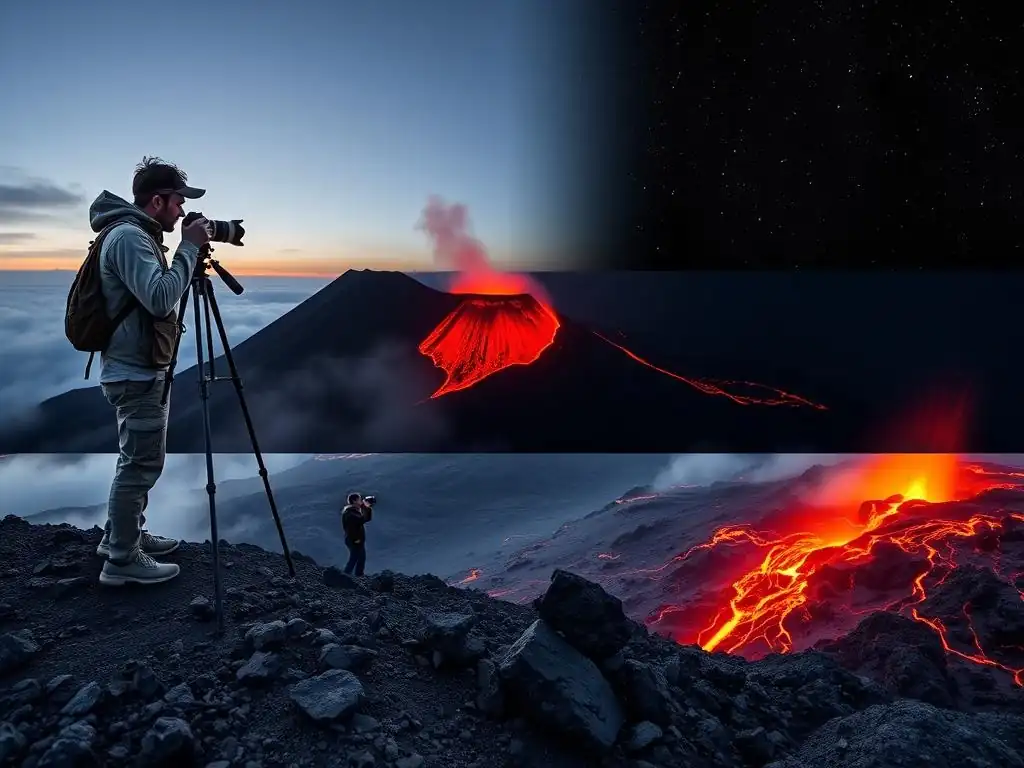
[Data to be inserted: Real case studies of budget volcano photographers or examples of stunning volcano photos taken with entry-level gear. If specific cases are unavailable, create realistic scenarios based on common budget gear and techniques. Examples could include a photographer using a kit lens to capture a sunrise eruption in Iceland, or another using a smartphone and creative composition to document volcanic landscapes in Hawaii. Focus on the gear used, techniques applied, and the resulting impactful images despite budget constraints.]
Conclusion: Unleashing Your Inner Volcano Photographer on a Budget
Capturing the awe-inspiring beauty of volcanoes through photography is not limited to those with expensive equipment. As we've explored, budget volcano photography is not only possible but also incredibly rewarding. By mastering fundamental techniques like composition, light utilization, and image stabilization, and by making smart choices with affordable gear and free post-processing tools, you can create stunning images that rival those taken with professional setups.
Remember, the most crucial ingredient in exceptional volcano photography is not the price tag of your gear, but your passion, creativity, and willingness to learn and explore. So, grab your camera, embrace the budget-friendly tips and techniques outlined in this guide, and unleash your inner volcano photographer. The eruptive beauty of these natural wonders awaits your lens.
Frequently Asked Questions
How can I take stunning volcano photos without expensive equipment?
You can achieve great results by focusing on composition, utilizing natural light (especially during golden hour), and employing basic editing techniques on your smartphone or free software.
What are some affordable camera options for volcano photography?
Consider a used DSLR or a high-quality smartphone with a good camera. These options offer a significant upgrade over basic point-and-shoot cameras without requiring a huge financial investment.
What essential accessories can I get on a budget to improve my volcano photos?
A tripod is crucial for stability, especially in low-light conditions. A lens cleaning kit is also important to keep your equipment free of ash and debris, ensuring clear shots.
Are there any free resources available to learn more about volcano photography techniques?
Yes! Websites like VolcanoExplorers.org offer free tutorials and articles on various photography techniques. Also, search for online photography communities that offer tips and feedback.
How can I safely photograph a volcano without spending a lot on specialized gear?
Always prioritize safety first. Maintain a safe distance from the volcano, monitor volcanic activity updates, and wear basic protective gear like a dust mask. Avoid venturing into restricted areas.
Final Reflection: Embracing the Fire Within
The allure of capturing volcanic eruptions, a dance of destruction and creation, is undeniable, yet often perceived as an expensive endeavor. This article has demonstrated that breathtaking volcano photography is indeed accessible on a budget, proving that passion and resourcefulness can triumph over financial constraints. The tips and techniques shared are not merely about saving money; they are about fostering creativity and resourcefulness, qualities essential for any artist seeking to capture the raw power of nature.
The ability to document these ephemeral moments of geological drama has a profound impact, allowing us to witness the Earth's power and fragility simultaneously. My own journey into photography began with similar limitations, forcing me to innovate and discover beauty in unexpected places. This experience instilled in me a deep appreciation for the process and the stories that can be told with limited resources. The best camera is the one that's with you.
- Chase Jarvis. This quote encapsulates the spirit of this article: it's not about the gear, but about the vision and the dedication to capturing the moment.
Now, armed with these budget-friendly volcano photography tips, I invite you to embark on your own photographic adventure. Don't let financial limitations extinguish your passion. Instead, let them fuel your creativity and drive you to discover new perspectives. Go forth, explore, and capture the eruptive beauty that awaits, proving that the most stunning images are born not from expensive equipment, but from the fire within.
Unleash Your Inner Lava Chaser!
Thanks for exploring the world of budget-friendly volcano photography with us! We hope you're feeling inspired and ready to capture some stunning eruptive beauty without emptying your wallet. Let's turn that inspiration into action:
- Plan your very own low-cost volcano photography expedition! Start by researching accessible volcanic areas and budgeting for transportation, accommodation (camping! ), and essential safety gear.
- Join our online community forum at VolcanoExplorers.org to share your budget-friendly photography tips and connect with fellow lava enthusiasts.
- Surprise us! Post your most creative photo taken with only a smartphone and free editing software on Instagram using #VolcanoExplorersBudget.
What's the first volcanic landscape you're dreaming of capturing on a shoestring? Share your location goals in the comments below!