
Silent Stalkers: Can Pyroclastic Flows Strike Without Warning?


Welcome to Volcano Explorers! Ever wondered if you can really outrun a volcano? Dive into the heart of the earth's fiery secrets and confront the chilling truth about one of its deadliest creations: the pyroclastic flow. But are there always signs before they strike?
Our latest article, "Silent Stalkers: Can Pyroclastic Flows Strike Without Warning?" explores pyroclastic flow warning signs and might just change how you view these awe-inspiring, yet terrifying, forces of nature. Prepare to uncover the clues and learn how to stay safe in the face of unimaginable power. The clock is ticking...are you ready to learn what you need to know?
- Understanding Pyroclastic Flows: A Volcano Explorer's Guide
- The Question of Warning: Detecting Imminent Pyroclastic Flow Activity
- Pyroclastic Flow Warning Signs: Recognizing the Signals of Impending Danger
- The Role of Monitoring Technology in Detecting Pyroclastic Flow Risks
- Living Near Volcanoes: Understanding and Responding to Pyroclastic Flow Alerts
- Case Studies: Learning from Past Pyroclastic Flow Disasters
- Minimizing Risk: Improving Pyroclastic Flow Prediction and Mitigation
- Conclusion: Staying Vigilant in the Face of Pyroclastic Flow Hazards
-
Frequently Asked Questions
- Can pyroclastic flows really strike without any warning signs?
- What are the most important pyroclastic flow warning signs that people should be aware of?
- If I see an ash cloud forming on a volcano, does that automatically mean a pyroclastic flow is imminent?
- What should I do if I receive a pyroclastic flow warning?
- Are there any specific types of volcanoes that are more prone to generating pyroclastic flows?
- Final Reflection: Embracing Vigilance in the Shadow of Volcanoes
- Uncover the Secrets & Prepare for Volcanic Hazards!
Understanding Pyroclastic Flows: A Volcano Explorer's Guide
What are Pyroclastic Flows and Surges? Defining the Threat
Pyroclastic flows and surges are among the most destructive and terrifying phenomena associated with explosive volcanic eruptions. Essentially, they are ground-hugging avalanches of hot gas and volcanic debris, ranging in size from ash and pumice to larger rocks and boulders. Pyroclastic flows are characterized by their high density and are driven by gravity, flowing down volcanic slopes at incredible speeds. In contrast, pyroclastic surges are more dilute, turbulent mixtures of gas and particles that can spread out more widely, sometimes overriding topographic obstacles and affecting areas further from the direct path of the flow. Both, however, are incredibly dangerous.
These phenomena are not simply lava flows; they are a complex mixture of volcanic materials erupted explosively. The temperature within a pyroclastic flow can range from 200°C to as high as 700°C (392°F to 1292°F), and even hotter in some cases. The composition of a pyroclastic flow can vary depending on the type of eruption and the volcano, but typically includes volcanic ash, pumice, rock fragments, and volcanic gases like water vapor, sulfur dioxide, and carbon dioxide. Understanding the distinction between flows and surges, and their shared characteristics, is crucial for recognizing the multifaceted threat they pose.
The Devastating Power of Pyroclastic Flows: Speed, Temperature, and Impact
The sheer power of pyroclastic flows stems from a combination of factors: their extreme speed, searing temperatures, and immense density. These flows can travel at speeds exceeding 700 km/h (over 450 mph), making them virtually impossible to outrun. To put this into perspective, this is comparable to the speed of a Formula 1 race car at top velocity.
The intense heat, often reaching hundreds of degrees Celsius, is enough to incinerate anything in their path, from forests to buildings. The density of these flows, laden with rock and ash, gives them a tremendous force capable of flattening structures and stripping landscapes bare.
The impact of a pyroclastic flow is catastrophic. The combination of heat and velocity creates a lethal environment. People caught within a pyroclastic flow are subjected to immediate and often fatal effects, including severe burns, asphyxiation from hot gases and ash, and impact trauma from debris.
Beyond the immediate loss of life, pyroclastic flows can obliterate entire towns and infrastructure. For example, the 1902 pyroclastic flow at Mount Pelée completely destroyed the city of Saint-Pierre, Martinique, killing an estimated 30,000 people in a matter of minutes. The landscape itself is drastically altered, buried under thick deposits of ash and rock, rendering areas uninhabitable for extended periods.
The Question of Warning: Detecting Imminent Pyroclastic Flow Activity
Can Scientists Predict Pyroclastic Flow Eruptions? Limitations and Challenges
Predicting volcanic eruptions, and specifically pyroclastic flows, is a complex scientific challenge, but it is not entirely impossible. Volcanologists utilize a range of monitoring techniques to detect changes in volcanic activity that might precede an eruption capable of generating pyroclastic flows. However, the Earth's volcanic systems are incredibly dynamic and often unpredictable. While scientists can identify increased risks and probabilities of eruption, pinpointing the exact timing and nature of a pyroclastic flow event remains a significant challenge.
One of the primary limitations in prediction is the inherent variability of volcanoes. Each volcano has its own unique geological history, plumbing system, and eruptive style. What might be a clear warning sign at one volcano could be normal background activity at another. Furthermore, the processes leading to pyroclastic flows can be rapid and occur on timescales shorter than the lead time needed for effective warnings and evacuations. Despite these challenges, advances in monitoring technology and a deeper understanding of volcanic processes are constantly improving our ability to assess and mitigate pyroclastic flow hazards.
Precursors to Pyroclastic Flows: What to Look For (and What They Mean)
Volcanoes often exhibit a range of precursory activities that can indicate an increasing likelihood of an eruption, potentially including pyroclastic flows. These precursors are changes from a volcano's baseline behavior and can manifest in various forms, requiring careful and continuous monitoring. Common precursors include increased seismicity, changes in volcanic gas emissions, ground deformation, and alterations in thermal activity. It's important to note that these precursors are not always definitive and can sometimes be ambiguous, necessitating expert interpretation.
Increased seismicity is a frequent precursor, often involving an increase in the frequency and intensity of volcanic earthquakes. Changes in the type of earthquakes, such as the appearance of long-period earthquakes associated with magma movement, can also be significant. Similarly, changes in the composition and flux of volcanic gases, particularly increases in sulfur dioxide (SO2) emissions, can indicate magma rising towards the surface.
Ground deformation, such as swelling or tilting of the volcano's edifice, measured by instruments like GPS and tiltmeters, reflects magma accumulation beneath the surface. These precursory signals, when analyzed together and in the context of a volcano's history, can provide valuable insights into the potential for pyroclastic flow generation.
Pyroclastic Flow Warning Signs: Recognizing the Signals of Impending Danger
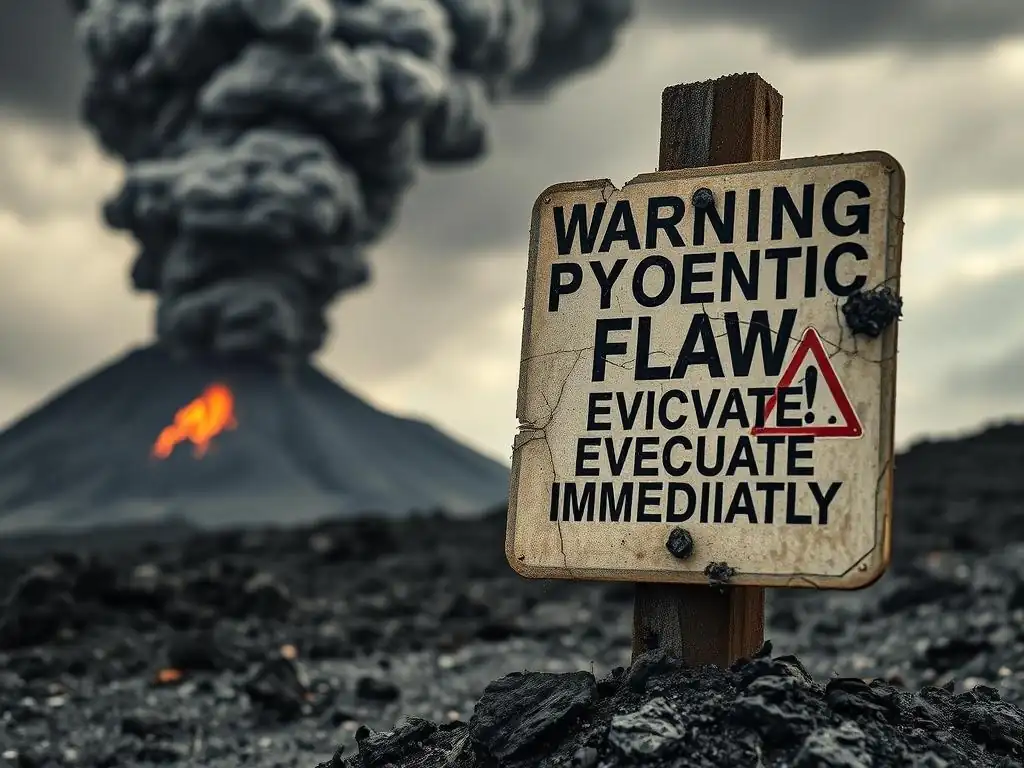
Identifying Key Indicators: Increased Volcanic Gas Emissions as a Warning Sign
Changes in volcanic gas emissions are a crucial indicator of volcanic activity and can serve as a pyroclastic flow warning sign. Volcanoes constantly release gases, even during periods of quiescence. However, significant changes in the rate and composition of these gases can signal changes in the magma system beneath the surface.
An increase in the overall flux of gases, particularly sulfur dioxide (SO2), is often associated with magma ascent and increasing eruption potential. For example, ahead of the 1991 eruption of Mount Pinatubo, Philippines, scientists observed a dramatic increase in SO2 emissions, which was a key factor in recognizing the escalating threat.
Furthermore, changes in the ratios of different gases can also be indicative. An increase in the ratio of SO2 to HCl (hydrogen chloride) or CO2 (carbon dioxide) can suggest that magma is becoming shallower and degassing more intensely. Volcano observatories routinely monitor volcanic gas emissions using instruments like spectrometers and gas sensors placed at vents and around the volcano.
Real-time monitoring of gas emissions provides valuable data for assessing volcanic unrest and can be a crucial component of pyroclastic flow warning systems. Sudden, sharp increases or significant shifts in gas composition are red flags that warrant heightened vigilance and potential escalation of alert levels.
Ground Deformation and Seismic Activity: Early Warning Signals of Pyroclastic Flow Potential
Ground deformation and seismic activity are fundamental early warning signals of pyroclastic flow potential. As magma rises beneath a volcano, it exerts pressure on the surrounding rocks, causing the ground surface to deform. This deformation can manifest as swelling, tilting, or stretching of the volcanic edifice.
Scientists use sophisticated instruments like tiltmeters, GPS stations, and InSAR (Interferometric Synthetic Aperture Radar) to precisely measure these subtle changes in ground shape. For instance, before the 1980 eruption of Mount St. Helens, a significant bulge developed on the north flank of the volcano, a clear sign of magma accumulation and instability, ultimately leading to a massive landslide and eruption.
Seismic activity is another critical indicator. Volcanic earthquakes are often associated with magma movement, fracturing of rocks, and pressure changes within the volcanic system. Changes in the frequency, magnitude, and type of earthquakes can signal escalating volcanic unrest.
An increase in the rate of earthquakes, the occurrence of stronger earthquakes, or the appearance of specific types of earthquakes like long-period earthquakes (often associated with fluid movement) or volcanic tremor (continuous seismic vibrations) can all indicate an increased risk of eruption and potential pyroclastic flow generation. Volcano observatories rely heavily on seismic networks to monitor ground shaking and detect changes that might precede hazardous volcanic events.
Changes in Crater Morphology: Visual Clues of Imminent Volcanic Activity
Visual observations of changes in crater morphology can also provide valuable, albeit sometimes less quantifiable, pyroclastic flow warning signs. While scientific instruments provide precise data, visual clues should not be overlooked, especially for volcanoes that are less intensely monitored. Changes in the shape and structure of a volcano's crater, summit, or vent area can indicate increasing instability and potential for explosive activity. For example, the growth of a lava dome within a crater can signal a buildup of pressure, which could eventually lead to dome collapse and pyroclastic flow generation.
The appearance of new fumaroles or changes in the vigor of existing fumaroles can also be visually observed warning signs. Increased steam or gas emission from fumaroles, or changes in their location, may indicate changes in the hydrothermal system and magma degassing. Similarly, the widening of existing cracks or the formation of new cracks in the crater area could suggest ground deformation and weakening of the volcanic edifice. Regular visual inspections, coupled with aerial surveys and satellite imagery analysis, contribute to a comprehensive understanding of a volcano's state and can complement instrumental monitoring in assessing pyroclastic flow risks.
Mount St. Helens, 1980: Precursors and the Eruption
The 1980 eruption of Mount St. Helens in Washington State, USA, serves as a stark reminder of the power of pyroclastic flows and the importance of understanding volcanic precursors. In the months leading up to the catastrophic May 18th eruption, Mount St. Helens exhibited a series of clear warning signs. Starting in March 1980, increased seismic activity was detected, with numerous small earthquakes occurring beneath the volcano. This seismicity progressively intensified, indicating magma movement beneath the surface.
Perhaps the most visually striking precursor was the development of a prominent bulge on the north flank of the volcano. This bulge grew at an alarming rate, expanding outwards at several meters per day. Scientists recognized this bulge as a direct result of magma intrusion into the volcano.
Gas emissions also increased during this period, although they were not as dramatic as the ground deformation and seismicity. These combined precursors – seismicity, ground deformation (the bulge), and changes in gas emissions – were clear indicators of escalating volcanic unrest. While the exact timing and magnitude of the eruption were not precisely predicted, the precursory activity provided ample warning of an impending major event, albeit tragically, not all people heeded the warnings fully due to the unprecedented nature of the predicted lateral blast.
The Role of Monitoring Technology in Detecting Pyroclastic Flow Risks
Real-Time Monitoring Systems: How Volcano Observatories Track Potential Threats
Volcano observatories around the world play a critical role in mitigating pyroclastic flow risks by employing real-time monitoring systems. These observatories utilize a network of sophisticated instruments strategically placed on and around volcanoes to continuously track various parameters that can indicate volcanic unrest. The goal of these systems is to detect subtle changes in a volcano's behavior that might precede an eruption capable of generating pyroclastic flows, providing early warning and allowing for timely evacuations.
These real-time systems integrate data from multiple sources, including seismometers, gas sensors, deformation instruments (like GPS and tiltmeters), thermal cameras, and sometimes even acoustic sensors. Data is transmitted continuously to the observatory, where it is processed, analyzed, and interpreted by volcanologists. Sophisticated software and algorithms are used to detect anomalies and changes from baseline levels. When significant deviations are observed, indicating increasing volcanic risk, observatories issue alerts and warnings to civil authorities and the public. This integrated, real-time approach is essential for effective pyroclastic flow hazard mitigation.
Using Seismometers, Gas Sensors, and Thermal Cameras for Early Detection
Seismometers, gas sensors, and thermal cameras are among the key instruments used for the early detection of pyroclastic flow risks. Seismometers are highly sensitive devices that detect ground vibrations caused by earthquakes and volcanic tremor. A network of seismometers around a volcano can pinpoint the location and depth of seismic events, providing information about magma movement and fracturing within the volcanic edifice. Changes in seismic patterns, such as increased earthquake frequency or the onset of volcanic tremor, are crucial indicators of escalating unrest.
Gas sensors are deployed to measure the concentration and composition of volcanic gases released from vents and fumaroles. These sensors can detect changes in the flux of gases like sulfur dioxide (SO2), carbon dioxide (CO2), and hydrogen sulfide (H2S). Increases in SO2 emissions, in particular, are often associated with magma ascent and increased eruption potential.
Thermal cameras, on the other hand, measure infrared radiation to detect changes in surface temperatures. Increased thermal activity around a volcano, such as hotter fumaroles or newly developed hot spots, can indicate magma approaching the surface and increasing volcanic risk. These three types of instruments provide complementary datasets that are vital for early warning systems.
The Use of InSAR and Tiltmeters in Monitoring Volcanic Activity
In addition to seismometers, gas sensors, and thermal cameras, InSAR (Interferometric Synthetic Aperture Radar) and tiltmeters are valuable tools for monitoring volcanic activity and detecting pyroclastic flow risks. InSAR is a satellite-based technique that measures ground deformation over large areas with high precision. By comparing radar images of a volcano taken at different times, InSAR can detect even subtle changes in ground elevation, such as swelling or subsidence, which may be indicative of magma movement beneath the surface. InSAR is particularly useful for monitoring remote or inaccessible volcanoes and for detecting regional deformation patterns.
Tiltmeters are highly sensitive instruments that measure minute changes in the tilt of the ground surface. They are typically deployed in arrays around a volcano to detect localized deformation, such as the inflation or deflation of the volcanic edifice. Tiltmeters are particularly effective at detecting short-term deformation events that may precede explosive eruptions or pyroclastic flow generation. Combining InSAR's regional perspective with the high-resolution, localized measurements from tiltmeters provides a comprehensive picture of ground deformation patterns, enhancing the ability to detect and assess pyroclastic flow hazards.
Living Near Volcanoes: Understanding and Responding to Pyroclastic Flow Alerts
Heeding Evacuation Orders: Why Time is of the Essence
For communities living near volcanoes prone to pyroclastic flows, heeding evacuation orders is not just recommended, it is a matter of life and death. Pyroclastic flows are incredibly fast-moving and destructive phenomena, leaving virtually no time for escape once they are initiated. As mentioned earlier, they can reach speeds exceeding 700 km/h (450 mph), meaning that a flow originating from the summit of a volcano could reach populated areas on the flanks within minutes, or even seconds, depending on the distance and topography.
Evacuation orders are issued by civil authorities based on the scientific assessment of volcanic risk by volcano observatories. These orders are not given lightly and are based on the best available scientific data and understanding of the volcano's current state. When an evacuation order is issued due to increased pyroclastic flow risk, it means that scientists have detected significant changes in volcanic activity that indicate a high probability of a hazardous eruption.
Delaying or ignoring an evacuation order can have catastrophic consequences, as pyroclastic flows offer virtually no chance of survival for those caught in their path. Time is truly of the essence, and immediate compliance with evacuation orders is paramount.
Community Preparedness: Developing and Practicing Evacuation Plans
Community preparedness is crucial for minimizing the impact of pyroclastic flow hazards in volcanic regions. This preparedness encompasses developing and practicing evacuation plans, public education, and establishing clear communication channels between volcano observatories, emergency management agencies, and the public. Evacuation plans should be tailored to the specific risks posed by the local volcano and should outline evacuation routes, assembly points, and procedures for vulnerable populations.
Regular drills and exercises are essential to ensure that communities are familiar with evacuation plans and can respond effectively in an emergency. Public education campaigns should focus on raising awareness about pyroclastic flow hazards, warning signs, and appropriate responses. This includes disseminating information through various channels, such as community meetings, schools, and media outlets.
Establishing clear and reliable communication systems is also vital. This involves ensuring that warning messages from volcano observatories and emergency agencies reach the public promptly and effectively, using methods like sirens, radio broadcasts, mobile alerts, and social media. A well-prepared community is far more resilient to the threats posed by pyroclastic flows.
Local Emergency Management Resources and Contacts
Knowing and understanding local emergency management resources and contacts is an essential aspect of living safely near volcanoes. Emergency management agencies are the primary organizations responsible for coordinating responses to volcanic crises, including pyroclastic flow events. These agencies work closely with volcano observatories to receive scientific assessments of volcanic risk and to implement appropriate mitigation measures, such as issuing evacuation orders and managing emergency shelters.
It is crucial for residents in volcanic areas to identify and familiarize themselves with their local emergency management agency. This includes knowing their contact information, understanding their warning systems, and being aware of the resources they provide, such as evacuation routes, shelter locations, and emergency supplies. Many emergency management agencies have websites and social media channels that provide valuable information and updates during volcanic crises. Proactive engagement with local emergency management resources and establishing clear communication channels are vital steps in preparing for and responding to pyroclastic flow hazards effectively.
Case Studies: Learning from Past Pyroclastic Flow Disasters
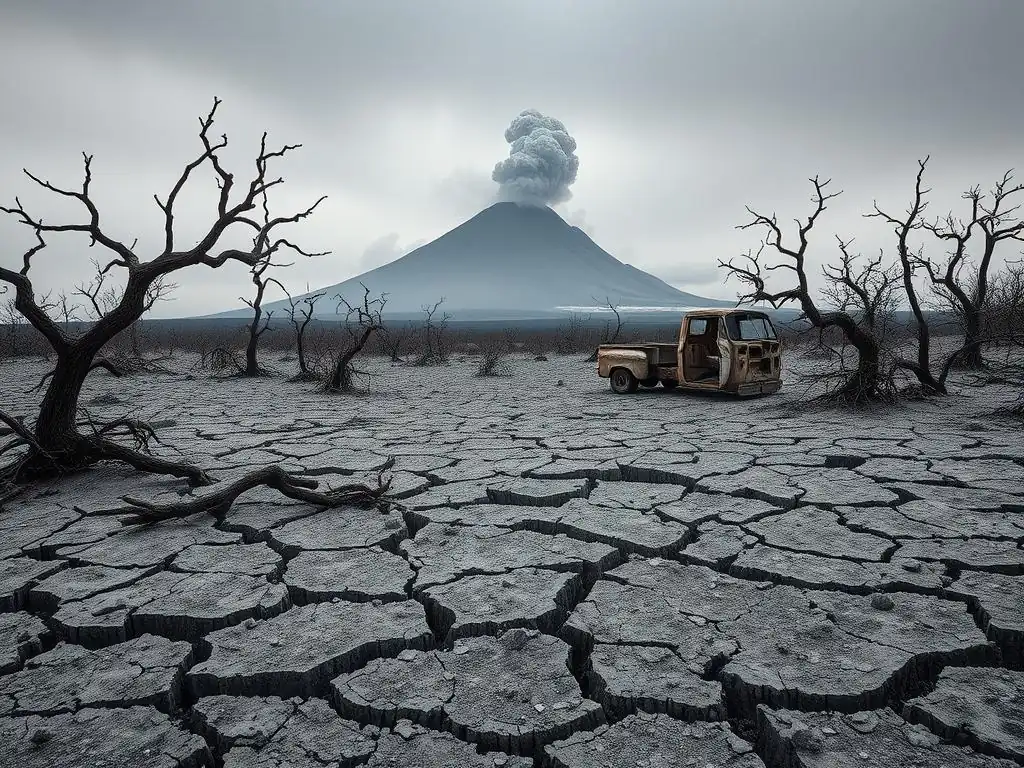
Mount Pelée, 1902: Lessons Learned from Catastrophic Loss
The 1902 eruption of Mount Pelée on the Caribbean island of Martinique stands as a tragic case study highlighting the devastating consequences of pyroclastic flows and the critical importance of heeding volcanic warnings. Prior to the major eruption on May 8, 1902, Mount Pelée exhibited several warning signs, including increased fumarolic activity, ashfall, and sulfurous odors in the city of Saint-Pierre, located at the foot of the volcano. Despite these escalating signs of unrest, many residents and officials dismissed the danger, partly due to skepticism and partly due to political and economic pressures to maintain normalcy.
On the morning of May 8th, a devastating pyroclastic flow swept down the slopes of Mount Pelée and engulfed Saint-Pierre. The city was virtually annihilated in minutes, and an estimated 30,000 people perished. Only a handful of people in the city survived, mostly those on ships in the harbor or in the city's prison, which had thick-walled cells.
The Mount Pelée disaster underscored the lethal nature of pyroclastic flows and the catastrophic consequences of ignoring or misinterpreting volcanic warning signs. The lessons learned from this tragedy emphasized the need for robust volcano monitoring, effective communication of volcanic hazards, and public education to ensure communities take volcanic threats seriously.
Mount Unzen, 1991: The Role of Early Warning and Evacuation
In contrast to the Mount Pelée tragedy, the 1991 eruption of Mount Unzen in Japan provides a case study demonstrating the effectiveness of early warning and evacuation in mitigating pyroclastic flow risks. Mount Unzen began erupting in November 1990, with lava dome growth occurring in its summit crater. Scientists closely monitored the volcano and recognized the potential for dome collapse and pyroclastic flow generation. As the lava dome grew and became increasingly unstable, pyroclastic flows started occurring in June 1991.
Based on the scientific assessments and increasing pyroclastic flow activity, authorities implemented a series of evacuations in the areas downslope of the volcano. These evacuations were largely successful in minimizing casualties, despite the occurrence of numerous pyroclastic flows throughout the eruption period. While the eruption did cause significant damage to infrastructure and agricultural land, the timely evacuations prevented a large-scale loss of life.
The Mount Unzen case study illustrates the crucial role of volcano monitoring, scientific assessment, and effective communication in enabling successful evacuations and reducing the human impact of pyroclastic flow hazards. However, it is also a reminder that even with effective monitoring, pyroclastic flows remain a significant threat and can still cause localized fatalities, as tragically demonstrated by the deaths of volcanologists and journalists caught in a pyroclastic flow at Unzen in June 1991.
Minimizing Risk: Improving Pyroclastic Flow Prediction and Mitigation
Research and Development: Advancing Our Understanding of Pyroclastic Flow Dynamics
Ongoing research and development are crucial for continually improving our understanding of pyroclastic flow dynamics and enhancing prediction and mitigation capabilities. Scientists are actively engaged in studying the complex processes that trigger pyroclastic flows, their flow behavior, and their interaction with the environment. This research involves a combination of field studies at active volcanoes, laboratory experiments simulating pyroclastic flow processes, and numerical modeling to simulate flow dynamics and propagation.
Advancements in monitoring technology are also playing a vital role. Researchers are developing more sensitive and robust instruments for detecting subtle changes in volcanic activity, such as improved seismic networks, more precise gas sensors, and advanced deformation monitoring techniques. Furthermore, efforts are underway to integrate different types of monitoring data and develop sophisticated algorithms for real-time hazard assessment and early warning systems. By continually advancing our scientific knowledge and technological capabilities, we can improve our ability to predict and mitigate the risks posed by pyroclastic flows.
Public Education: Empowering Communities with Knowledge and Awareness
Public education is a cornerstone of minimizing risk and empowering communities to live safely in volcanic areas threatened by pyroclastic flows. Knowledge and awareness are powerful tools that can significantly reduce vulnerability and enhance community resilience. Effective public education programs should aim to inform residents about the hazards of pyroclastic flows, the warning signs of volcanic unrest, and appropriate responses, including evacuation procedures.
These programs can utilize a variety of methods to reach diverse audiences, including community meetings, school programs, public service announcements, websites, and social media campaigns. Educational materials should be tailored to the local context and culture, and should be presented in clear, accessible language, avoiding overly technical jargon. Community workshops and drills can provide hands-on experience and reinforce key messages. By empowering communities with knowledge and awareness, we can foster a culture of preparedness and ensure that people are better equipped to protect themselves and their families when faced with the threat of pyroclastic flows.
Conclusion: Staying Vigilant in the Face of Pyroclastic Flow Hazards
Pyroclastic flows are indeed silent stalkers, capable of striking with devastating speed and force. While they can seem to appear without warning in the immediate moment of eruption, volcanoes often provide detectable precursors that, when carefully monitored and interpreted, can offer crucial warning signs. Recognizing these pyroclastic flow warning signs – changes in gas emissions, ground deformation, seismic activity, and crater morphology – is essential for mitigating the risks associated with these hazardous phenomena.
The continuous advancements in monitoring technology and ongoing research are improving our ability to detect volcanic unrest and assess pyroclastic flow potential. However, vigilance remains paramount. For communities living near volcanoes, preparedness, education, and a culture of heeding evacuation orders are the most effective defenses against the unpredictable nature of these volcanic hazards. By staying informed, engaged, and respectful of the power of volcanoes, we can strive to coexist with these dramatic forces of nature while minimizing the risks they pose.
Frequently Asked Questions
Can pyroclastic flows really strike without any warning signs?
While not always entirely without warning, pyroclastic flows can develop with extreme rapidity. Precursory signs like increased gas emissions or minor explosions may be subtle or even missed, making them seem to appear suddenly.
What are the most important pyroclastic flow warning signs that people should be aware of?
Key signs include increased volcanic activity like ash plumes, explosions, and ground swelling. Also, pay attention to official alerts from volcanologists and local authorities.
If I see an ash cloud forming on a volcano, does that automatically mean a pyroclastic flow is imminent?
Not necessarily. An ash cloud could indicate an impending pyroclastic flow, but it could also be from a less dangerous eruption. It's crucial to monitor the situation closely and heed any warnings.
What should I do if I receive a pyroclastic flow warning?
Immediately evacuate to higher ground or designated safe zones. Follow the instructions of local authorities and avoid low-lying areas near the volcano.
Are there any specific types of volcanoes that are more prone to generating pyroclastic flows?
Yes, stratovolcanoes are generally considered to be more prone to pyroclastic flows. This is due to their composition, structure, and the type of eruptions they typically produce - explosive eruptions.
Final Reflection: Embracing Vigilance in the Shadow of Volcanoes
The exploration of pyroclastic flow warning signs underscores a crucial reality: nature's power demands our unwavering respect and preparedness. While scientific advancements offer invaluable insights into predicting volcanic activity, the inherent unpredictability of these events necessitates a proactive approach to risk mitigation and community safety. The ability to recognize even subtle warning signs can be the difference between life and death.
The impact of understanding pyroclastic flows extends far beyond scientific curiosity; it directly influences the cultural and social fabric of communities living near active volcanoes. This knowledge empowers individuals to become active participants in their own safety, fostering a culture of preparedness and resilience. The only way to predict the future is to have power to shape the future.
- Eric Hoffer. This quote resonates deeply, reminding us that while we cannot control volcanic eruptions, we can control our response and preparedness.
As we conclude this exploration of pyroclastic flow warning signs, let us not simply absorb the information, but internalize it. Consider how you can contribute to raising awareness within your own communities, advocating for improved monitoring systems, and supporting initiatives that empower vulnerable populations. The lessons learned here are not just academic; they are a call to action, urging us to embrace vigilance and safeguard lives in the face of nature's awesome power.
Okay, here's a CTA designed for the end of an article titled "Silent Stalkers: Can Pyroclastic Flows Strike Without Warning?" published on Volcano Explorers (volcanoexplorers.org):
Uncover the Secrets & Prepare for Volcanic Hazards!
Thank you for exploring the unpredictable nature of pyroclastic flows with us. You now have a deeper understanding of these dangerous phenomena and the potential risks they pose. Now, let's translate that knowledge into proactive steps.
- Be Ready: Research evacuation routes in your area and share them with your family. This is your first and most crucial line of defense.
- Dig Deeper: Explore our website for firsthand accounts and expert analyses of past pyroclastic flow events. Understanding history helps predict the future.
- Join the Community: Share this article with friends and family to broaden awareness. Together, we can strengthen preparedness.
What steps will you take to prepare for a volcanic eruption in your area? Share your plans and questions in the comments below!