
Steam and Ash: The Surprising Power of Phreatic Volcanic Blasts

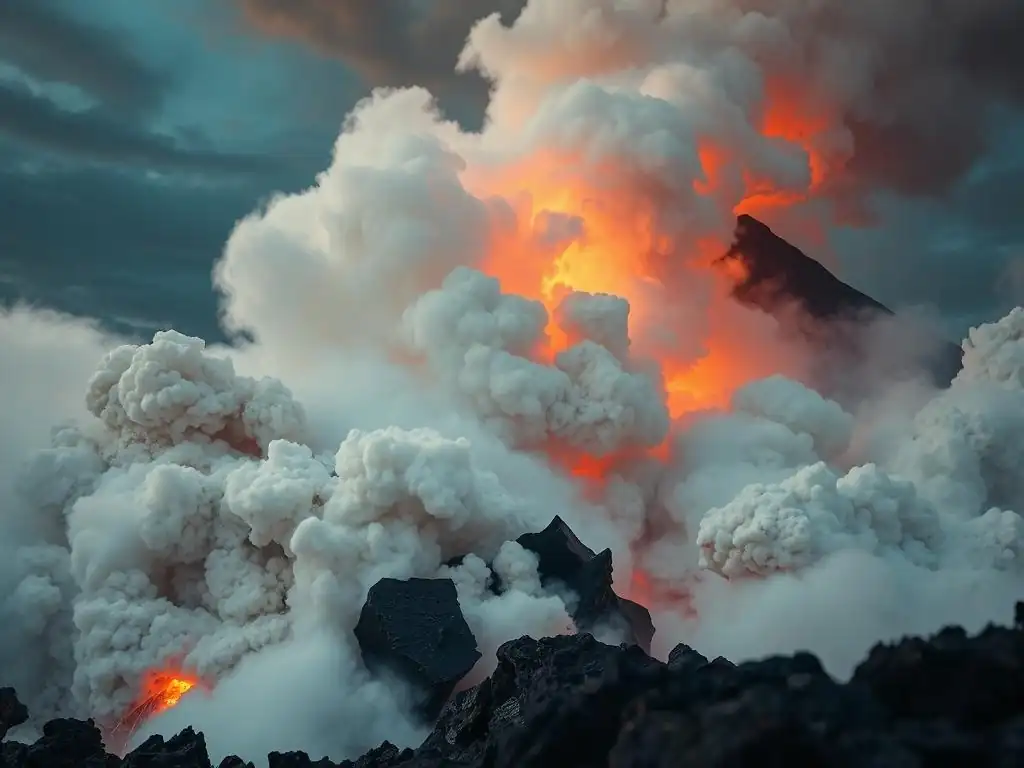
Welcome to Volcano Explorers, where the Earth breathes fire!
Ever wondered how a volcano can erupt without magma? Prepare to be amazed as we unravel the secrets behind phreatic volcanic blasts, those unpredictable steam-driven explosions that pack a surprising punch. Join us as we delve into the science, the danger, and the sheer power of these often-overlooked volcanic events. Your journey to understanding begins now...
- Understanding Phreatic Volcanic Blasts: An Introduction for Volcano Explorers
- The Science Behind Phreatic Eruptions: How Water Meets Magma
- The Characteristics of Phreatic Volcanic Blasts: Ash, Steam, and More
- Case Studies: Examining Notable Phreatic Eruptions Around the World
- Hazards Associated with Phreatic Volcanic Activity: Protecting Communities
- Monitoring and Predicting Phreatic Eruptions: The Role of Volcanologists
- Phreatic Eruptions and Volcanic Tourism: Balancing Exploration and Safety
- The Future of Phreatic Eruption Research: Ongoing Studies and Emerging Technologies
- Frequently Asked Questions
- Final Reflection: Embracing the Earth's Volatile Breath
- Unearth Your Inner Volcanologist!
Understanding Phreatic Volcanic Blasts: An Introduction for Volcano Explorers
What is a Phreatic Eruption? Defining Steam-Driven Volcanic Explosions
A phreatic eruption, often referred to as a steam-blast eruption, is a type of volcanic explosion driven by the heat from magma interacting with water. Unlike other volcanic eruptions that involve the direct ejection of molten rock, phreatic eruptions are characterized by the expulsion of steam, hot water, ash, rock fragments, and volcanic bombs.
The term "phreatic" itself comes from the Greek word "phrear," meaning well or underground water, aptly describing the crucial role of water in this type of eruption. Essentially, a phreatic eruption is a violent release of pressure built up when water is rapidly heated to steam by magma or hot volcanic rocks beneath the surface.
To put it simply, imagine pouring water onto a scorching hot pan. The immediate and explosive flash of steam is a miniature analogy for a phreatic eruption. In a volcanic context, the ‘hot pan’ is the subsurface heat source, and the ‘water’ is groundwater, surface water (like lakes or rivers), or even snow and ice that comes into contact with this heat.
This interaction causes instantaneous vaporization of water into steam, which expands rapidly and explosively. This rapid expansion is the driving force behind a phreatic blast, shattering surrounding rocks and propelling debris into the air. It's important to note that phreatic eruptions do not involve the direct eruption of magma; the explosion is purely steam-driven, making them distinct from other types of volcanic eruptions.
Why Phreatic Blasts are Often Underestimated: A Look at Their Destructive Potential
Phreatic eruptions, despite not involving fresh magma, can be surprisingly dangerous and destructive. Because they don't display the typical precursory signs of magma movement associated with magmatic eruptions, they can occur with little to no warning, catching people off guard. The sudden and forceful nature of these blasts can eject rock fragments, sometimes referred to as volcanic bombs if larger than 64mm, and ash over considerable distances, posing significant projectile hazards. Furthermore, the intense steam explosions can trigger landslides and mudflows, especially in areas with steep slopes and loose volcanic material.
The underestimation of phreatic eruption hazards often stems from the perception that they are ‘minor’ volcanic events compared to lava flows or pyroclastic flows. However, history shows us otherwise. The 1997 phreatic eruption at Ruapehu volcano in New Zealand, for example, sent a surge of water and debris down the mountain, causing damage to ski fields and infrastructure.
While no lives were lost in this particular event due to timely warnings, it highlighted the potential for disruption and destruction. Moreover, the unpredictability of phreatic eruptions, coupled with their potential for sudden onset, makes them a significant hazard in volcanic regions.
The Science Behind Phreatic Eruptions: How Water Meets Magma
The Role of Groundwater and Surface Water in Phreatic Explosions
Water is the essential ingredient in a phreatic eruption. This water can come from various sources including groundwater aquifers, surface water bodies like lakes and rivers, rainwater percolating through the ground, or even snow and ice cover in volcanic regions. The critical factor is the proximity of these water sources to a heat source, typically magma or hot volcanic rocks beneath the surface.
In many volcanic systems, hydrothermal systems are already present, where groundwater is heated by the Earth's geothermal gradient and volcanic activity. Phreatic eruptions often occur when there's a sudden increase in heat input or a change in the hydrothermal system that leads to rapid vaporization of water.
The geological setting plays a significant role in determining the likelihood and characteristics of phreatic eruptions. Volcanoes located in areas with abundant groundwater or near bodies of water are more susceptible. For instance, volcanic islands or coastal volcanoes have a higher probability of phreatic activity due to the readily available seawater or groundwater. Similarly, volcanoes in regions with high rainfall or snowmelt can experience increased phreatic activity as water infiltrates the volcanic edifice. The depth and permeability of the surrounding rocks also influence how water interacts with the heat source and the nature of the resulting phreatic explosion.
Heat Transfer and the Formation of Superheated Steam: The Engine of a Phreatic Blast
The engine driving a phreatic eruption is the rapid and efficient transfer of heat from a hot volcanic source to water. This heat source can be magma residing at shallow depths, hot solidified volcanic rocks still retaining significant thermal energy, or even geothermal systems heated by deeper magma bodies. When water comes into contact with these high-temperature materials, it undergoes almost instantaneous vaporization. This process is far more rapid and explosive than the typical boiling of water at atmospheric pressure. Confined water, under pressure beneath the surface, can be heated far beyond its normal boiling point, becoming superheated.
As superheated water flashes into steam, it expands in volume dramatically - over 1,700 times at atmospheric pressure and 100°C. This rapid expansion creates an immense pressure wave. If the surrounding rocks are unable to contain this pressure, a violent explosion occurs. The efficiency of heat transfer depends on factors like the temperature difference between the heat source and the water, the surface area of contact, and the presence of fractures or pathways that facilitate water infiltration. The more efficiently heat is transferred, the more rapid and powerful the steam generation, and consequently, the more explosive the phreatic eruption.
Distinguishing Phreatic Eruptions from Phreatomagmatic and Magmatic Eruptions
Understanding the differences between phreatic, phreatomagmatic, and magmatic eruptions is crucial for hazard assessment and risk mitigation in volcanic areas. The key distinction lies in the involvement of magma in the eruption process. A phreatic eruption, as we've discussed, is solely driven by steam explosions resulting from water interacting with heat, with no direct ejection of fresh magma. In contrast, a magmatic eruption involves the eruption of molten rock (magma) onto the surface, often accompanied by volcanic gases and ash. These eruptions are driven by the pressure build-up from dissolved gases within the magma itself.
Phreatomagmatic eruptions represent an intermediate type, where magma and water interact directly, resulting in explosive eruptions. The interaction is more intimate than in phreatic eruptions, leading to more energetic explosions and the fragmentation of both magma and surrounding rocks. Phreatomagmatic eruptions typically produce finer ash particles and a wider dispersal of volcanic material compared to phreatic eruptions.
While phreatic eruptions are characterized by steam and fragmented rocks, magmatic eruptions are defined by the presence of fresh lava and volcanic gases, and phreatomagmatic eruptions display a mixture of features, often including juvenile volcanic material alongside steam and fragmented rocks. Analyzing the erupted material is key to differentiating these eruption types.
The Characteristics of Phreatic Volcanic Blasts: Ash, Steam, and More
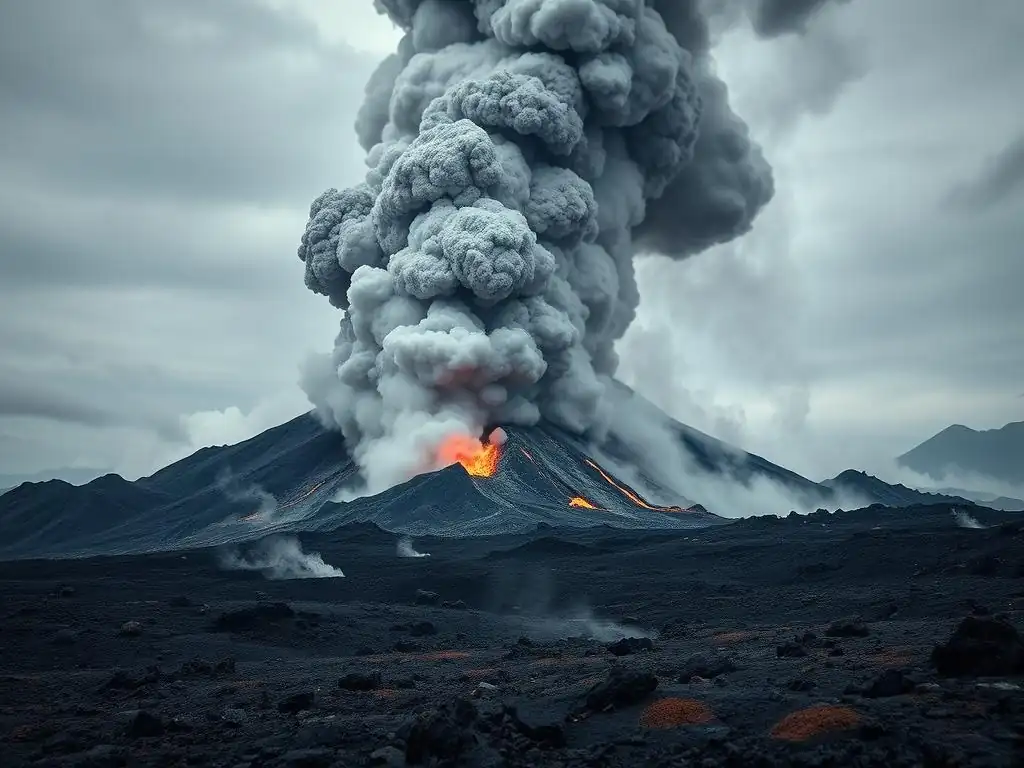
Absence of Fresh Magma: A Key Indicator of a Phreatic Event
One of the defining characteristics of a phreatic eruption is the absence of freshly erupted magma in the ejected material. While the eruption can expel significant quantities of ash, rock fragments, and steam, these materials are all derived from pre-existing rocks surrounding the vent, not from molten rock originating from deeper within the Earth. This lack of juvenile volcanic material (newly formed magma) is a primary way volcanologists distinguish phreatic eruptions from other types of volcanic explosions.
Following a suspected phreatic eruption, geological surveys and analyses of the erupted material are crucial. Scientists examine the ash and debris for the presence of glassy, vesicular (bubbly) fragments that would indicate the presence of new magma. In a purely phreatic eruption, such juvenile material will be absent. Instead, the ejecta will consist of hydrothermally altered rocks, older volcanic fragments, and minerals that are consistent with the local geology but not indicative of a recent magmatic source. This absence of fresh magma is a key diagnostic tool for confirming a phreatic eruption and understanding the underlying volcanic processes.
Ash Plumes and Debris Ejection: What to Expect During a Phreatic Explosion
Despite the absence of fresh magma, phreatic eruptions can still produce impressive and potentially hazardous ash plumes and eject debris over considerable distances. The explosive force of the steam blast is capable of fragmenting surrounding rocks into fine ash particles and larger rock fragments. These materials are then propelled upwards into the atmosphere, forming ash plumes that can resemble those of magmatic eruptions, at least in initial appearance. The height and extent of the ash plume depend on the energy of the explosion and atmospheric conditions.
The debris ejected in a phreatic eruption can range in size from fine ash particles to large blocks or volcanic bombs. The distribution of this ejecta is typically radial around the vent, with larger fragments falling closer to the eruption site and finer ash being carried further downwind.
The force of the explosion can also create impact craters around the vent, further evidence of the powerful nature of these steam-driven blasts. While the volume of ejected material in phreatic eruptions is often less than in large magmatic eruptions, the suddenness and proximity of the explosion still pose significant hazards from falling debris and ashfall.
The Size and Scale of Phreatic Eruptions: From Small Bursts to Significant Events
Phreatic eruptions exhibit a wide range in size and scale, from small, localized steam bursts to more substantial explosions that can impact wider areas. Smaller phreatic eruptions might manifest as sudden steam plumes emerging from hydrothermal areas, fumaroles, or crater lakes. These smaller events might eject only limited amounts of ash and debris, posing localized hazards primarily in the immediate vicinity of the vent. They can occur frequently in active hydrothermal systems, especially after periods of increased rainfall or geothermal activity.
On the other end of the spectrum, larger phreatic eruptions can be quite powerful and impactful. These more significant events can produce substantial ash plumes reaching several kilometers in height, eject larger volumes of debris over broader areas, and even trigger secondary hazards like lahars or landslides.
While generally smaller in magnitude than major magmatic eruptions, large phreatic blasts can still cause significant disruption, damage infrastructure, and pose risks to life, particularly due to their often-unpredictable nature and rapid onset. The scale of a phreatic eruption is influenced by factors such as the volume of water involved, the efficiency of heat transfer, and the strength of the surrounding rocks.
Case Studies: Examining Notable Phreatic Eruptions Around the World
Mount Ontake 2014: A Deadly Phreatic Eruption in Japan
The 2014 eruption of Mount Ontake in Japan serves as a stark reminder of the deadly potential of phreatic eruptions. On September 27, 2014, without significant precursory signs, Mount Ontake, a popular hiking destination, experienced a sudden and powerful phreatic eruption. The eruption caught hundreds of hikers by surprise, resulting in 58 fatalities and several injuries, making it Japan's deadliest volcanic disaster in the post-war era. The eruption was characterized by a sudden steam explosion that ejected hot rocks, ash, and volcanic gases over a wide area surrounding the summit.
Analysis of the erupted material confirmed that it was indeed a phreatic eruption, with no evidence of fresh magma. The explosion was attributed to the rapid vaporization of groundwater heated by underlying volcanic activity. The lack of clear precursory signals, such as significant ground deformation or changes in volcanic gas emissions, contributed to the surprise and the high casualty count. The Mount Ontake disaster highlighted the challenges in predicting phreatic eruptions and the importance of public education and preparedness in volcanic regions, even for volcanoes not traditionally considered highly dangerous due to magmatic activity.
Taal Volcano 2020: A Widespread Phreatic Event in the Philippines
The January 2020 eruption of Taal Volcano in the Philippines provides an example of a widespread phreatic event that rapidly escalated. Initially classified as phreatic, the eruption began on January 12, 2020, with steam-driven explosions from the main crater lake. These initial blasts generated ash plumes that reached several kilometers in height, prompting the evacuation of surrounding communities. While the initial phase was phreatic, the eruption quickly transitioned into a phreatomagmatic event, and eventually exhibited some magmatic characteristics, although it did not progress to a major magmatic eruption.
The Taal eruption demonstrated how phreatic activity can be an initial phase of a more complex volcanic event. The interaction of hot volcanic gases and magma with the crater lake water triggered the initial phreatic explosions. As the eruption progressed, the interaction became more intense, leading to phreatomagmatic bursts and the ejection of some juvenile material. The event caused widespread ashfall across the region, impacting infrastructure, agriculture, and air quality. The Taal 2020 eruption underscored the dynamic nature of volcanic eruptions and how phreatic activity can be an indicator of escalating volcanic unrest.
Analyzing the Common Factors and Unique Aspects of Different Phreatic Eruptions
Comparing case studies like Mount Ontake and Taal Volcano reveals both common threads and unique aspects of phreatic eruptions. A common factor is the rapid and often unexpected onset, making them challenging to forecast. Both eruptions involved the interaction of water with a volcanic heat source, leading to steam explosions. Both events also produced ash plumes and ejected debris, posing hazards to surrounding areas.
However, they also exhibit unique characteristics. Mount Ontake was a purely phreatic eruption with minimal precursory activity and tragic consequences due to the surprise nature. Taal, while starting phreatically, evolved into a more complex event, showcasing the potential for phreatic activity to be a precursor to further volcanic unrest.
Analyzing these and other phreatic eruptions globally helps volcanologists better understand the processes driving these events, improve monitoring strategies, and develop more effective hazard assessments. Factors like the geological setting, the type of volcanic system, the availability of water, and the nature of the heat source all contribute to the specific characteristics of each phreatic eruption. Continued research and analysis of past and future phreatic events are crucial for mitigating the risks associated with these often-underestimated volcanic hazards.
Hazards Associated with Phreatic Volcanic Activity: Protecting Communities
Steam Explosions and Projectile Hazards: Understanding the Immediate Dangers
The most immediate and direct hazards from phreatic eruptions stem from the steam explosions themselves and the projectiles they launch. The force of the steam blast can be powerful enough to shatter rocks and eject them at high velocities in all directions. These projectiles, ranging from small rock fragments to larger volcanic bombs, pose a significant impact hazard, capable of causing serious injuries or fatalities to anyone in the vicinity of the eruption vent. The danger zone is typically within a few hundred meters to a kilometer of the vent, but larger explosions can project debris further.
Beyond the immediate blast zone, smaller rock fragments and ash can still pose hazards. Falling rocks can cause injuries and damage property. Ashfall, while generally less dense than rock projectiles, can irritate the eyes and respiratory system, especially for vulnerable populations. The sudden and forceful nature of phreatic explosions means that these projectile hazards can materialize with little to no warning, making it crucial to maintain a safe distance from known hydrothermal areas and active volcanic vents, particularly in regions with a history of phreatic activity.
Lahar Formation and Mudflows: The Risks Associated with Water-Saturated Ash
Phreatic eruptions can indirectly trigger secondary hazards like lahars, which are volcanic mudflows or debris flows. Lahars are particularly dangerous because they can travel rapidly down river valleys, far beyond the immediate eruption site, burying landscapes and destroying infrastructure in their path. The formation of lahars in the context of phreatic eruptions typically occurs when the eruption deposits significant amounts of ash and fragmented rock on the slopes of a volcano, and this loose material becomes saturated with water.
The water source for lahar formation can be rainfall, snowmelt, or even water released from the hydrothermal system itself during the eruption. Once the ash and debris become water-saturated, gravity can initiate a flow down slope. Lahars are dense, fast-moving slurries capable of carrying rocks, trees, and even buildings. In areas with steep volcanic slopes and seasonal rainfall or snow, the risk of lahar formation following a phreatic eruption is a significant concern, requiring careful monitoring and land-use planning in vulnerable valleys and drainage systems.
Volcanic Gas Emissions and Air Quality: Potential Health Impacts of Phreatic Activity
While phreatic eruptions are primarily steam-driven, they can still release volcanic gases into the atmosphere, potentially impacting air quality and posing health risks. The source of these gases is not directly from magma, as in magmatic eruptions, but rather from the hydrothermal system or from degassing of hot rocks involved in the eruption process. Gases like sulfur dioxide (SO2), hydrogen sulfide (H2S), and carbon dioxide (CO2) can be released during phreatic activity.
Sulfur dioxide, even at relatively low concentrations, can irritate the respiratory system and exacerbate pre-existing respiratory conditions like asthma. Hydrogen sulfide is known for its rotten egg smell and can be toxic at higher concentrations. Carbon dioxide, while odorless and colorless, can accumulate in low-lying areas and displace oxygen, posing a suffocation hazard in confined spaces. The extent and concentration of gas emissions during phreatic eruptions are generally lower than in major magmatic eruptions, but in areas with frequent phreatic activity or poor air circulation, the cumulative effect of gas release can still be a concern for public health.
Monitoring and Predicting Phreatic Eruptions: The Role of Volcanologists
Detecting Changes in Hydrothermal Systems: Identifying Potential Phreatic Activity
Monitoring hydrothermal systems is crucial for detecting potential phreatic activity. Volcanologists employ various techniques to track changes in these systems that might precede an eruption. One key indicator is changes in fumarole activity – the vents that release steam and volcanic gases. Increased steam output, changes in gas composition, or a rise in fumarole temperatures can signal increased heat input from below and a potential build-up of pressure within the hydrothermal system. Temperature monitoring of hot springs and crater lakes can also reveal changes in the thermal regime.
Another important aspect is monitoring the chemistry of hydrothermal fluids. Changes in the concentration of certain chemical species, such as chloride, sulfate, or specific gas ratios, can indicate alterations in the underground processes and potentially signal an increased risk of phreatic eruption. Remote sensing techniques, such as thermal infrared imaging, can be used to map temperature variations across hydrothermal areas and detect subtle changes that might be missed by ground-based observations. By continuously monitoring these parameters, volcanologists can gain insights into the state of hydrothermal systems and identify potential precursors to phreatic eruptions.
Ground Deformation and Seismic Monitoring: Tools for Predicting Imminent Eruptions
Ground deformation and seismic monitoring are also valuable tools for predicting phreatic eruptions, although their interpretation can be more complex compared to magmatic eruptions. Ground deformation, measured using techniques like GPS and InSAR (Interferometric Synthetic Aperture Radar), can detect subtle swelling or changes in the shape of the volcano's surface. While large-scale deformation associated with magma movement might be absent in purely phreatic eruptions, localized deformation around hydrothermal areas could indicate pressure build-up or fluid movement related to an impending steam blast.
Seismic monitoring is particularly important. While phreatic eruptions may not be preceded by the same type of volcanic earthquakes associated with magma ascent, they can generate characteristic seismic signals. These signals might include short-duration, high-frequency events related to fluid movement, fracturing of rocks due to thermal stress, or small explosions within the hydrothermal system. Analyzing the frequency, intensity, and location of these seismic events can provide valuable clues about the state of unrest and the potential for a phreatic eruption. Combining ground deformation and seismic data with hydrothermal monitoring provides a more comprehensive picture for assessing phreatic eruption hazards.
Challenges in Forecasting Phreatic Eruptions: The Unpredictable Nature of Steam Explosions
Despite advancements in monitoring techniques, forecasting phreatic eruptions remains a significant challenge due to their inherently unpredictable nature. Unlike magmatic eruptions, which often exhibit clear precursory signals related to magma ascent, phreatic eruptions can occur with minimal or subtle warning signs. The rapid and localized nature of steam explosions, driven by complex interactions between heat and water, makes them difficult to predict with high precision.
The lack of consistent and easily detectable precursors is a major hurdle. While changes in hydrothermal systems, ground deformation, and seismicity can be observed, these signals can be subtle, ambiguous, or easily masked by background noise. Furthermore, the timescales involved in phreatic eruptions can be very short, with the transition from unrest to eruption occurring rapidly, sometimes within hours or even minutes.
This short lead time limits the opportunity for issuing timely warnings and implementing effective evacuation measures. Improving forecasting capabilities for phreatic eruptions requires ongoing research into the specific processes driving these events and the development of more sensitive and reliable monitoring techniques that can detect subtle precursors with greater certainty.
Phreatic Eruptions and Volcanic Tourism: Balancing Exploration and Safety
Understanding the Risks Before Visiting a Volcanically Active Area
Volcanic areas, including those prone to phreatic eruptions, are often popular tourist destinations due to their dramatic landscapes and unique geothermal features. However, it's crucial for visitors to understand the inherent risks associated with these environments, particularly the potential for sudden phreatic eruptions. Before visiting a volcanically active area, tourists should research the volcano's history, recent activity, and potential hazards. Information can be obtained from volcano observatories, geological surveys, and tourism authorities.
Understanding that phreatic eruptions can occur with little warning is paramount. Visitors should be aware of the signs of volcanic unrest, such as increased steam emissions, changes in hot spring activity, unusual smells (like sulfur), and ground deformation. Heeding warnings and advisories issued by local authorities is essential. Tourists should also be aware of designated safe zones and evacuation routes in case of an eruption. Responsible volcanic tourism requires a proactive approach to risk assessment and a commitment to prioritizing safety.
Guidelines for Safe Exploration Near Hydrothermal Features and Active Volcanoes
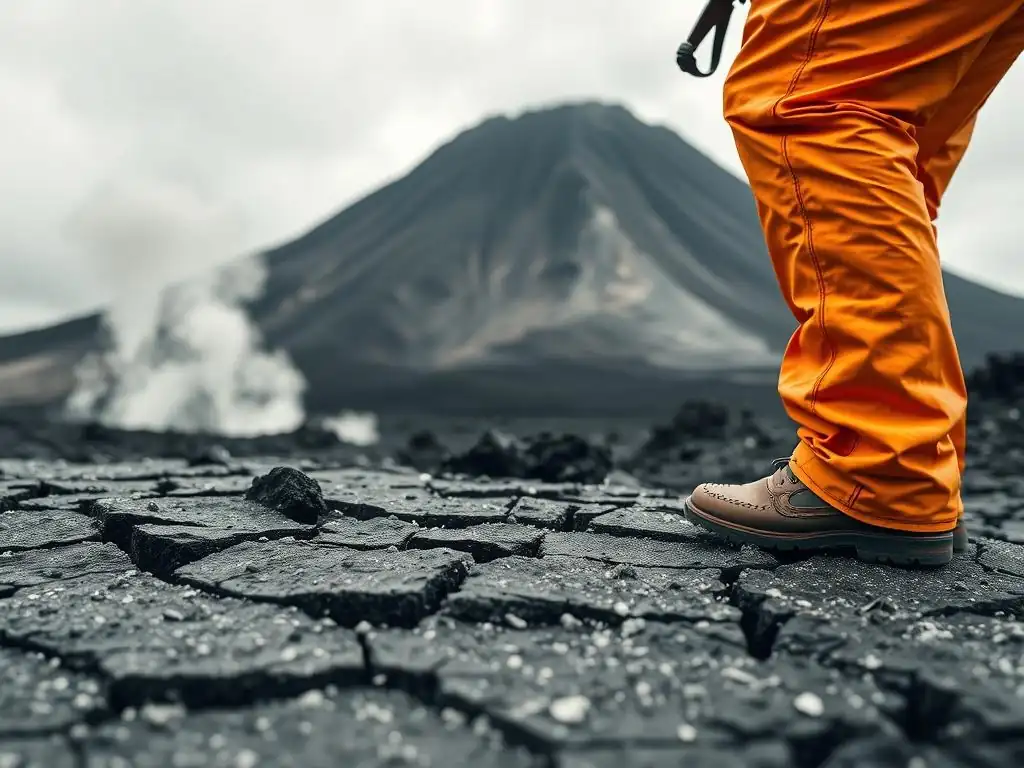
When exploring near hydrothermal features and active volcanoes, following specific safety guidelines is crucial to minimize risks. Maintaining a safe distance from fumaroles, hot springs, and crater lakes is paramount. These areas are often the sites of phreatic eruptions, and the immediate vicinity is the most hazardous zone. Staying on marked trails and avoiding venturing into restricted areas is essential. Unstable ground, hidden steam vents, and hazardous gases can be present off-trail.
Paying attention to warning signs and changes in volcanic activity is critical. If you notice increased steam emissions, sudden noises, or feel ground shaking, move away from the area immediately and seek guidance from park rangers or local authorities. Wearing appropriate clothing and footwear is important. Sturdy shoes are necessary for uneven terrain, and layers of clothing can protect against changing weather conditions and potential ashfall. Carrying a basic safety kit, including water, food, a flashlight, and a first-aid kit, is also recommended. Respecting the power of nature and exercising caution are key to safe volcanic exploration.
Respecting Volcanic Environments: Minimizing Impact and Ensuring Sustainable Tourism
Volcanic environments are fragile ecosystems that deserve respect and careful management. Sustainable volcanic tourism aims to minimize the impact of tourism on these environments while ensuring the safety and enjoyment of visitors. Staying on designated trails helps to prevent erosion and damage to vegetation. Avoiding littering and disposing of waste properly is essential to maintain the natural beauty of volcanic landscapes. Refraining from disturbing wildlife or geological features is also important.
Supporting local communities and businesses that promote responsible tourism practices contributes to the long-term sustainability of volcanic tourism. Educating oneself and others about volcanic hazards and environmental conservation fosters a culture of respect for these powerful and dynamic natural environments. By practicing responsible tourism, visitors can enjoy the wonders of volcanoes while ensuring their preservation for future generations.
The Future of Phreatic Eruption Research: Ongoing Studies and Emerging Technologies
Improving Monitoring Techniques and Early Warning Systems
Ongoing research is focused on improving monitoring techniques specifically tailored to phreatic eruptions and developing more effective early warning systems. One area of focus is enhancing seismic monitoring to better detect and interpret subtle seismic signals associated with fluid movement and pressure changes in hydrothermal systems. Developing more sophisticated algorithms and machine learning techniques to analyze seismic data in real-time could improve the detection of precursory activity.
Another avenue of research involves refining ground deformation monitoring techniques to detect localized and subtle deformation patterns that might precede phreatic eruptions. Integrating data from multiple monitoring networks, including seismic, deformation, gas, and hydrothermal monitoring, into comprehensive early warning systems is crucial. Developing probabilistic forecasting models that can assess the likelihood of phreatic eruptions based on real-time monitoring data is also a key area of advancement. The goal is to move towards more reliable and timely warnings that can effectively mitigate the risks associated with these unpredictable volcanic events.
Understanding the Long-Term Impacts of Phreatic Activity on Landscapes
Research is also expanding to understand the long-term impacts of phreatic activity on volcanic landscapes. Phreatic eruptions, even relatively small ones, can significantly alter hydrothermal systems, create new vents and craters, and modify drainage patterns. Studying the geomorphic effects of past phreatic eruptions helps to assess the potential for future landscape changes and to understand the long-term evolution of volcanic areas.
Investigating the ecological impacts of phreatic eruptions is another important area. Ashfall and hydrothermal alteration can affect soil chemistry, vegetation, and water quality. Understanding how ecosystems recover from phreatic disturbances and how they adapt to ongoing volcanic activity is crucial for long-term environmental management in volcanic regions. Researching the long-term socio-economic impacts of phreatic eruptions on communities living near active volcanoes is also important for developing sustainable land-use planning and disaster preparedness strategies.
The Importance of Public Education and Awareness Regarding Phreatic Volcanic Hazards
Public education and awareness are paramount for mitigating the risks associated with phreatic volcanic hazards. Many people living in or visiting volcanic areas may not fully understand the nature of phreatic eruptions or their potential dangers. Educational programs and outreach initiatives are essential to inform the public about phreatic eruption hazards, warning signs, and appropriate safety measures. This includes providing clear and accessible information through websites, brochures, public presentations, and community workshops.
Developing effective communication strategies to disseminate warnings and advisories during volcanic unrest is crucial. Ensuring that warning messages are timely, understandable, and reach all segments of the population is a key challenge. Community preparedness programs, including evacuation drills and emergency response training, are essential to build resilience and reduce vulnerability to phreatic eruption hazards. Raising public awareness and promoting a culture of volcanic safety are vital steps in protecting communities living with the dynamic power of volcanoes.
Frequently Asked Questions
What exactly is a phreatic volcanic blast?
A phreatic volcanic blast is an eruption driven by steam, not by magma. It occurs when magma heats groundwater or surface water, causing it to flash into steam and erupt explosively.
How is a phreatic eruption different from a typical volcanic eruption?
Unlike typical eruptions, phreatic eruptions don't involve fresh magma. They are characterized by the ejection of steam, ash, and pre-existing rock, rather than molten lava.
Are phreatic eruptions predictable?
Phreatic eruptions can be difficult to predict because they are often triggered by subtle changes in groundwater systems. They can occur with little or no warning, making them particularly dangerous.
What are the main hazards associated with phreatic blasts?
The primary hazards include steam explosions, ashfall, and the ejection of rocks and debris. These can cause significant damage and pose a risk to life, even in relatively small eruptions.
Why are phreatic eruptions considered "surprising" or unexpected?
They are often surprising because they can occur at volcanoes that show little or no other signs of activity. This lack of obvious warning signs can make them particularly hazardous and unexpected.
Final Reflection: Embracing the Earth's Volatile Breath
The exploration of phreatic volcanic blasts, as detailed in this article, highlights a crucial intersection between geological forces and human understanding. These seemingly small, steam-driven eruptions are a potent reminder of the Earth's raw power and the importance of respecting its unpredictable nature. Understanding the mechanics and potential impact of phreatic blasts is not just an academic exercise, but a vital step in mitigating risks and fostering resilience in volcanic regions worldwide.
The subtle, often overlooked nature of phreatic eruptions underscores a broader lesson about the world around us. We often focus on the grand spectacles, the fiery lava flows and towering ash plumes, but it's the quieter, less dramatic events that can sometimes catch us most off guard. The greatest deception men suffer is from their own opinions.
- Leonardo da Vinci. This quote resonates deeply when considering phreatic blasts; their deceptively simple nature can lead to underestimation and, consequently, increased vulnerability.
As you reflect on the information presented here, consider the hidden forces at play in your own life. Are there subtle signs you're overlooking? Are you prepared for the unexpected shifts that can arise from seemingly insignificant sources? Let this exploration of phreatic volcanic blasts serve as a catalyst for deeper awareness, encouraging you to observe, learn, and prepare for the unpredictable currents that shape our world.
Okay, I'm ready to craft a CTA for the end of a "Steam and Ash: The Surprising Power of Phreatic Volcanic Blasts" article on volcanoexplorers.org. Here it is:
Unearth Your Inner Volcanologist!
Thank you for delving into the fascinating world of phreatic eruptions with us. We hope you now have a newfound appreciation for the raw power and unpredictability hidden beneath the Earth's surface. Now, it's time to put that knowledge into action!
- Dig deeper: Research a specific phreatic eruption event (e.g., Mount Ontake 2014) and share your findings with a local science club or school group.
- Support Volcano Explorers' mission:Donate to our research and outreach programs, helping us to continue shedding light on these incredible geological phenomena and educate future volcanologists.
- Test your skills: Build a simple model of a phreatic volcanic system using household materials. Can you demonstrate how the interaction of water and magma leads to an explosive eruption?
What surprising fact about phreatic blasts will you share with others today to spark their curiosity about the hidden forces shaping our planet?