
Thermal Signatures of Different Volcano Types: Comparing Stratovolcanoes and Shield Volcanoes

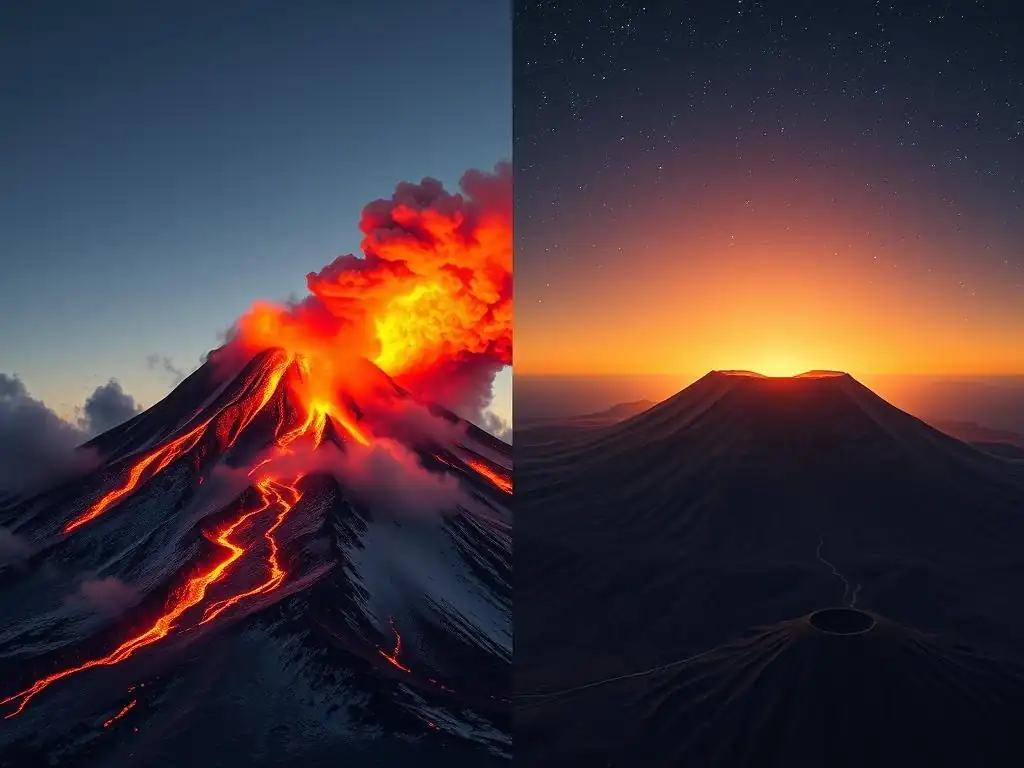
Welcome to Volcano Explorers, where the Earth's fiery heart is revealed. Ever wondered how scientists "see" inside a volcano, predicting its next move? This article plunges into the fascinating world of thermal signatures of volcano types, comparing the unique heat profiles of stratovolcanoes and shield volcanoes. Uncover the secrets hidden within their thermal fingerprints and discover how this knowledge helps us understand, and even anticipate, the power of these geological giants. Are you ready to explore?
- Introduction to Volcanic Thermal Signatures and Volcano Types
- Stratovolcanoes: Thermal Characteristics and Patterns
-
Shield Volcanoes: Thermal Characteristics and Patterns
- Defining Shield Volcanoes: Formation and Geological Features
- Typical Thermal Signatures of Shield Volcanoes: Effusive Eruptions and Lava Flows
- Factors Influencing Shield Volcano Thermal Emissions: Lava Composition and Eruption Style
- Case Studies: Analyzing Thermal Activity in Specific Shield Volcanoes
- Comparative Analysis: Thermal Signatures of Stratovolcanoes vs. Shield Volcanoes
- Advanced Thermal Monitoring Techniques for Volcanoes
- Applications of Thermal Signatures in Volcano Monitoring and Prediction
- Challenges and Future Directions in Volcano Thermal Monitoring
- Conclusion: Leveraging Thermal Signatures for Volcano Exploration and Safety
-
Frequently Asked Questions
- What are thermal signatures, and why are they important in studying volcanoes?
- How do the thermal signatures of stratovolcanoes differ from those of shield volcanoes?
- What factors influence the thermal signature of a particular volcano type?
- What instruments are used to measure the thermal signatures of volcanoes?
- Can thermal signatures alone predict volcanic eruptions?
- Final Reflection: Unveiling Earth's Fiery Secrets
- Ignite Your Inner Volcanologist: Dive Deeper Now!
Introduction to Volcanic Thermal Signatures and Volcano Types
Understanding Thermal Signatures in Volcanic Activity: An Overview
Volcanic thermal signatures refer to the patterns of heat emitted from volcanoes, which can be detected and measured using various techniques. These signatures are crucial indicators of volcanic activity as they reflect the movement of magma and gases beneath the surface and the processes occurring within the volcanic edifice. The Earth's internal heat, generated by radioactive decay and primordial heat, drives volcanic activity.
When magma rises towards the surface, it carries significant thermal energy, causing changes in the temperature of the surrounding rocks and gases. These temperature variations create distinct thermal signatures that can be observed using instruments sensitive to infrared radiation. Different volcanic processes, such as magma ascent, degassing, lava effusion, and pyroclastic flows, each produce unique thermal signatures, making their analysis vital for understanding volcanic behavior.
Monitoring these thermal signatures provides valuable insights into the state of a volcano, allowing volcanologists to track changes that may precede an eruption. For instance, an increase in the thermal output of a volcano can signify magma accumulation at shallow depths, increased gas release, or the onset of lava effusion.
Conversely, a decrease in thermal output might indicate a lull in activity or a change in the style of eruption. Understanding the nuances of volcanic thermal signatures is essential not only for fundamental volcanological research but also for effective volcano monitoring and hazard mitigation, especially in regions with populations living near active volcanic centers.
Importance of Thermal Monitoring in Volcano Exploration and Hazard Assessment
Thermal monitoring plays a pivotal role in both volcano exploration and hazard assessment. In exploration, it helps scientists understand the internal workings of volcanoes, including magma pathways, storage zones, and heat transfer mechanisms. By mapping the thermal anomalies of a volcanic system, researchers can gain insights into its structure and dynamics, contributing to a better understanding of volcanic processes. This is especially important for volcanoes in remote or inaccessible areas where direct observation is challenging. Thermal data can reveal hidden features and ongoing processes that might not be apparent through other monitoring techniques alone.
From a hazard assessment perspective, thermal monitoring is a critical component of early warning systems for volcanic eruptions. Changes in thermal output can be precursors to eruptive activity, sometimes occurring weeks, days, or even hours before an eruption onset. Detecting and interpreting these thermal anomalies allows for timely alerts and warnings to be issued to at-risk communities, enabling evacuations and mitigating potential disasters.
Continuous thermal monitoring, combined with other geophysical and geochemical data, enhances the accuracy and reliability of eruption forecasts, ultimately saving lives and reducing the socio-economic impact of volcanic eruptions. Furthermore, post-eruption thermal monitoring is also crucial for tracking the cooling of lava flows and pyroclastic deposits, assessing the ongoing hazards, and informing decisions related to re-occupation and recovery efforts.
Stratovolcanoes: Thermal Characteristics and Patterns
Defining Stratovolcanoes: Formation and Geological Features
Stratovolcanoes, also known as composite volcanoes, are characterized by their steep, conical shape, built up by many layers (strata) of hardened lava, tephra, pumice, and volcanic ash. They are typically formed above subduction zones, where one tectonic plate slides beneath another.
The subducting plate releases water into the mantle wedge above, lowering the melting point of mantle rocks and generating magma. This magma, often andesitic to dacitic in composition, is viscous and rich in silica and volatiles, leading to explosive eruptions and the formation of steep slopes due to the relatively short flow distances of the viscous lava and pyroclastic flows.
Geologically, stratovolcanoes are complex structures often featuring a central conduit system that feeds magma to the summit crater. They can also have parasitic cones and vents on their flanks, resulting from magma intrusions and eruptions along zones of weakness in the volcanic edifice. The internal structure of a stratovolcano reflects its eruptive history, with alternating layers of lava flows providing structural strength and layers of ash and tephra representing explosive events. Examples of iconic stratovolcanoes include Mount Fuji in Japan, Mount Rainier in the United States, and Mount Vesuvius in Italy, each exhibiting distinct geological features and thermal characteristics.
Typical Thermal Signatures of Stratovolcanoes: High Heat Flux and Magma Dynamics
Stratovolcanoes, driven by their viscous magma and explosive eruptive style, often exhibit distinct thermal signatures characterized by relatively high heat flux compared to other volcano types. This elevated heat output is primarily attributed to the accumulation of magma in shallow reservoirs beneath the summit, the degassing of volatile-rich magma, and the frequent occurrence of explosive eruptions and pyroclastic flows. Measurements from satellites and ground-based instruments often show localized thermal anomalies concentrated around the summit crater and vent areas of stratovolcanoes.
The thermal patterns of stratovolcanoes can be dynamic and fluctuate significantly over time. Pre-eruptive phases may be marked by a gradual or rapid increase in thermal output as magma ascends and accumulates near the surface. During explosive eruptions, intense thermal signatures are associated with the ejection of hot pyroclastic material, gas plumes, and the exposure of hot vent areas. Even during periods of quiescence, stratovolcanoes can exhibit persistent thermal anomalies due to ongoing degassing and hydrothermal activity within the volcanic edifice. Understanding these typical thermal signatures is crucial for monitoring stratovolcanoes and assessing their potential for future eruptions.
Factors Influencing Stratovolcano Thermal Emissions: Gas Content and Conduit Geometry
Several factors influence the thermal emissions from stratovolcanoes, with gas content and conduit geometry being particularly significant. The high volatile content of magmas in stratovolcanoes, particularly water vapor, sulfur dioxide, and carbon dioxide, plays a crucial role in heat transfer. As magma rises and decompresses, these gases exsolve, carrying heat to the surface and contributing to fumarolic activity and volcanic plumes. The efficiency of gas release and the temperature of the emitted gases directly impact the overall thermal signature.
The geometry of the volcanic conduit system also significantly affects thermal emissions. A narrow, constricted conduit can impede magma ascent and gas escape, leading to pressure build-up and potentially more explosive eruptions. Conversely, a more open conduit might allow for more continuous degassing and effusive activity.
The presence of fractures and fissures within the volcanic edifice can also influence thermal patterns by creating pathways for hydrothermal fluids and volcanic gases to reach the surface, leading to distributed thermal anomalies across the volcano's flanks. The interplay between gas content, conduit geometry, and hydrothermal systems dictates the complex thermal behavior observed in stratovolcanoes.
Case Studies: Analyzing Thermal Anomalies in Specific Stratovolcanoes
Mount St. Helens, a stratovolcano in Washington State, USA, provides a compelling case study for analyzing thermal anomalies. Prior to its cataclysmic eruption in 1980, satellite and ground-based thermal monitoring revealed a significant increase in heat flow, indicating magma movement and pressurization within the volcano.
In the years following the eruption, thermal monitoring has been instrumental in tracking the growth of the lava dome within the crater, with variations in thermal output reflecting changes in extrusion rates and degassing processes. Studies using thermal infrared imagery have shown that the lava dome's surface temperature fluctuates, providing insights into the dynamics of dome growth and potential instability.
Another example is Popocatépetl, a highly active stratovolcano near Mexico City. Thermal monitoring of Popocatépetl has been crucial in detecting pre-eruptive activity and tracking its frequent episodes of dome growth and destruction. Increased thermal anomalies at the summit crater often precede explosive eruptions, allowing for timely warnings and evacuations of nearby communities. Analysis of thermal data, combined with seismic and gas monitoring, has enabled scientists to develop sophisticated models for eruption forecasting at Popocatépetl, highlighting the practical applications of thermal monitoring in mitigating volcanic hazards associated with stratovolcanoes.
Shield Volcanoes: Thermal Characteristics and Patterns
Defining Shield Volcanoes: Formation and Geological Features
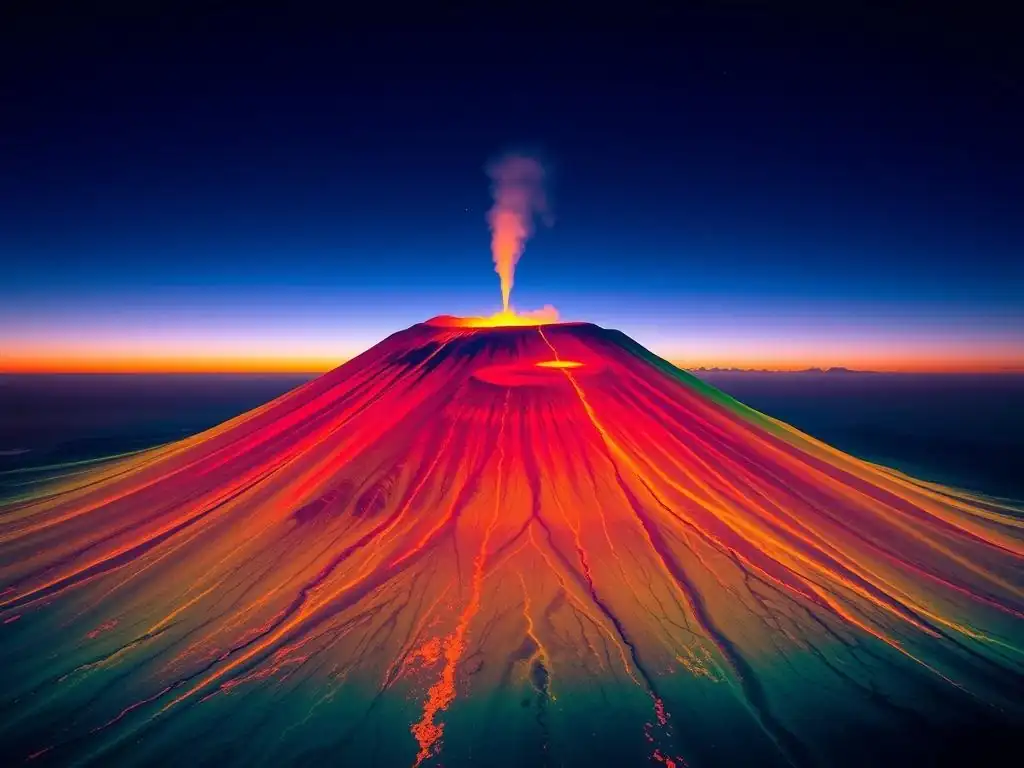
Shield volcanoes are characterized by their broad, gently sloping profiles resembling a warrior's shield laid on the ground. They are formed primarily by the eruption of fluid basaltic lava flows that spread out over large distances due to their low viscosity. Shield volcanoes are typically associated with hotspots, where plumes of hot mantle material rise to the surface, or divergent plate boundaries, such as mid-ocean ridges, where tectonic plates move apart. The Hawaiian Islands are a classic example of shield volcanoes formed over a hotspot, while Iceland is built on the Mid-Atlantic Ridge, also featuring numerous shield volcanoes.
Geologically, shield volcanoes are massive structures built over long periods by countless lava flows accumulating layer upon layer. They often have summit calderas, large basin-shaped depressions formed by the collapse of the magma chamber after significant eruptions. Rift zones, linear fractures extending from the summit, are common features on shield volcanoes, serving as pathways for lava to erupt along the flanks. The basaltic composition of shield volcano lavas is relatively low in silica and volatiles, resulting in effusive eruptions that produce vast lava fields and contribute to the gradual construction of the volcano's broad shape.
Typical Thermal Signatures of Shield Volcanoes: Effusive Eruptions and Lava Flows
The thermal signatures of shield volcanoes are typically associated with effusive eruptions and extensive lava flows. Compared to stratovolcanoes, shield volcanoes generally exhibit lower heat flux but over a wider area due to the large extent of their lava flows. Thermal anomalies in shield volcanoes are often characterized by elongated patterns corresponding to active lava flows, lava lakes within summit calderas, and areas of persistent degassing. Satellite thermal imagery is particularly effective in monitoring the thermal evolution of lava flows, tracking their advance, cooling rates, and potential hazards.
Effusive eruptions in shield volcanoes are characterized by relatively steady thermal output, reflecting the continuous effusion of lava. Thermal monitoring can detect the onset of new lava flows, map their extent, and estimate effusion rates based on the thermal energy released. Lava lakes, persistent bodies of molten lava within summit craters, are prominent thermal features on some shield volcanoes, such as Kilauea in Hawaii and Erta Ale in Ethiopia. The thermal behavior of lava lakes can provide insights into magma supply rates and degassing processes within the volcanic system.
Factors Influencing Shield Volcano Thermal Emissions: Lava Composition and Eruption Style
Lava composition and eruption style are primary factors influencing the thermal emissions from shield volcanoes. The basaltic lava erupted by shield volcanoes is relatively hot, typically around 1100-1200 degrees Celsius, and its low viscosity allows it to flow readily and efficiently transport heat away from the vent. The volume of lava erupted during shield volcano eruptions is often much larger than in stratovolcano eruptions, leading to significant thermal output over extended periods.
The effusive eruption style of shield volcanoes contributes to their characteristic thermal signatures. Lava flows radiate heat as they cool and solidify, creating broad thermal anomalies that can persist for days, weeks, or even months depending on the flow's size and thickness.
The absence of large explosive eruptions in typical shield volcano activity means that thermal emissions are primarily associated with the cooling of lava flows and degassing from active vents, resulting in a more continuous and less fluctuating thermal pattern compared to stratovolcanoes. However, some shield volcanoes can exhibit episodic explosive activity, particularly when magma interacts with groundwater or seawater, which can introduce more transient and intense thermal signatures.
Case Studies: Analyzing Thermal Activity in Specific Shield Volcanoes
Kilauea volcano in Hawaii, one of the most actively monitored shield volcanoes globally, provides extensive case studies for analyzing thermal activity. The long-lived Pu'u 'Ō'ō eruption, which lasted from 1983 to 2018, generated vast lava flows that were continuously tracked using satellite and ground-based thermal infrared instruments. Thermal data from Kilauea has been used to estimate lava effusion rates, map lava flow paths, assess lava flow hazards, and study the cooling behavior of basaltic lava flows. The thermal monitoring of Kilauea has significantly advanced our understanding of shield volcano eruption dynamics.
Another illustrative example is the Bárðarbunga volcanic system in Iceland, which experienced a significant fissure eruption at Holuhraun in 2014-2015. Satellite thermal imagery played a crucial role in monitoring the eruption, mapping the extensive lava field, and estimating the eruption rate. The Holuhraun eruption produced one of the largest lava flows in Iceland's recorded history, and thermal data were essential for tracking its evolution and assessing the associated hazards. These case studies demonstrate the effectiveness of thermal monitoring in understanding the behavior of shield volcanoes and mitigating the risks associated with their effusive eruptions.
Comparative Analysis: Thermal Signatures of Stratovolcanoes vs. Shield Volcanoes
Key Differences in Thermal Emission Patterns: A Direct Comparison
Directly comparing the thermal emission patterns of stratovolcanoes and shield volcanoes reveals key differences stemming from their distinct magmatic and eruptive characteristics. Stratovolcanoes typically exhibit higher peak thermal intensities concentrated around summit vents, reflecting their viscous magma, explosive eruptions, and shallow magma reservoirs. Their thermal signatures are often more dynamic and fluctuate significantly, particularly during pre-eruptive unrest and explosive events. The heat flux is generally localized and intense, associated with degassing and intermittent explosive activity.
Shield volcanoes, conversely, show lower peak thermal intensities but over a wider spatial extent, corresponding to their effusive eruptions and extensive lava flows. Their thermal signatures are generally more stable and continuous, reflecting the steady effusion of basaltic lava. The heat flux is distributed over large areas due to lava flow cooling, and thermal anomalies tend to be elongated and follow the paths of active lava flows. While stratovolcano thermal patterns are punctuated by explosive events, shield volcano thermal patterns are dominated by the continuous radiation from cooling lava.
Thermal Monitoring Techniques for Distinguishing Volcano Types
Thermal monitoring techniques play a crucial role in distinguishing between stratovolcanoes and shield volcanoes based on their thermal signatures. Satellite-based thermal infrared imagery is particularly effective for large-scale monitoring of both volcano types. For stratovolcanoes, high-resolution satellite data can detect localized hotspots at summit craters and track changes in thermal intensity associated with degassing and potential pre-eruptive activity. For shield volcanoes, satellite imagery is invaluable for mapping the extent of lava flows, tracking their advance, and estimating eruption rates over broad areas.
Ground-based infrared surveys offer more detailed thermal mapping of specific volcanic features for both types. For stratovolcanoes, ground surveys can provide high-resolution thermal maps of summit crater areas, fumarole fields, and hydrothermal systems, revealing fine-scale thermal anomalies related to gas emissions and shallow magma dynamics. For shield volcanoes, ground surveys can be used to study the cooling characteristics of lava flows, investigate thermal variations within lava lakes, and monitor thermal activity in rift zones and flank vents. Combining satellite and ground-based thermal data provides a comprehensive approach to distinguishing and characterizing the thermal behavior of different volcano types.
Implications of Thermal Differences for Eruption Forecasting
The distinct thermal differences between stratovolcanoes and shield volcanoes have significant implications for eruption forecasting strategies. For stratovolcanoes, the focus of thermal monitoring for eruption forecasting is on detecting rapid increases in thermal output at summit areas, which may indicate magma ascent and increasing eruption probability. Sharp increases in summit thermal anomalies, particularly when combined with other indicators like increased seismicity and gas emissions, can trigger alerts and prompt enhanced monitoring or precautionary measures. Thermal monitoring helps assess the potential for explosive eruptions and pyroclastic flows.
For shield volcanoes, eruption forecasting using thermal data often involves tracking the evolution of lava flows and assessing the hazard posed by flow paths and advance rates. Thermal monitoring can help predict the direction and extent of lava flows, providing critical information for hazard mitigation and evacuation planning in areas threatened by lava inundation. Changes in the thermal output of lava lakes or rift zones can also indicate changes in magma supply and potential shifts in eruption activity. Understanding the volcano-specific thermal characteristics is essential for developing tailored and effective eruption forecasting approaches for both stratovolcanoes and shield volcanoes.
Advanced Thermal Monitoring Techniques for Volcanoes
Satellite-Based Thermal Imaging: Exploring Volcanic Heat from Space
Satellite-based thermal imaging has revolutionized volcano monitoring, providing a continuous and synoptic view of volcanic thermal activity from space. Satellites equipped with thermal infrared sensors can detect and measure the heat emitted by volcanoes, even in remote and inaccessible regions. These sensors measure the Earth's emitted radiation in different thermal bands, allowing scientists to calculate surface temperatures and map thermal anomalies. Various satellite missions, including Landsat, MODIS, ASTER, and Sentinel, provide valuable thermal data for volcano monitoring.
Satellite thermal imagery enables the detection of pre-eruptive thermal unrest, the mapping of lava flows and pyroclastic deposits, and the estimation of volcanic eruption rates. The temporal resolution of satellite data, ranging from daily to weekly, allows for the tracking of changes in volcanic thermal output over time. Advanced techniques, such as time-series analysis of thermal data and change detection algorithms, are used to identify subtle thermal anomalies that may indicate volcanic activity. Satellite thermal monitoring is an indispensable tool for global volcano surveillance and hazard assessment, particularly for volcanoes that are not well-monitored on the ground.
Ground-Based Infrared Surveys: Detailed Thermal Mapping of Volcanoes
Ground-based infrared surveys offer a complementary approach to satellite monitoring, providing detailed thermal mapping of volcanoes at higher spatial and temporal resolutions. Portable infrared cameras and thermal scanners are used to measure the surface temperature of volcanic features from the ground. These instruments can capture fine-scale thermal variations within craters, fumarole fields, lava flows, and other volcanic areas. Ground-based surveys are particularly useful for validating satellite data, studying specific volcanic processes, and monitoring volcanoes at local scales.
Detailed thermal mapping from the ground can reveal subtle thermal anomalies that might be missed by satellite observations due to lower spatial resolution or atmospheric interference. Ground-based surveys allow for the investigation of thermal features at close range, enabling the study of fumarole temperatures, lava flow cooling processes, and the thermal characteristics of volcanic vents. Repeat ground-based thermal surveys can track temporal changes in thermal activity at specific locations, providing valuable insights into the dynamics of volcanic systems and complementing the broader perspective offered by satellite monitoring.
Integrating Thermal Data with Other Monitoring Methods: A Holistic Approach
Integrating thermal data with other volcano monitoring methods is crucial for a holistic understanding of volcanic activity and improved eruption forecasting. Thermal monitoring is most effective when combined with seismic, gas geochemical, deformation, and visual observations. Seismic data provides information about subsurface magma movement and volcanic tremor, while gas measurements reveal changes in volcanic degassing and magma composition. Deformation monitoring detects ground movements associated with magma accumulation or withdrawal. Visual observations, including webcam imagery and field reports, provide real-time information on eruptive activity.
Combining thermal data with these other datasets allows for a more comprehensive assessment of volcanic unrest and eruption potential. For example, an increase in thermal output coupled with increased seismicity and gas emissions can provide stronger evidence of impending eruptive activity than any single dataset alone.
Integrated monitoring approaches enable scientists to develop more robust and accurate models for eruption forecasting and hazard assessment. Data fusion techniques and sophisticated analytical methods are increasingly used to combine and interpret multi-parameter volcano monitoring datasets, maximizing the information gained from each monitoring method and improving our ability to understand and predict volcanic eruptions.
Applications of Thermal Signatures in Volcano Monitoring and Prediction
Detecting Pre-Eruptive Thermal Anomalies: Early Warning Systems
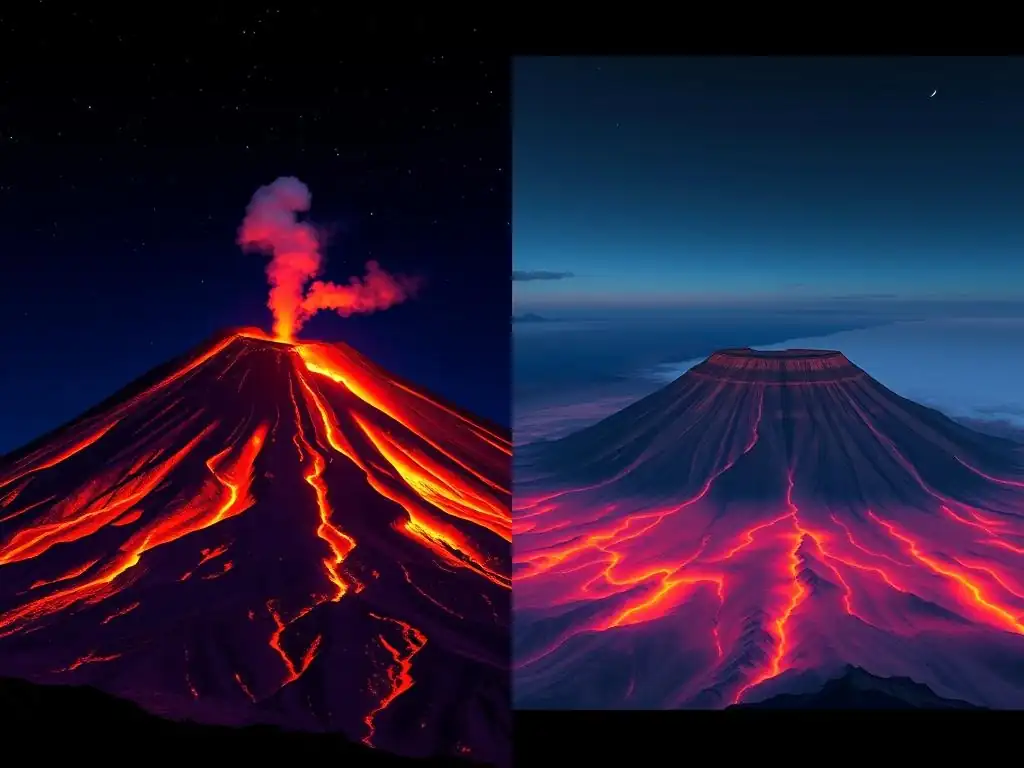
One of the most critical applications of thermal signatures in volcano monitoring is the detection of pre-eruptive thermal anomalies, which can serve as early warning signals of impending eruptions. Many volcanic eruptions are preceded by changes in thermal output, often manifested as increases in surface temperatures or heat flux at the summit or flanks of the volcano. These thermal anomalies can be caused by magma ascent, increased degassing, or changes in hydrothermal activity. Detecting and interpreting these anomalies is crucial for issuing timely warnings and mitigating volcanic hazards.
Early warning systems based on thermal monitoring typically involve continuous or frequent measurements of volcanic thermal output, either from satellites or ground-based instruments. Statistical analysis and anomaly detection algorithms are used to identify significant deviations from baseline thermal behavior. When a pre-defined thermal threshold is exceeded, or a significant thermal anomaly is detected, an alert can be triggered, prompting further investigation and potential escalation of alert levels. Thermal monitoring-based early warning systems are particularly valuable for volcanoes with a history of explosive eruptions or those located near densely populated areas.
Estimating Eruption Intensity and Lava Flow Rates Using Thermal Data
Thermal data can be used to estimate eruption intensity and lava flow rates, providing valuable information for hazard assessment and emergency response during ongoing eruptions. The thermal energy released during an eruption is related to the volume and temperature of erupted material, which can be used to estimate eruption intensity parameters such as Volcanic Explosivity Index (VEI). For effusive eruptions, thermal infrared imagery of lava flows can be used to estimate lava flow areas, volumes, and effusion rates.
By analyzing the cooling curves of lava flows and measuring their thermal radiance, scientists can calculate lava effusion rates and track the evolution of lava flow fields in near real-time. These estimates are crucial for assessing the hazard posed by lava flows, predicting their potential paths, and informing evacuation planning. Thermal data-derived eruption intensity and lava flow rate estimates complement other eruption parameters obtained from seismic, gas, and deformation monitoring, providing a more complete picture of the ongoing eruption and its potential impacts.
Improving Volcano Hazard Assessments Through Thermal Analysis
Thermal analysis significantly improves volcano hazard assessments by providing crucial information about volcanic activity and potential eruption scenarios. Thermal data helps to identify areas of increased volcanic heat flux, which may indicate zones of higher volcanic hazard. Thermal maps can be integrated with other hazard maps, such as those based on topographic data or geological history, to create more comprehensive and accurate hazard assessments. Understanding the thermal characteristics of different volcanic features, such as craters, fumaroles, and lava flows, is essential for assessing their potential hazards.
Thermal analysis can also contribute to probabilistic hazard assessments by providing data on the frequency and intensity of thermal anomalies associated with past eruptions. Statistical analysis of historical thermal data can help to quantify the likelihood of future thermal events and their potential magnitudes. By incorporating thermal information into volcano hazard models, scientists can develop more realistic and reliable assessments of volcanic risk, informing land-use planning, infrastructure development, and emergency preparedness strategies in volcanic regions.
Challenges and Future Directions in Volcano Thermal Monitoring
Limitations of Current Thermal Monitoring Technologies
Despite significant advancements, current thermal monitoring technologies still face limitations. Satellite-based thermal infrared sensors are affected by atmospheric conditions, such as clouds and aerosols, which can obscure volcanic thermal signals or introduce errors in temperature measurements. The spatial resolution of satellite thermal data may be insufficient to resolve fine-scale thermal features or monitor small changes in thermal activity. Ground-based thermal surveys are limited by accessibility, weather conditions, and the need for on-site measurements, which can be challenging in hazardous volcanic environments.
Current thermal monitoring techniques primarily measure surface temperatures, while subsurface thermal processes, such as magma movement and heat transfer at depth, are less directly observable. Interpreting thermal data can be complex, as thermal anomalies can be caused by various volcanic processes, and distinguishing between different causes can be challenging. Further research is needed to improve the accuracy, resolution, and sensitivity of thermal monitoring technologies and to develop better methods for interpreting thermal data in the context of complex volcanic systems.
Emerging Technologies for Enhanced Thermal Data Collection
Emerging technologies are poised to enhance thermal data collection for volcano monitoring in the future. Unmanned Aerial Vehicles (UAVs) or drones equipped with thermal infrared cameras offer a promising platform for high-resolution, flexible, and safe thermal surveys of volcanoes. UAVs can access hazardous areas, fly below cloud cover, and acquire thermal data at centimeter-scale resolution. Hyperspectral thermal infrared sensors, which measure thermal radiation in many narrow spectral bands, can provide more detailed information about surface composition and temperature, improving the discrimination of volcanic features and processes.
Advanced satellite missions with improved spatial, temporal, and spectral resolution are being developed, promising enhanced global volcano monitoring capabilities. Geostationary satellites with thermal infrared sensors offer the potential for near-real-time, continuous thermal monitoring of volcanoes, enabling rapid detection of thermal anomalies and improved early warning capabilities. Fiber optic distributed temperature sensing (DTS) systems, deployed on volcanic slopes or in boreholes, can provide continuous, high-resolution temperature profiles along extended lengths, offering new insights into subsurface thermal processes.
Future Research: Improving Our Understanding of Volcanic Thermal Processes
Future research is crucial for improving our understanding of volcanic thermal processes and enhancing the application of thermal monitoring in volcano science and hazard mitigation. More research is needed to develop sophisticated models that link thermal signatures to subsurface volcanic processes, such as magma ascent, degassing, and hydrothermal activity. Experimental studies and numerical simulations are essential for understanding the heat transfer mechanisms in volcanic systems and for calibrating thermal monitoring data.
Long-term, continuous thermal monitoring datasets are needed to establish baseline thermal behavior for different volcano types and to identify subtle pre-eruptive thermal changes. Integrating thermal data with other geophysical and geochemical datasets through advanced data fusion techniques will improve our ability to interpret thermal anomalies and forecast volcanic eruptions. Collaborative research efforts involving volcanologists, remote sensing experts, and engineers are essential for advancing thermal monitoring technologies and applying them effectively to mitigate volcanic risks worldwide.
Conclusion: Leveraging Thermal Signatures for Volcano Exploration and Safety
Key Takeaways: Thermal Signatures as a Vital Tool for Volcano Monitoring
Thermal signatures are a vital tool in volcano monitoring, providing critical insights into volcanic processes and contributing significantly to hazard assessment and eruption forecasting. The distinct thermal characteristics of different volcano types, particularly stratovolcanoes and shield volcanoes, reflect their unique magmatic and eruptive styles. Stratovolcanoes often exhibit high, localized, and dynamic thermal signatures associated with explosive activity, while shield volcanoes show lower, spatially extensive, and more stable thermal patterns related to effusive eruptions.
Advanced thermal monitoring techniques, including satellite-based and ground-based infrared surveys, provide valuable data for tracking volcanic thermal activity, detecting pre-eruptive anomalies, and estimating eruption parameters. Integrating thermal data with other monitoring methods offers a holistic approach to volcano surveillance and improved eruption forecasting capabilities. Continued research and technological advancements are crucial for overcoming the limitations of current thermal monitoring technologies and for further leveraging thermal signatures to enhance volcano exploration and safety.
The Role of Volcano Explorers in Promoting Thermal Monitoring Awareness
Volcano Explorers, as a platform dedicated to exploring the world of volcanoes, plays a crucial role in promoting thermal monitoring awareness among the public and enthusiasts. By providing accessible and informative content on thermal signatures of volcano types and the importance of thermal monitoring, Volcano Explorers can educate readers about this essential aspect of volcano science and hazard mitigation. Showcasing real-world examples and case studies of thermal monitoring applications can illustrate the practical benefits of this technology in protecting communities living near volcanoes.
Volcano Explorers can also highlight the ongoing research and technological advancements in thermal monitoring, fostering a greater appreciation for the scientific efforts dedicated to understanding and predicting volcanic eruptions. By engaging with the audience through informative articles, visually appealing content, and interactive features, Volcano Explorers can inspire a broader understanding of the crucial role that thermal monitoring plays in ensuring volcano safety and advancing our knowledge of these powerful natural phenomena.
Frequently Asked Questions
What are thermal signatures, and why are they important in studying volcanoes?
Thermal signatures refer to the heat patterns emitted by a volcano. They are important because they help volcanologists monitor volcanic activity and predict potential eruptions.
How do the thermal signatures of stratovolcanoes differ from those of shield volcanoes?
Stratovolcanoes tend to have localized, high-temperature thermal anomalies near their summit due to their viscous lava. Shield volcanoes usually display broader, lower-temperature thermal signatures across a larger area, reflecting their more fluid lava flows.
What factors influence the thermal signature of a particular volcano type?
Factors include the lava's composition and viscosity, the volcano's internal plumbing system, and the presence of hydrothermal activity. These all affect how heat is distributed and emitted.
What instruments are used to measure the thermal signatures of volcanoes?
Scientists use thermal infrared cameras on satellites, aircraft, and ground-based stations to measure thermal emissions. Ground-based sensors can also record temperature changes at specific locations.
Can thermal signatures alone predict volcanic eruptions?
While thermal signatures are valuable indicators, they are best used in conjunction with other data, such as seismic activity and gas emissions. A combination of these factors provides a more comprehensive picture of a volcano's state.
Final Reflection: Unveiling Earth's Fiery Secrets
The exploration of thermal signatures of volcano types is not merely an academic exercise; it's a crucial window into understanding the dynamic processes shaping our planet. By differentiating between the thermal fingerprints of stratovolcanoes and shield volcanoes, we gain invaluable insights into eruption styles, magma compositions, and the potential hazards these geological giants pose to surrounding communities. This knowledge is more critical than ever as we face increasing challenges from natural disasters and strive for more accurate predictive models.
The study of volcanic thermal signatures has profoundly influenced our understanding of Earth's internal workings. It's a reminder that beneath the seemingly solid ground, immense forces are constantly at play, shaping the landscapes we inhabit and influencing the climate we experience. The Earth is a very small stage in a vast cosmic arena.
- Carl Sagan. This quote underscores the importance of understanding our planet, including its volcanic activity, within the larger context of the universe.
As we conclude this exploration of volcanic thermal signatures, I invite you to consider your own connection to the Earth's dynamic processes. How can you use this newfound knowledge to appreciate the power and fragility of our planet? Let us all strive to be more informed and responsible stewards of this Earth, recognizing the importance of scientific inquiry in safeguarding our future.
Ignite Your Inner Volcanologist: Dive Deeper Now!
Thank you for exploring the fascinating thermal world of stratovolcanoes and shield volcanoes with us! We hope you've gained a new appreciation for the diverse ways these geological giants express themselves. Now, let's put that knowledge to work!
Here are a few ways to continue your volcanic journey:
- Analyze recent satellite thermal data from a volcano near you. Explore publicly available data sources in your region.
- Share this article with fellow geology enthusiasts and spark a discussion about your favorite volcano type and its unique characteristics.
- Compare and contrast the geological histories of a well-known stratovolcano and a shield volcano, focusing on the key differences in their formation and eruption styles.
What surprising differences in thermal activity have you observed between stratovolcanoes and shield volcanoes, and how might these insights improve our ability to forecast eruptions? Share your thoughts below!