
Phreatomagmatic Fury: When Magma Meets Water in Explosive Volcanoes

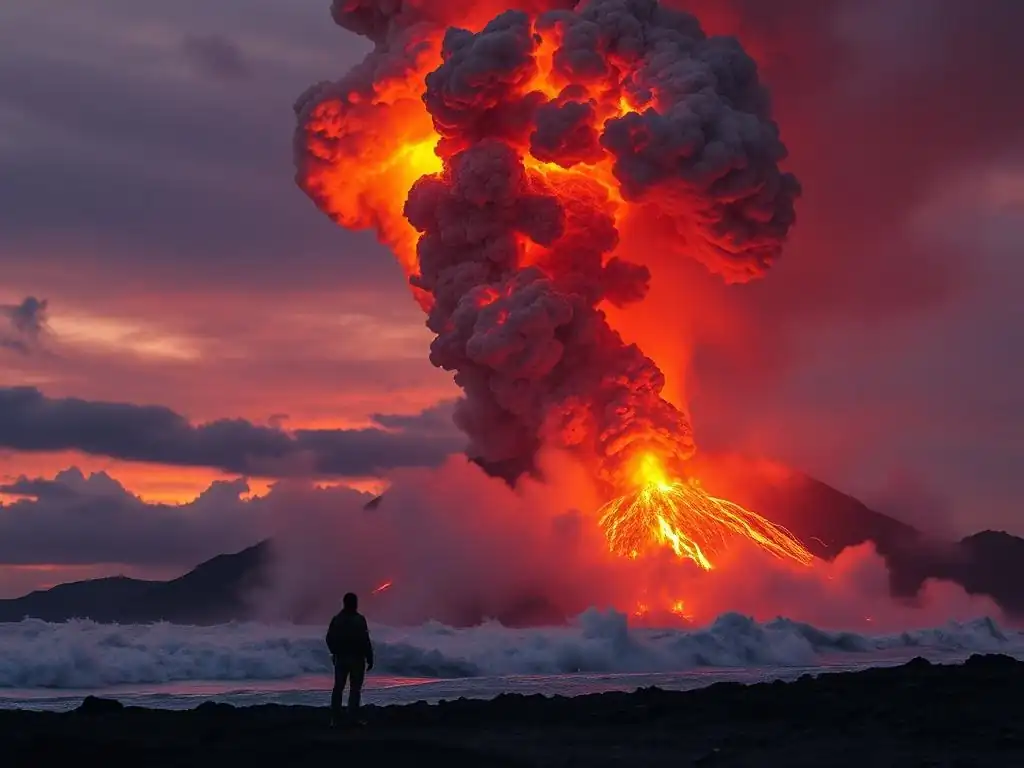
Welcome to Volcano Explorers, where we chase the fiery heart of our planet! Ever wondered what happens when molten fury collides with the life-giving force of water? Prepare to be amazed, because today we're diving deep into the explosive world of Phreatomagmatic Eruptions. What exactly triggers these cataclysmic events, and what makes them so uniquely dangerous? Uncover the secrets within – your journey into the science of volcanic fury begins now...
- Understanding Phreatomagmatic Eruptions: An Explanation
- The Science Behind Phreatomagmatic Explosions
- Locations Prone to Phreatomagmatic Activity
- Types of Phreatomagmatic Volcanoes & Formations
- Case Studies: Notable Phreatomagmatic Eruptions
- The Dangers and Impacts of Phreatomagmatic Explosions
- Monitoring and Predicting Phreatomagmatic Events
- Phreatomagmatic Eruption Explanation: A Recap
- Frequently Asked Questions
- Final Reflection: Understanding Earth's Fiery Water Dance
- Uncover the Secrets of Volcanic Power!
Understanding Phreatomagmatic Eruptions: An Explanation
What Defines a Phreatomagmatic Eruption?
Phreatomagmatic eruptions are a distinct type of volcanic explosion that occurs when magma or lava interacts with external water sources such as groundwater, surface water (lakes, rivers, or oceans), or even ice and snow. The defining characteristic of these eruptions is the violent and explosive nature resulting from this interaction.
Unlike purely magmatic eruptions, where the explosivity is driven by the exsolution of volcanic gases within the magma itself, phreatomagmatic eruptions derive their power from the rapid heating and vaporization of water upon contact with hot magma. This interaction leads to a sudden and dramatic increase in volume, generating powerful explosions that eject a mixture of steam, volcanic ash, rock fragments, and sometimes even juvenile magmatic material.
The term "phreatomagmatic" itself is derived from the Greek words "phreas" (well or spring), referring to water, and "magma," indicating molten rock. This etymology highlights the crucial role of water in these volcanic events. Understanding phreatomagmatic eruptions is essential for comprehending volcanic hazards in regions where volcanoes are located near or beneath water bodies or within water-saturated environments. The explosivity of these eruptions can vary significantly depending on factors such as the amount and type of water involved, the temperature and composition of the magma, and the confining pressure of the surrounding environment.
Key Differences: Phreatomagmatic vs. Magmatic and Phreatic Eruptions
Distinguishing phreatomagmatic eruptions from other types of volcanic activity, namely magmatic and phreatic eruptions, is crucial for accurate hazard assessment and volcanic monitoring. Magmatic eruptions are driven by the pressure build-up of volcanic gases within the magma chamber. As magma rises to the surface, dissolved gases like water vapor, carbon dioxide, and sulfur dioxide expand rapidly, leading to explosive eruptions. These eruptions primarily eject juvenile magmatic material, such as lava, ash, and pumice, directly derived from the magma source. Examples include Strombolian, Vulcanian, and Plinian eruptions.
Phreatic eruptions, on the other hand, are steam-driven explosions that occur when magma or hot rocks heat groundwater or surface water. Crucially, phreatic eruptions do not involve the ejection of new magmatic material. The explosivity is solely due to the rapid vaporization of water into steam, causing rock fracturing and the ejection of pre-existing country rock, steam, and ash composed of fragmented older rocks.
In contrast, phreatomagmatic eruptions are a hybrid of these two processes. They involve both magmatic material and external water, leading to explosions that are often more energetic than phreatic eruptions and can eject both juvenile magmatic material and fragmented country rock. The interaction of magma and water is the key differentiating factor for a phreatomagmatic eruption explanation.
The Science Behind Phreatomagmatic Explosions
Magma and Water Interaction: The Driving Force
The fundamental mechanism behind phreatomagmatic explosions is the highly energetic interaction between hot magma and water. When magma, with temperatures often exceeding 700°C (1292°F), comes into contact with water, the water is instantly heated far beyond its boiling point. This rapid heating causes an almost instantaneous phase change from liquid water to steam, accompanied by a dramatic volume expansion. Water, when vaporized to steam at atmospheric pressure, expands approximately 1,700 times in volume. This immense volumetric expansion within a confined space creates an extremely powerful explosion.
The efficiency of this magma-water interaction depends on several factors, including the temperature difference between the magma and water, the pressure of the system, and the mixing ratio of magma to water. A larger temperature difference and higher confining pressure tend to enhance the explosivity.
The mixing process itself is complex, involving heat transfer, fragmentation of both magma and surrounding rocks, and the rapid expansion of steam. This interaction is not merely a simple boiling process; it is a highly dynamic and often chaotic event that releases significant energy in a short period, driving the powerful explosions characteristic of phreatomagmatic eruptions.
The Role of Water State: Steam Explosions and Fuel-Coolant Interaction
The state of water at the point of interaction significantly influences the nature and intensity of phreatomagmatic explosions. When magma encounters liquid water, the process is akin to a "fuel-coolant interaction" (FCI), a term borrowed from industrial safety studies, particularly in nuclear reactor scenarios. In an FCI, a hot molten material (the fuel) rapidly transfers heat to a cooler liquid (the coolant), causing explosive vaporization.
In the volcanic context, magma is the fuel, and water is the coolant. This rapid heat transfer and vaporization in liquid water result in highly energetic steam explosions that are responsible for many of the most violent phreatomagmatic events.
However, if the water is already in a supercritical state (a state beyond the critical point where distinct liquid and gas phases do not exist), the interaction can be different. Supercritical water, often found at depth in hydrothermal systems, behaves differently from liquid water and may lead to less explosive interactions compared to liquid water.
Furthermore, the presence of ice or snow can also contribute to phreatomagmatic activity, although the initial interaction involves melting and then vaporization of the meltwater. Understanding the initial state of water – liquid, steam, supercritical, or ice – is critical for deciphering the style and explosivity of phreatomagmatic eruptions.
Fragmentation of Magma: Creating Volcanic Ash and Tephra
A key consequence of the magma-water interaction in phreatomagmatic eruptions is the efficient fragmentation of magma. The rapid and explosive vaporization of water generates shock waves and pressure pulses that shatter the surrounding magma and rocks into fine particles. This fragmentation process is significantly more effective than the fragmentation driven solely by gas expansion in purely magmatic eruptions. The intense cooling effect of water also plays a role in magma fragmentation by inducing thermal stresses and promoting brittle fracturing of the rapidly chilled magma.
The fragmented material, known as tephra, consists of volcanic ash, lapilli, and blocks. Phreatomagmatic ash is often characterized by its fine-grained nature and the presence of distinctive particle shapes, often described as blocky or angular, in contrast to the vesicular (bubbly) textures common in ash from magmatic eruptions. The efficient fragmentation and dispersal of tephra are crucial aspects of phreatomagmatic eruptions, contributing to the formation of specific volcanic landforms like tuff rings and maars, and posing significant hazards through ashfall and pyroclastic density currents. The phreatomagmatic eruption explanation inherently involves understanding this process of magma fragmentation.
Locations Prone to Phreatomagmatic Activity
Coastal Volcanoes and Submarine Eruptions
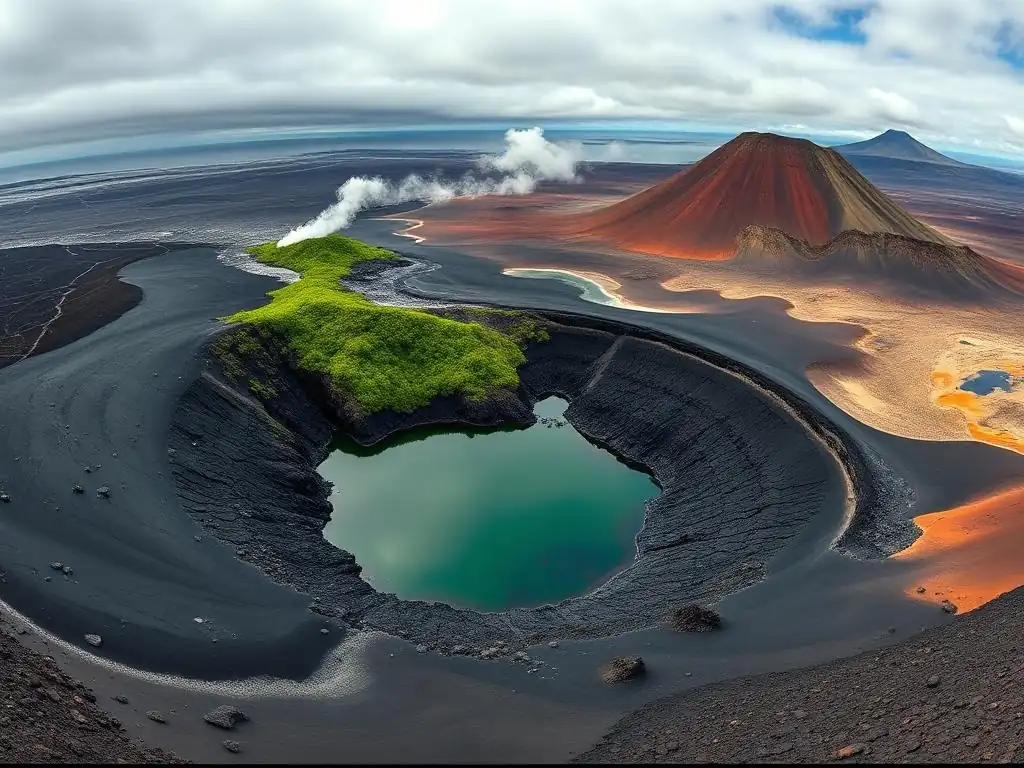
Coastal volcanoes and submarine volcanoes are inherently prone to phreatomagmatic activity due to their proximity to or location within large bodies of water. When a volcano erupts along a coastline, or beneath the sea surface, magma readily interacts with seawater. Submarine eruptions are almost invariably phreatomagmatic in their early stages, as magma encounters the overlying water column. The depth of the water column significantly influences the eruption style. In shallow water, the reduced confining pressure allows for more vigorous steam explosions and the formation of eruption plumes that can rise above the water surface.
In deeper water, the increased hydrostatic pressure can suppress steam formation to some extent, but the interaction is still fundamentally phreatomagmatic. Submarine phreatomagmatic eruptions can build up volcanic islands, as exemplified by the formation of Surtsey Island off the coast of Iceland. Coastal volcanoes, even if not directly submerged, can experience phreatomagmatic explosions if eruptions occur through water-saturated coastal sediments or if pyroclastic flows or lava flows enter the sea, triggering steam explosions at the coastline. The unique environment of coastal and submarine volcanoes makes them hotspots for phreatomagmatic eruption phenomena.
Volcanoes Near Lakes and Groundwater Systems
Volcanoes located near lakes or in regions with shallow groundwater systems are also susceptible to phreatomagmatic eruptions. Lakes provide a readily available source of surface water that can interact with rising magma. Even relatively small lakes can contribute to significant phreatomagmatic explosions if magma conduits intersect them during an eruption. Similarly, volcanoes situated in areas with permeable rocks and high water tables are vulnerable to phreatomagmatic activity. Groundwater can seep into volcanic conduits or interact with magma at shallow depths, leading to steam explosions.
Many volcanic regions are characterized by hydrothermal systems where groundwater is heated by volcanic activity. While hydrothermal systems themselves can produce phreatic eruptions, they also increase the likelihood of phreatomagmatic eruptions should magma intrude into these water-rich zones. The presence of geothermal features like hot springs and fumaroles around a volcano can be an indicator of a potentially water-saturated subsurface environment, which might favor phreatomagmatic eruption styles if an eruption occurs. Areas with significant rainfall or snowmelt that percolates into the ground can also increase the risk of groundwater-magma interaction.
Identifying Potential Phreatomagmatic Hazard Zones
Identifying potential phreatomagmatic hazard zones is crucial for risk assessment and mitigation in volcanic areas. Proximity to water bodies, including coastlines, lakes, and rivers, is a primary indicator. Volcanoes located in low-lying coastal plains or in regions with extensive wetlands are particularly prone to phreatomagmatic activity due to the shallow water table and potential for surface water inundation. Geological mapping can also help identify areas where past phreatomagmatic eruptions have occurred, as evidenced by the presence of tuff rings, maars, and diatremes.
Hydrogeological studies that map groundwater flow paths and water table depths are essential for assessing phreatomagmatic hazard. Areas with shallow, permeable aquifers and active volcanic systems are considered high-risk zones. Volcanic monitoring efforts should also consider factors that might indicate increased water-magma interaction, such as changes in hydrothermal activity, increased steam emissions, and seismic signals associated with fluid movement. A comprehensive phreatomagmatic eruption explanation must include the identification of these hazard zones to improve preparedness and reduce the impact of these explosive events.
Types of Phreatomagmatic Volcanoes & Formations
Tuff Rings: A Hallmark of Phreatomagmatic Activity
Tuff rings are distinctive volcanic landforms considered a hallmark of phreatomagmatic eruptions in relatively dry, land-based environments. They are low-profile, broad volcanic craters surrounded by a circular rim composed of poorly consolidated volcanic ash and fragmented rocks, known as tuff. Tuff rings typically form when moderately explosive phreatomagmatic eruptions occur from shallow magma sources interacting with groundwater or damp sediments. The explosions eject material outwards in a base surge, a ground-hugging cloud of gas and ash, which deposits the tuff ring around the vent.
The crater within a tuff ring is usually wide and shallow, often extending below the surrounding ground level. The tuff deposits themselves are characteristically poorly sorted, containing a mixture of fine ash, lapilli, and accidental lithic fragments derived from the surrounding country rock. The rim of a tuff ring is typically low, often less than 100 meters in height, and the overall diameter of the structure can range from a few hundred meters to several kilometers. Tuff rings are common features in many volcanic fields worldwide and provide valuable insights into past phreatomagmatic eruption styles.
Maars: Broad, Low-Relief Craters Explained
Maars are another type of volcanic crater specifically formed by phreatomagmatic eruptions, but they are distinguished from tuff rings by their generally wider, shallower, and often lake-filled craters. Maars develop from more energetic and deeper-seated phreatomagmatic explosions, typically occurring in water-saturated ground or when magma interacts with a shallow aquifer. The explosive interaction excavates a broad, bowl-shaped depression in the ground, leaving behind a low-relief crater that can be several kilometers in diameter.
Unlike tuff rings, maars often have less prominent ejecta rims, or the rims may be largely absent due to the more dispersed nature of the ejected material and subsequent erosion. Maars are frequently filled with water, forming maar lakes, which are often circular and relatively deep. The ejecta surrounding maars is also composed of tuffaceous material, but it may be more widely dispersed than in tuff rings.
Maars are found in diverse geological settings and are important indicators of phreatomagmatic activity in areas with significant groundwater resources. The phreatomagmatic eruption explanation is crucial for understanding the formation of these unique volcanic craters.
The Formation of Diatremes: Volcanic Pipes
Diatremes, also known as volcanic pipes, are vertical conduits or channels formed by explosive phreatomagmatic eruptions originating from deep within the Earth's crust. They represent the solidified remains of the pathways through which magma and volcanic gases ascended to the surface during intense phreatomagmatic events. Diatremes are characterized by their pipe-like shape, often filled with a chaotic mixture of fragmented rocks, including volcanic breccia, country rock fragments, and sometimes mantle-derived xenoliths.
The formation of diatremes involves a series of powerful, deep-seated explosions driven by the interaction of magma with deep groundwater aquifers or volatile-rich layers within the crust. These explosions excavate and transport material from depth, creating a vertical conduit that can extend kilometers downwards. Diatremes are often associated with the emplacement of kimberlites and lamproites, which are mantle-derived magmas that are rich in volatiles and can trigger explosive phreatomagmatic eruptions as they ascend through the crust. Diatremes provide valuable information about the deep crustal and upper mantle processes associated with phreatomagmatic volcanism.
Case Studies: Notable Phreatomagmatic Eruptions
The Taal Volcano Eruption (2020): A Phreatomagmatic Example
The January 2020 eruption of Taal Volcano in the Philippines provides a recent and well-documented example of a phreatomagmatic eruption. Taal Volcano is a complex volcanic system located within a lake-filled caldera, making it highly susceptible to water-magma interaction. The eruption began with phreatic explosions from the main crater lake, driven by the heating of lake water by rising magma. As the eruption intensified, it transitioned into a phreatomagmatic phase as magma interacted directly with the lake water and water-saturated ground beneath the volcano island.
The eruption produced a towering ash plume that reached altitudes of over 19 kilometers (12 miles), impacting areas hundreds of kilometers away with ashfall. The eruption also generated pyroclastic density currents and volcanic lightning. The rapid escalation from phreatic to phreatomagmatic activity highlighted the volatile nature of water-magma interaction and the challenges in predicting the intensity and style of eruptions in water-rich volcanic systems. The Taal eruption serves as a stark reminder of the hazards associated with phreatomagmatic volcanoes.
Surtsey's Birth (1963-1967): A Volcanic Island Formed by Phreatomagmatism
The formation of Surtsey Island off the coast of Iceland between 1963 and 1967 is a classic case study of phreatomagmatic volcanism in a submarine setting. The eruption began on the seafloor, driven by the interaction of basaltic magma with seawater. The initial eruptions were highly explosive phreatomagmatic events, generating large volumes of tephra and building up a volcanic cone from the seabed. As the volcanic cone grew above sea level, the eruption style gradually shifted to Strombolian and effusive activity as the magma vent became isolated from direct seawater interaction.
The phreatomagmatic phase of Surtsey's eruption was characterized by vigorous steam explosions, base surges, and the formation of tuff rings around the emerging vent. The island's formation provided scientists with a unique opportunity to study the processes of island building and the ecological colonization of a newly formed volcanic landmass. Surtsey remains an active research site, offering valuable insights into phreatomagmatic eruption dynamics and volcanic island evolution.
The 1883 Krakatoa Eruption: A Catastrophic Phreatomagmatic Event
The 1883 eruption of Krakatoa in Indonesia is considered one of the most catastrophic volcanic events in recorded history, and it was primarily driven by phreatomagmatic explosions. Krakatoa was located in a marine environment, and the eruption involved the interaction of magma with seawater and water-saturated volcanic edifice. The eruption culminated in a series of massive explosions on August 27, 1883, which generated a devastating tsunami that claimed tens of thousands of lives and caused widespread devastation across the region.
The explosivity of the Krakatoa eruption was attributed to a complex interplay of factors, including the composition of the magma, the geometry of the magma chamber, and the extensive interaction with seawater. The eruption produced a massive ash cloud that circled the globe for weeks, affecting global weather patterns and causing spectacular sunsets worldwide. The 1883 Krakatoa eruption serves as a sobering example of the immense destructive potential of large-scale phreatomagmatic eruptions and their far-reaching impacts. A phreatomagmatic eruption explanation is crucial for understanding the magnitude of this historical event.
The Dangers and Impacts of Phreatomagmatic Explosions
Ash Clouds and Pyroclastic Surges: Immediate Threats
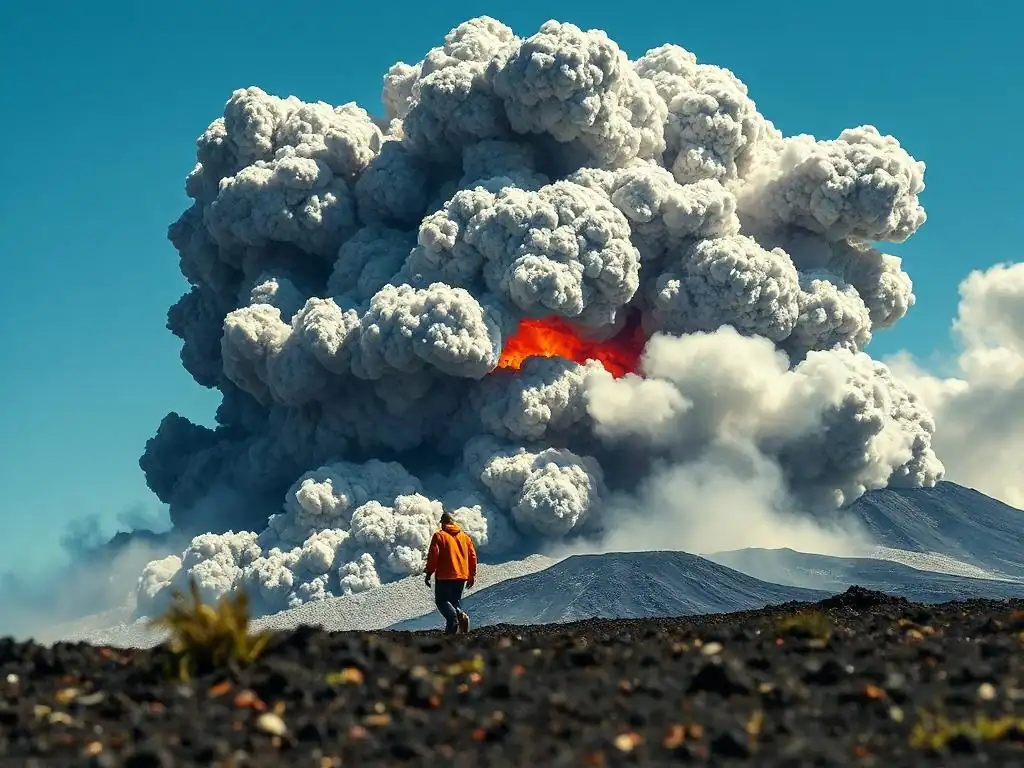
Phreatomagmatic eruptions pose significant immediate threats, primarily in the form of ash clouds and pyroclastic surges. Ash clouds generated by phreatomagmatic explosions can rise high into the atmosphere, disrupting air travel, impacting infrastructure, and causing respiratory problems for communities downwind. The fine-grained nature of phreatomagmatic ash makes it particularly hazardous as it can penetrate buildings, contaminate water supplies, and cause electrical short circuits.
Pyroclastic surges are ground-hugging, rapidly moving flows of hot gas, ash, and rock fragments that are a characteristic feature of phreatomagmatic eruptions. These surges can travel at high speeds, devastating everything in their path through heat, impact, and burial. Pyroclastic surges are particularly dangerous due to their unpredictable nature and ability to travel over water, posing a significant threat even to areas relatively distant from the volcanic vent. Both ash clouds and pyroclastic surges are immediate and potentially lethal hazards associated with phreatomagmatic activity.
Lahars and Mudflows: Secondary Hazards
Beyond the immediate explosive hazards, phreatomagmatic eruptions can also trigger secondary hazards such as lahars and mudflows. Lahars are volcanic mudflows or debris flows composed of a mixture of volcanic ash, rock debris, and water. Phreatomagmatic eruptions, especially those in water-rich environments or those that deposit significant amounts of ash on volcanic slopes, can readily generate lahars. The rapid deposition of ash can destabilize slopes, and rainfall or snowmelt can mobilize this ash into fast-moving and destructive mudflows that travel down river valleys and drainage systems.
Lahars can travel long distances from the volcano, burying communities and infrastructure in thick deposits of mud and debris. They are a major secondary hazard in volcanic regions, often causing more fatalities and damage than the initial explosive eruption itself. The presence of water in phreatomagmatic eruption settings directly contributes to the potential for lahar generation, making this secondary hazard a critical consideration in phreatomagmatic risk assessment.
Environmental and Climatic Impacts of Phreatomagmatic Activity
Phreatomagmatic eruptions, like all volcanic eruptions, can have significant environmental and climatic impacts. Large phreatomagmatic eruptions can inject substantial quantities of volcanic ash, gases, and aerosols into the atmosphere. Volcanic ash can affect regional and even global climate by reflecting sunlight back into space, potentially causing temporary cooling. Sulfur dioxide gas released during eruptions can react in the atmosphere to form sulfate aerosols, which also contribute to cooling and can affect atmospheric chemistry.
Phreatomagmatic eruptions can also impact local ecosystems through ashfall, acid rain, and the disruption of water resources. Ashfall can smother vegetation, contaminate soils, and affect water quality. Acid rain, formed from volcanic gases, can damage forests and aquatic ecosystems. While the long-term climatic impacts of individual phreatomagmatic eruptions are often less pronounced than those of large, sulfur-rich magmatic eruptions, the cumulative effect of frequent phreatomagmatic activity over geological timescales can still influence environmental conditions and climate patterns.
Monitoring and Predicting Phreatomagmatic Events
Detecting Changes in Groundwater Levels
Monitoring changes in groundwater levels is a crucial aspect of detecting and potentially predicting phreatomagmatic events. Groundwater plays a critical role in driving phreatomagmatic explosions, so changes in groundwater levels or pressure can indicate increased volcanic activity or magma-water interaction. Volcanologists use networks of groundwater monitoring wells around volcanoes to measure water table fluctuations and pore pressure changes. Rapid decreases in groundwater levels or sudden increases in pore pressure can be indicative of magma intrusion or increased heat flow that could lead to phreatomagmatic eruptions.
Continuous monitoring of groundwater levels, combined with other geophysical and geochemical data, provides valuable early warning signals of potential phreatomagmatic activity. Automated data acquisition and real-time data analysis allow for rapid detection of anomalies and timely assessment of volcanic hazards. Understanding the baseline groundwater conditions around a volcano and identifying deviations from this baseline is essential for effective phreatomagmatic eruption forecasting.
Analyzing Seismic Activity: Early Warning Signs
Seismic activity is a primary tool for monitoring volcanoes and detecting precursory signals of eruptions, including phreatomagmatic events. Changes in the frequency, intensity, and type of seismic signals can indicate magma movement, fluid pressure changes, and fracturing processes within the volcanic system. For phreatomagmatic eruptions, specific types of seismic signals may be particularly relevant. Short-period events, associated with brittle fracturing and fluid-driven explosions, are often observed prior to and during phreatomagmatic activity.
Increased seismicity, particularly swarms of shallow earthquakes or volcanic tremor, can signal magma ascent and potential water-magma interaction. Real-time seismic monitoring networks around volcanoes provide continuous data that are analyzed to detect changes in seismic patterns. Combining seismic data with other monitoring techniques, such as ground deformation and gas emission measurements, enhances the ability to provide timely warnings of impending phreatomagmatic eruptions.
Gas Emission Monitoring and Interpretation
Monitoring volcanic gas emissions is another important technique for understanding volcanic activity and assessing eruption potential, including phreatomagmatic eruptions. Changes in the composition and flux of volcanic gases can provide insights into magma degassing, hydrothermal activity, and magma-water interaction processes. Increased steam emissions, particularly if accompanied by changes in the ratios of other volcanic gases like carbon dioxide or sulfur dioxide, can indicate enhanced hydrothermal activity or magma interaction with groundwater.
Measuring the isotopic composition of water vapor in volcanic plumes can also help distinguish between magmatic water and meteoric water (derived from precipitation), providing information on the source of water involved in phreatomagmatic systems. Remote sensing techniques, such as satellite-based gas monitoring, and ground-based gas analyzers are used to continuously measure volcanic gas emissions. Interpreting changes in gas emission patterns in conjunction with other monitoring data is crucial for forecasting phreatomagmatic eruption potential.
Phreatomagmatic Eruption Explanation: A Recap
Key Factors Contributing to Phreatomagmatic Explosivity
Several key factors contribute to the explosivity of phreatomagmatic eruptions. The availability and state of water are paramount. Abundant external water sources, whether groundwater, surface water, or seawater, are necessary for phreatomagmatic activity. The interaction is most explosive when liquid water is involved due to the efficient heat transfer and rapid vaporization. The magma composition also plays a role; basaltic to andesitic magmas, with moderate to high gas contents, are commonly associated with phreatomagmatic eruptions.
The depth and pressure conditions of the interaction are also critical. Shallow interactions, where confining pressure is lower, tend to be more explosive than deeper interactions. The mixing ratio of magma and water, and the efficiency of heat transfer between them, influence the intensity of explosions. Understanding these key factors is essential for a comprehensive phreatomagmatic eruption explanation and hazard assessment.
The Importance of Understanding Phreatomagmatic Processes
Understanding phreatomagmatic processes is of paramount importance for volcanic hazard assessment and risk mitigation, particularly in regions with water-rich volcanic systems. Phreatomagmatic eruptions can be highly explosive and pose significant threats to communities and infrastructure. Accurate hazard mapping, eruption forecasting, and effective early warning systems rely on a thorough understanding of the mechanisms, triggers, and characteristics of phreatomagmatic eruptions.
Studying past phreatomagmatic eruptions, monitoring active volcanoes for signs of water-magma interaction, and developing numerical models to simulate phreatomagmatic processes are all crucial for improving our ability to anticipate and manage the risks associated with these explosive volcanic events. A detailed phreatomagmatic eruption explanation empowers communities and authorities to better prepare for and respond to these natural hazards.
Further Research and Exploration of Phreatomagmatic Volcanism
Further research and exploration of phreatomagmatic volcanism are continuously advancing our understanding of these complex volcanic phenomena. Ongoing research focuses on improving numerical models of magma-water interaction to better simulate explosion dynamics and predict eruption styles. Field studies of phreatomagmatic deposits provide valuable insights into past eruption processes and help refine hazard assessments. Advanced monitoring techniques, including geophysical, geochemical, and remote sensing methods, are being developed to improve early detection of phreatomagmatic activity.
Exploring submarine phreatomagmatic volcanism, which remains less well understood than subaerial eruptions, is a frontier area of research. Investigating the role of different water sources, magma compositions, and geological settings in shaping phreatomagmatic eruption styles is crucial for a more complete phreatomagmatic eruption explanation and for mitigating the hazards posed by these dynamic and often unpredictable volcanic events.
Frequently Asked Questions
What is a phreatomagmatic eruption?
A phreatomagmatic eruption occurs when magma interacts with water, like groundwater, seawater, or even meltwater from glaciers. This interaction causes intense heating and vaporization, leading to explosive eruptions.
What makes phreatomagmatic eruptions so explosive?
The rapid conversion of water to steam creates a sudden and massive volume expansion. This expansion fractures surrounding rock and propels ash, steam, and volcanic debris violently into the atmosphere.
How are phreatomagmatic eruptions different from magmatic eruptions?
Magmatic eruptions are driven primarily by dissolved gases within the magma itself. Phreatomagmatic eruptions, in contrast, are powered by the external addition of water, resulting in different eruption styles and ash characteristics.
What are some common features associated with phreatomagmatic eruptions?
These eruptions often produce base surges (ground-hugging clouds of ash and gas) and maars (broad, low-relief volcanic craters). The ash produced is typically fine-grained and blocky due to the rapid cooling.
Where are phreatomagmatic eruptions most likely to occur?
They are common in coastal areas, islands, and regions with abundant groundwater or ice, where magma can readily interact with water sources. Examples include Iceland, Indonesia, and the Philippines.
Final Reflection: Understanding Earth's Fiery Water Dance
The intricate dance between magma and water, as explored in this phreatomagmatic eruption explanation, is not just a geological curiosity; it's a powerful reminder of the raw, untamed forces shaping our planet. Understanding these explosive interactions is crucial, not only for scientific advancement but also for mitigating the very real risks faced by communities living near active volcanoes. The lessons learned from studying these eruptions are directly applicable to improving hazard assessments and early warning systems, potentially saving countless lives.
The impact of phreatomagmatic eruptions extends beyond immediate physical danger. They serve as a potent symbol of the Earth's dynamic nature, constantly reminding us of the delicate balance between creation and destruction. The sheer power unleashed during these events has undoubtedly influenced folklore and cultural narratives throughout history, shaping our perception of the natural world. The earth has music for those who listen.
- William Shakespeare. This quote resonates deeply when considering the symphony of forces at play during a phreatomagmatic eruption, a dramatic performance of earth's power.
As we conclude this exploration of phreatomagmatic eruptions, I invite you to consider your own relationship with the natural world. How can you, in your own way, contribute to a greater understanding and respect for the forces that shape our planet? Let the knowledge gained here inspire you to be a more informed and responsible steward of the Earth, advocating for scientific research and supporting communities at risk. The future of our planet depends on our collective awareness and action.
Uncover the Secrets of Volcanic Power!
Thanks for exploring the incredible forces unleashed when magma and water collide in phreatomagmatic eruptions! Ready to delve deeper into the world of volcanoes?
Here are a few ways to continue your exploration:
- Contribute to our citizen science project by reporting any volcanic activity near water. Your observations will help us better predict future phreatomagmatic eruptions.
- Explore our interactive map to discover known phreatomagmatic volcanoes around the globe and learn about their eruptive history.
- Share this article with fellow volcano enthusiasts and spark a discussion about the surprising locations where phreatomagmatic eruptions can occur.
What are your thoughts on the potential impact of human activity on the risk of triggering phreatomagmatic eruptions? Share your insights in the comments below!