
Can We Really Predict Eruptions? Exploring the Limits of RealTime Data

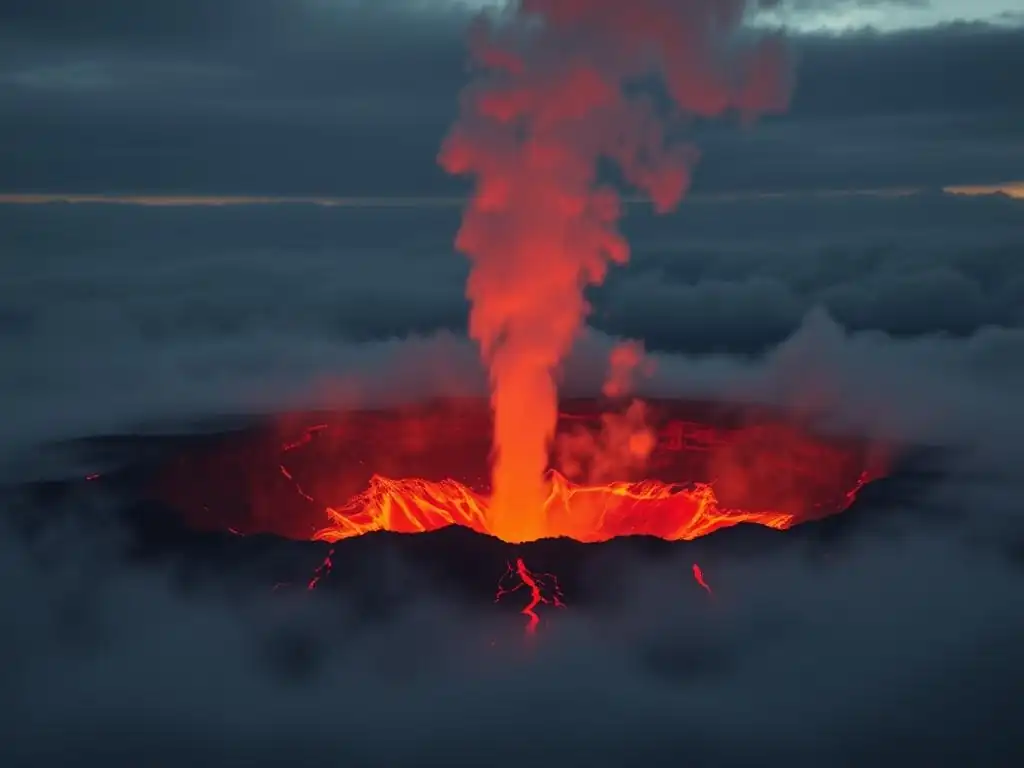
Welcome to Volcano Explorers!
Prepare to journey into the fiery heart of our planet. Have you ever wondered if we can truly know when a volcano will erupt? In " Can We Really Predict Eruptions? Exploring the Limits of RealTime Data," we delve into the fascinating, and often frustrating, world of predicting volcanic eruptions accuracy. Join us as we uncover the secrets and challenges of forecasting these powerful events, and discover just how close (or far) we are from truly mastering the art of prediction. Are you ready to uncover the truth? Let's begin!
Real-time Volcano Monitoring Networks: Our First Line of Defense
Volcano monitoring networks are critical infrastructure for understanding and predicting volcanic eruptions. These networks are composed of a suite of sophisticated instruments strategically deployed around volcanoes, both on the flanks and at a distance. Seismometers, for instance, are at the heart of these systems, meticulously recording ground vibrations caused by magma movement and tectonic stresses.
Geodetic instruments, such as GPS stations and tiltmeters, precisely measure subtle changes in the volcano's shape, indicating magma accumulation or deflation within the volcanic edifice. Gas sensors continuously sample volcanic plumes, detecting changes in the composition and flux of gases like sulfur dioxide and carbon dioxide, which can signal changes in volcanic activity.
The deployment and maintenance of these networks are complex and often challenging endeavors. Volcanoes are typically located in remote and rugged terrains, making access and infrastructure development difficult. Furthermore, the harsh environment surrounding active volcanoes, with extreme temperatures, corrosive gases, and the potential for explosive eruptions, demands robust and resilient instrumentation. Despite these challenges, the global network of volcano observatories continues to expand and refine its monitoring capabilities, providing invaluable real-time data that forms the foundation for eruption forecasting efforts.
The Crucial Role of Data Analysis in Eruption Prediction
The vast amounts of data streaming in from real-time volcano monitoring networks are only valuable when expertly analyzed and interpreted. This is where the science of volcanology truly shines, transforming raw data into meaningful insights about a volcano's state and potential for eruption. Volcanologists employ a range of sophisticated techniques to process and analyze seismic signals, ground deformation measurements, and gas emission data. Seismic data, for example, is analyzed to identify different types of volcanic earthquakes, such as volcano-tectonic earthquakes caused by faulting or long-period earthquakes associated with fluid movement, each providing clues about the underlying volcanic processes.
Furthermore, advanced statistical methods and computational models are increasingly used to identify patterns and anomalies within the data streams that might precede an eruption. These models can integrate data from multiple monitoring parameters, such as seismicity, deformation, and gas emissions, to create a more comprehensive picture of a volcano's activity.
The integration of machine learning and artificial intelligence is also emerging as a powerful tool to enhance data analysis, enabling faster and more efficient identification of subtle eruption precursors that might be missed by traditional methods. The accuracy of predicting volcanic eruptions hinges significantly on the ability to effectively analyze and interpret the complex datasets generated by real-time monitoring networks.
- Real-time Volcano Monitoring Networks: Our First Line of Defense
- The Crucial Role of Data Analysis in Eruption Prediction
- Can we accurately predict exactly when a volcanic eruption will occur?
- What types of data are most crucial for monitoring and predicting volcanic activity?
- How does the history of a volcano influence our ability to predict future eruptions?
- Why is it so hard to accurately predict volcanic eruptions, even with advanced technology?
- What can people who live near active volcanoes do to stay safe, given the limitations in prediction accuracy?
Frequently Asked Questions
Can we accurately predict exactly when a volcanic eruption will occur?
No, precise timing is currently beyond our capabilities. Volcanologists can identify increased activity and assess the probability of an eruption within a timeframe, but a pinpoint prediction is not yet possible. This is due to the complex and often unpredictable nature of magma movement.
What types of data are most crucial for monitoring and predicting volcanic activity?
Key data includes seismic activity (earthquakes), ground deformation (changes in the volcano's shape), and gas emissions (changes in the type and amount of gases released). Analyzing these factors together provides a more comprehensive picture of what's happening beneath the surface.
How does the history of a volcano influence our ability to predict future eruptions?
Past eruption patterns provide valuable insights into a volcano's typical behavior. Knowing the frequency, style (explosive or effusive), and magnitude of past eruptions helps volcanologists better anticipate potential future scenarios. However, volcanoes can also exhibit new behaviors, making prediction challenging.
Why is it so hard to accurately predict volcanic eruptions, even with advanced technology?
The Earth's interior is incredibly complex and difficult to study directly. Magma movement and interactions within the volcano are influenced by many variables, making it hard to create perfectly accurate models. There are also limitations in the data that can be collected.
What can people who live near active volcanoes do to stay safe, given the limitations in prediction accuracy?
It's crucial to be aware of official warnings and evacuation plans. Stay informed about the volcano's current activity level and prepare an emergency kit. Following the instructions of local authorities is paramount for personal safety.
Final Reflection: The Unfolding Future of Volcanic Prediction
The exploration of real-time data in predicting volcanic eruptions reveals a crucial truth: while we've made significant strides, absolute certainty remains elusive. The intricate dance between scientific advancement and the unpredictable nature of the Earth underscores the ongoing challenge of safeguarding communities living near these powerful forces of nature.
This quest to understand and predict volcanic activity has profoundly shaped our approach to disaster preparedness and risk management. The relentless pursuit of accuracy, driven by the imperative to protect lives, highlights humanity's enduring commitment to understanding and mitigating the risks posed by our planet. The only way to do great work is to love what you do.
- Steve Jobs. This quote, while not directly about volcanology, encapsulates the dedication and passion required to push the boundaries of our understanding in this complex field.
As we stand at the intersection of advanced technology and the raw power of nature, let us not be discouraged by the limitations we face. Instead, let us embrace the ongoing journey of discovery, refining our methods, sharing our knowledge, and working together to build a future where communities can coexist safely with the volcanoes that shape our world. Consider how you can contribute to a more informed and resilient future, whether through supporting scientific research, advocating for improved disaster preparedness, or simply spreading awareness about the importance of understanding our planet's dynamic processes.
Unleash Your Inner Volcanologist: Explore Further!
Thank you for exploring the fascinating, yet complex world of volcano eruption prediction with us! We hope you gained a deeper understanding of the challenges and possibilities of using real-time data. Now, let's build on that knowledge.
Here are a few ways to continue your volcanic exploration:
- Explore local volcanoes: Research their history, current monitoring efforts, and the impact on nearby communities. Even seemingly dormant volcanoes hold valuable clues to understanding their future behavior.
- Share your knowledge: Discuss the complexities and importance of volcano eruption prediction with friends and family. You might be surprised by their interest in these powerful natural forces.
- Dive deeper into volcano research: The USGS Volcano Hazards Program website offers a wealth of real-time data and information.
What question about eruption prediction sparked your curiosity the most? Share your thoughts in the comments below!