
Hotspot Havens: Plumes and the Enigmatic Origins of Magma

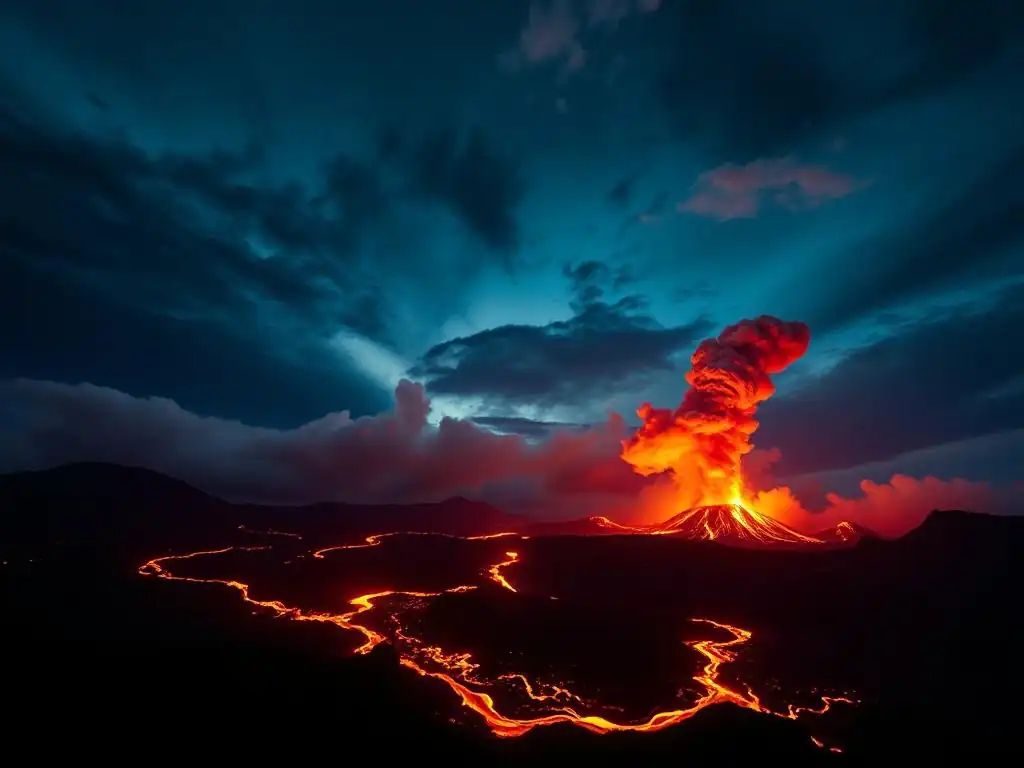
Welcome to Volcano Explorers, where the Earth's fiery secrets are revealed! Ever wondered about the origins of magma formation, the very lifeblood of volcanoes? Hotspot Havens: Plumes and the Enigmatic Origins of Magma dives deep into this molten mystery. Prepare to journey beneath the surface and uncover the forces that shape our planet's most explosive creations... Are you ready to explore?
- Introduction: Exploring the Depths of Magma Genesis
- What are Hotspots and How Do They Contribute to Magma Formation?
- The Deep Mantle Connection: Unraveling the Roots of Mantle Plumes
- The Melting Process: Understanding Magma Generation at Hotspots
- Hotspot Tracks and Plate Tectonics: Tracing the Movement of Plates
- The Enigma of Magma Origins: Unanswered Questions and Ongoing Research
- Conclusion: Hotspots as Windows into the Earth's Interior and Magma Formation
-
Frequently Asked Questions
- What are the primary theories behind the origins of magma formation?
- How do mantle plumes contribute to magma formation, especially in hotspot volcanoes?
- What role does the composition of the mantle play in determining the type of magma formed?
- What are some of the methods volcanologists use to study the origins of magma formation?
- How does understanding the origins of magma formation help us predict volcanic eruptions?
- Final Reflection: Unveiling Earth's Fiery Secrets
- Ignite Your Inner Geologist: Delve Deeper into Earth's Fiery Secrets!
Introduction: Exploring the Depths of Magma Genesis
Magma, molten rock beneath the Earth's surface, is the lifeblood of volcanoes and a fundamental force in shaping our planet. Its origins are diverse and complex, with various geological settings contributing to its formation. While plate tectonics, particularly at divergent and convergent plate boundaries, are well-established as major sites of magma generation, there exists another fascinating and less understood source: hotspots.
These volcanic regions, often located far from plate boundaries, present a unique window into the Earth's deep interior and the enigmatic processes behind magma formation. This article delves into the world of hotspots, exploring the role of mantle plumes in generating magma and shedding light on the ongoing quest to understand the origins of magma formation.
What are Hotspots and How Do They Contribute to Magma Formation?
Defining Hotspots: Volcanic Anomalies Away From Plate Boundaries
Hotspots are geographically fixed areas of intense volcanic activity that are not directly associated with the margins of tectonic plates. Unlike volcanoes at plate boundaries, which arise from the interactions of moving plates, hotspot volcanoes appear to be anchored to a deeper, more stationary source within the Earth's mantle. A prime example is the Hawaiian Islands, a chain of volcanoes located in the middle of the Pacific Plate, thousands of kilometers from any plate boundary.
These volcanic anomalies challenge the traditional plate tectonic paradigm and suggest a fundamentally different mechanism for magma generation, one that taps into the Earth's deep thermal reservoirs. The consistent volcanic activity over millions of years in locations like Hawaii, Yellowstone, and Iceland points towards a persistent and powerful source of heat and magma originating from the Earth's depths.
The Role of Mantle Plumes in Generating Magma
The prevailing theory to explain hotspots is the mantle plume hypothesis. This theory proposes that hotspots are fed by mantle plumes, upwellings of abnormally hot, solid material rising from deep within the Earth's mantle, possibly from the core-mantle boundary, approximately 2,900 kilometers beneath the surface. These plumes are thought to be buoyant due to their higher temperature and lower density compared to the surrounding mantle. As a mantle plume rises, it experiences a decrease in pressure.
This decompression causes the mantle material to partially melt, generating magma. The rising plume acts like a thermal conveyor belt, bringing heat from the deep Earth and facilitating magma formation in the upper mantle and lithosphere. The sheer volume of erupted material at hotspots like Hawaii, estimated to be around 1 cubic kilometer per year over millions of years, underscores the efficiency of mantle plumes in generating magma.
Comparing Hotspot Magma to Magma Formed at Plate Boundaries
Magma generated at hotspots often exhibits distinct characteristics compared to magma formed at plate boundaries, particularly at mid-ocean ridges and subduction zones. Mid-ocean ridge magmas, formed by decompression melting of the upper mantle as plates diverge, are typically basaltic in composition and relatively uniform globally. Subduction zone magmas, generated by the addition of water to the mantle wedge above a subducting plate, are more diverse, ranging from basaltic to andesitic and rhyolitic, and are enriched in volatile components.
Hotspot magmas, while predominantly basaltic, can show a wider range in composition and isotopic signatures, reflecting the potentially deeper and more heterogeneous source regions in the mantle. For example, some hotspot volcanoes, like those in Iceland, erupt magmas with higher concentrations of incompatible elements, suggesting contributions from a different, possibly primordial, mantle reservoir compared to the source of mid-ocean ridge basalts.
The Deep Mantle Connection: Unraveling the Roots of Mantle Plumes
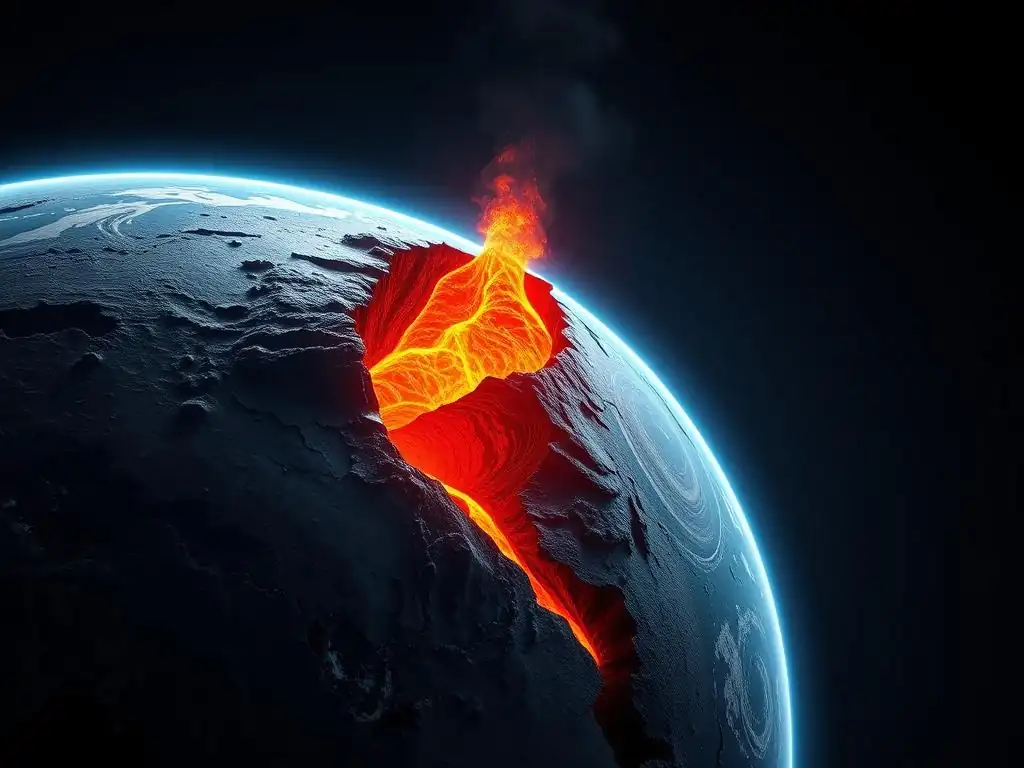
Seismic Evidence for the Existence of Deep Mantle Plumes
Seismic tomography, a technique that uses seismic waves to image the Earth's interior, provides crucial evidence for the existence of mantle plumes. Studies using seismic wave velocities have revealed columns of slower-velocity material extending from the deep mantle towards the surface beneath many hotspot locations. Slower seismic wave velocities are generally associated with hotter, less dense material, consistent with the concept of hot mantle plumes.
For example, seismic studies beneath Hawaii, Iceland, and Yellowstone have imaged plume-like structures extending hundreds to thousands of kilometers into the mantle. While the precise depth of origin and the detailed structure of mantle plumes are still subjects of ongoing research, seismic evidence strongly supports their existence and their role in connecting hotspots to the deep Earth.
The Composition of Mantle Plumes: Insights into the Earth's Interior
Analyzing the chemical composition of hotspot lavas provides valuable insights into the nature of mantle plumes and the composition of the Earth's deep interior. Hotspot lavas often exhibit isotopic ratios that are distinct from mid-ocean ridge basalts and are interpreted to reflect contributions from different mantle reservoirs. For instance, some hotspot lavas show isotopic signatures suggesting a source region that is less depleted in incompatible elements than the source of mid-ocean ridge basalts.
This has led to the idea that mantle plumes may sample a primordial, undegassed mantle reservoir, possibly located in the lower mantle or at the core-mantle boundary. The study of noble gas isotopes, such as helium-3 and helium-4, in hotspot lavas is particularly informative, as these isotopes can trace mantle components that have remained relatively isolated since the Earth's formation.
How Mantle Plumes Influence the Chemical Signature of Magma
Mantle plumes not only provide a heat source for magma generation but also contribute to the chemical diversity of magma. As plumes ascend through the mantle, they interact with different mantle layers, potentially entraining material and modifying their chemical composition. The interaction of plume material with the surrounding peridotitic mantle can lead to metasomatism, a process where fluids or melts from the plume alter the mineralogy and chemical composition of the surrounding mantle.
This process can enrich the mantle in incompatible elements and volatile components, influencing the composition of the magma generated by decompression melting. The complex interplay between plume material and the ambient mantle results in the diverse chemical signatures observed in hotspot lavas, reflecting the intricate processes involved in magma origins within mantle plumes.
The Melting Process: Understanding Magma Generation at Hotspots
Decompression Melting: A Key Mechanism in Hotspot Magma Formation
Decompression melting is considered the primary mechanism for magma generation at hotspots. As a mantle plume rises towards the surface, the pressure exerted on the plume material decreases. This reduction in pressure lowers the melting point of mantle rocks, causing them to partially melt even though the temperature may remain relatively constant.
The extent of decompression melting is influenced by the ascent rate of the plume, the initial temperature of the plume material, and the composition of the mantle. Numerical models suggest that significant volumes of magma can be generated through decompression melting as a mantle plume rises and spreads beneath the lithosphere, explaining the voluminous eruptions observed at hotspot volcanoes like those in Hawaii and Iceland.
The Influence of Water and Other Volatiles on Magma Generation
While decompression melting is the dominant process, the presence of water and other volatile components can significantly influence magma generation at hotspots. Water, in particular, can drastically lower the melting temperature of mantle rocks. Even small amounts of water in the mantle can promote melting at shallower depths and increase the volume of magma produced.
Mantle plumes are thought to carry some amount of water and other volatiles from their deep source regions. The introduction of these volatiles into the melting regime can enhance magma generation and alter the composition of the resulting melts. For example, the presence of water can influence the crystallization sequence of minerals in magma and affect the explosivity of volcanic eruptions.
Partial Melting and the Creation of Diverse Magma Compositions
Magma generation at hotspots is a process of partial melting, where only a fraction of the mantle rock melts to form magma. The degree of partial melting and the mineralogy of the source rock control the composition of the resulting magma. Different minerals in the mantle melt at different temperatures and pressures, leading to variations in magma composition depending on the conditions of melting and the source material.
For instance, low degrees of partial melting tend to produce magmas enriched in incompatible elements, while higher degrees of partial melting can generate magmas that are more depleted in these elements. The complex interplay of partial melting, mantle heterogeneity, and plume dynamics contributes to the wide range of magma compositions observed at different hotspots and even within individual hotspot volcanic chains.
Hotspot Tracks and Plate Tectonics: Tracing the Movement of Plates
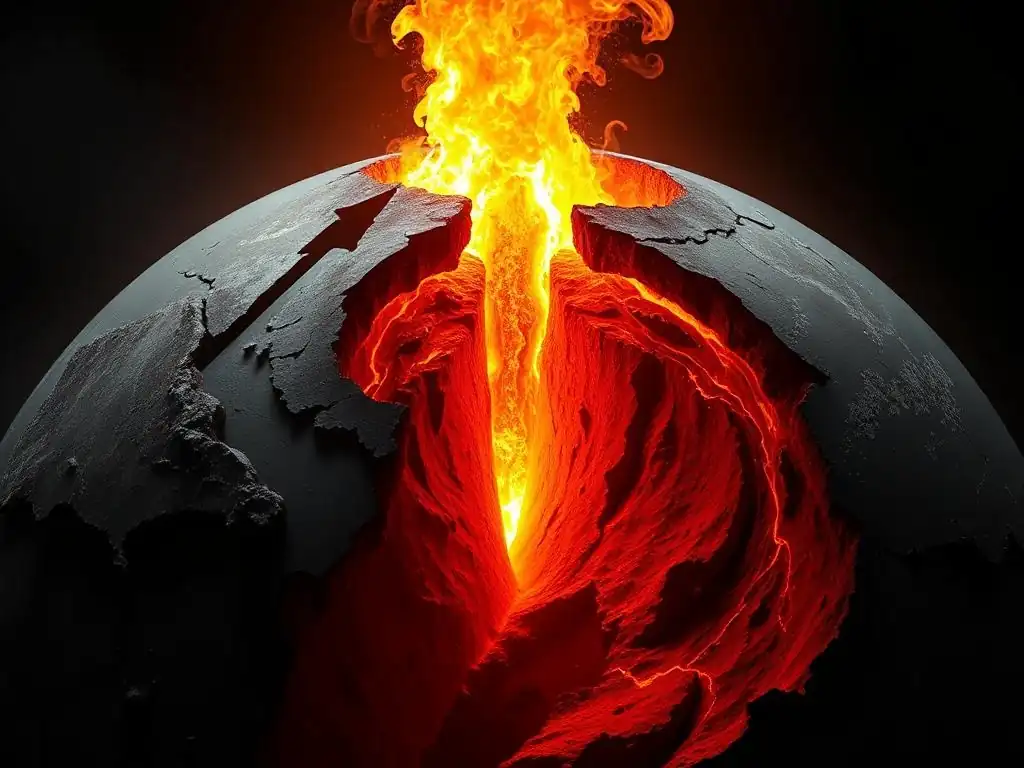
The Formation of Linear Volcanic Chains: A Hotspot Legacy
One of the most striking features associated with hotspots is the formation of linear volcanic chains. As a tectonic plate moves over a relatively stationary hotspot, a succession of volcanoes is created, forming a chain that records the direction and rate of plate motion over millions of years. The Hawaiian-Emperor Seamount Chain is a classic example of a hotspot track.
The active volcanoes of the Hawaiian Islands are currently located above the hotspot, while the older, extinct volcanoes and seamounts extend in a chain to the northwest, representing the Pacific Plate's movement over the hotspot. The age progression along these volcanic chains, with the youngest volcanoes located at one end and the oldest at the other, provides compelling evidence for the plate tectonic model and the stationary nature of hotspots.
Using Hotspot Tracks to Reconstruct Past Plate Motions
Hotspot tracks are invaluable tools for reconstructing past plate motions. By dating the ages of volcanoes along a hotspot chain and analyzing their spatial distribution, geoscientists can determine the direction and speed of plate movement over geological timescales. Changes in the orientation of hotspot tracks, such as the bend in the Hawaiian-Emperor Seamount Chain, can reflect changes in plate motion direction.
These reconstructions of past plate motions are crucial for understanding the long-term evolution of the Earth's surface and the dynamics of plate tectonics. Hotspot tracks provide a unique and independent record of plate movements, complementing other geological and paleomagnetic data used to reconstruct Earth's tectonic history.
The Hawaiian-Emperor Seamount Chain: A Case Study
The Hawaiian-Emperor Seamount Chain serves as a quintessential case study for understanding hotspot volcanism and plate tectonics. This chain extends over 5,800 kilometers across the Pacific Ocean and records over 80 million years of volcanic activity. The active volcanoes of the Hawaiian Islands, including Kilauea and Mauna Loa, represent the current location of the hotspot.
Moving northwest along the chain, the islands and seamounts become progressively older and more eroded, culminating in the Emperor Seamounts, which formed when the Pacific Plate was moving in a different direction. The bend in the chain, known as the Hawaiian-Emperor Bend, is thought to record a change in the direction of Pacific Plate motion around 47 million years ago. The Hawaiian-Emperor Seamount Chain provides a detailed and well-studied example of how hotspot volcanism and plate tectonics interact to shape the Earth's surface.
The Enigma of Magma Origins: Unanswered Questions and Ongoing Research
Variations in Hotspot Magma Composition: A Puzzle for Geoscientists
Despite significant progress in understanding hotspot volcanism, several enigmas remain regarding the origins of magma formation at hotspots. One puzzling aspect is the variability in magma composition observed across different hotspots and even within individual hotspot tracks. While most hotspot magmas are basaltic, they exhibit variations in trace element and isotopic ratios, suggesting different mantle sources or melting processes.
Some hotspots, like Iceland, produce magmas with unique geochemical signatures that are difficult to reconcile with simple mantle plume models. Understanding the causes of these compositional variations and their implications for the origin and evolution of mantle plumes is an active area of research.
The Debate Over the Origin and Structure of Mantle Plumes
The origin and structure of mantle plumes are still debated topics in geosciences. While the deep mantle origin of some plumes is supported by seismic evidence and geochemical data, the precise depth of origin and the mechanisms that initiate plume ascent remain uncertain. Some researchers propose that plumes originate from the core-mantle boundary, while others suggest shallower origins within the mantle transition zone.
The structure of mantle plumes is also debated, with models ranging from narrow, cylindrical plumes to broader, more complex upwellings. High-resolution seismic imaging and geodynamic modeling are continuously refining our understanding of plume structure and dynamics, but many questions about their deep roots and ascent mechanisms persist.
Future Directions in Hotspot Research: Unveiling the Secrets of Magma
Future research on hotspots will likely focus on further unraveling the secrets of magma origins and the deep Earth. Advancements in seismic tomography, geochemical analysis, and geodynamic modeling are providing new tools to probe the structure and dynamics of mantle plumes and to understand the complex processes of magma generation at hotspots.
Studies of submarine volcanoes along hotspot tracks are revealing new insights into the early stages of hotspot volcanism and the evolution of hotspot islands. Furthermore, investigations into the role of volatiles, particularly water and carbon dioxide, in plume dynamics and magma generation are crucial for a more complete understanding of hotspot volcanism and its impact on Earth's geological evolution.
Conclusion: Hotspots as Windows into the Earth's Interior and Magma Formation
Hotspots, fueled by mantle plumes, represent a unique and fascinating mechanism for magma formation, distinct from plate boundary volcanism. They provide a window into the Earth's deep mantle, revealing information about its composition, thermal state, and dynamic processes.
The study of hotspot volcanoes and their linear tracks has been instrumental in developing and refining the theory of plate tectonics and understanding the long-term evolution of our planet. While many questions remain about the origins of magma formation at hotspots and the nature of mantle plumes, ongoing research continues to unveil the secrets of these enigmatic volcanic regions and their profound influence on Earth's geological and geochemical cycles.
Frequently Asked Questions
What are the primary theories behind the origins of magma formation?
The most prominent theories involve decompression melting, which occurs as mantle rock rises and pressure decreases, and flux melting, where the introduction of water lowers the melting point of the mantle. Heat transfer from existing magma bodies can also trigger melting in surrounding rocks.
How do mantle plumes contribute to magma formation, especially in hotspot volcanoes?
Mantle plumes are upwellings of abnormally hot rock from deep within the Earth's mantle. As this hot material rises and undergoes decompression melting, it generates significant quantities of magma, leading to the formation of hotspot volcanoes like those in Hawaii.
What role does the composition of the mantle play in determining the type of magma formed?
The mantle's composition, particularly the presence of certain minerals and volatile elements, influences the melting temperature and the resulting chemical makeup of the magma. Variations in composition can lead to different types of volcanic eruptions.
What are some of the methods volcanologists use to study the origins of magma formation?
Volcanologists use a variety of techniques, including seismic imaging to map the structure of the Earth's interior, geochemical analysis of volcanic rocks to determine their origin and composition, and modeling of magma dynamics to understand the processes involved in magma formation.
How does understanding the origins of magma formation help us predict volcanic eruptions?
By understanding the processes that generate magma, we can better assess the potential for future eruptions. This includes monitoring changes in magma supply, composition, and pressure, which can provide valuable clues about impending volcanic activity and improve eruption forecasting.
Final Reflection: Unveiling Earth's Fiery Secrets
The journey into the depths of magma formation, as explored in this article, highlights the enduring mystery surrounding Earth's internal processes. Understanding the origins of magma is not just an academic pursuit; it's crucial for predicting volcanic activity, harnessing geothermal energy, and ultimately, comprehending the very evolution of our planet. The ongoing debate surrounding mantle plumes and their role in magma generation underscores the complexity and dynamism of the Earth's interior, a complexity that continues to challenge and inspire scientists today.
The study of magma formation has profoundly shaped our understanding of plate tectonics and the Earth's geological history. The realization that magma isn't simply a uniform substance but a product of diverse and intricate processes has revolutionized our approach to studying volcanoes and their impact on the environment. The Earth is a dynamic planet, constantly reshaping itself through the interplay of internal forces and surface processes. Understanding the origins of magma is key to deciphering this complex dance.
This quote encapsulates the ongoing quest to unravel the secrets hidden beneath our feet and the profound implications for our understanding of the world around us.
As we conclude this exploration into the origins of magma formation, I invite you to consider the immense power and beauty of the Earth's internal workings. Reflect on the fact that beneath our feet, a fiery crucible is constantly shaping the landscape we inhabit. Let this knowledge inspire a deeper appreciation for the planet we call home and a renewed commitment to understanding and protecting its delicate balance. Consider how your own actions, however small, contribute to the Earth's overall health, and strive to be a responsible steward of this remarkable planet.
Ignite Your Inner Geologist: Delve Deeper into Earth's Fiery Secrets!
Thank you for joining us on this journey to uncover the mysteries of hotspot plumes! We hope you found this exploration of magma's origins as fascinating as we do. Now it's your turn to get involved and expand your understanding of volcanology.
Here's how you can continue your exploration:
- Boldly propose your own theory about a hotspot location that challenges current scientific understanding. What unique geological features or evidence could support your alternative explanation?
- Dive into Volcano Explorers' archives and compare the plume dynamics of different hotspots. What patterns do you observe?
- Share this article with a friend or colleague who shares your passion for geology and spark a conversation about the future of hotspot research.
What's the most surprising thing you learned about hotspot plumes and magma origins, and how will you use that knowledge to further your understanding of Earth's processes?