
From Steam Jets to Ash Clouds: The Spectrum of Phreatic Eruption Intensity

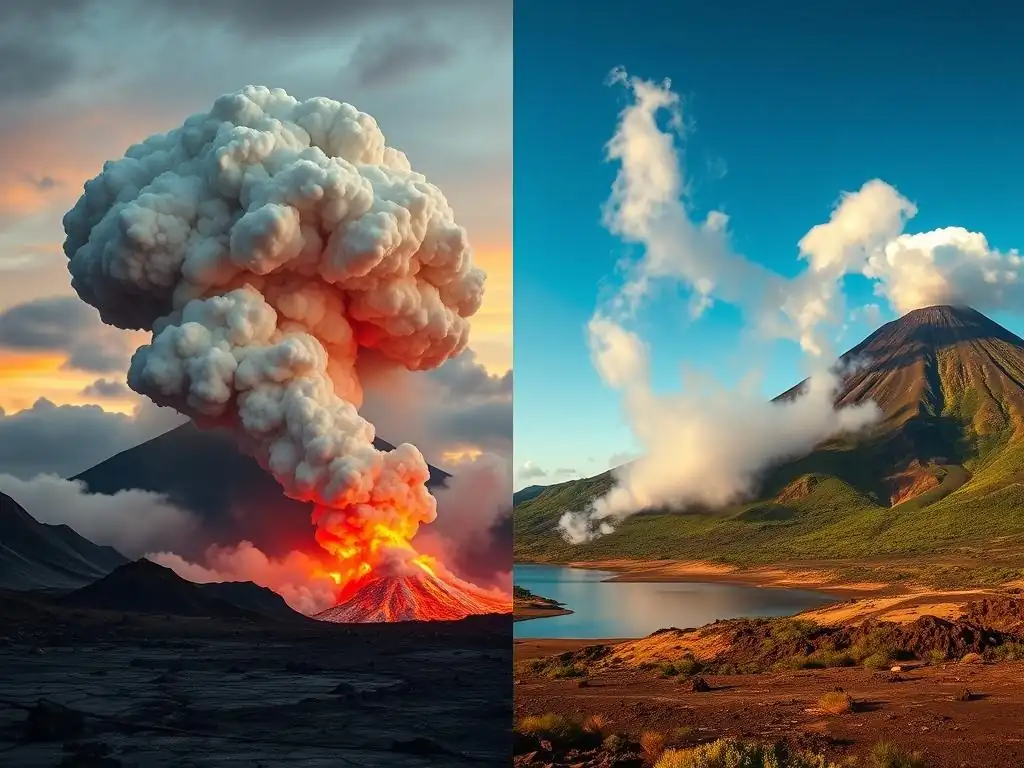
Welcome to Volcano Explorers, where the Earth's fiery heart beats! Ever wondered about the subtle whispers before a volcanic roar? Prepare to unravel the mysteries, starting with a crucial understanding of phreatic eruption intensity. But what exactly determines the scale, and what are the hidden dangers? Dive in and discover the fascinating science behind these steam-driven events, and learn how even the seemingly smallest eruption can pack a surprising punch.
- Understanding Phreatic Eruptions: An Introduction for Volcano Explorers
- Phreatic Eruption Intensity Explained: Exploring the Scale of Steam Explosions
- The Spectrum of Phreatic Eruption Intensity: From Mild to Explosive
- Hazards Associated with Phreatic Eruptions: Assessing the Risks
- Monitoring and Predicting Phreatic Eruptions: A Volcanologist's Perspective
- Famous Phreatic Eruptions: Learning from Past Events
- Living Near Volcanoes Prone to Phreatic Eruptions: Safety and Preparedness
- Phreatic Eruptions: A Dynamic and Unpredictable Volcanic Phenomenon
- Frequently Asked Questions
- Final Reflection: Embracing the Volatile Dance of Earth
- Ignite Your Inner Volcanologist: Track Eruptions Like a Pro!
Understanding Phreatic Eruptions: An Introduction for Volcano Explorers
The Role of Water in Phreatic Explosions
Phreatic eruptions, often referred to as steam-blast eruptions, are a distinct type of volcanic explosion driven by the interaction of magma or hot volcanic rocks with water. Unlike magmatic eruptions, which are propelled by the pressure of gas within magma itself, phreatic eruptions are fueled by the rapid heating and flashing of water into steam.
This water can originate from various sources, including groundwater, surface water like lakes or rivers, or even snow and ice. When this water comes into contact with a heat source, such as hot rocks or magma beneath the surface, it is instantaneously heated far beyond its boiling point.
The dramatic expansion of water into steam, which can increase in volume by over a thousand times, creates immense pressure. If this pressure builds up sufficiently within the subsurface, it overcomes the strength of the surrounding rocks, leading to a violent explosion. This explosion shatters the overlying rocks and ejects a mixture of steam, water, rock fragments, and ash into the atmosphere.
Crucially, in a purely phreatic eruption, no fresh magma is erupted; the ejected material consists solely of pre-existing rocks and steam. The intensity of these explosions can vary widely, ranging from relatively minor steam vents to powerful blasts capable of sending ash plumes kilometers into the air.
Distinguishing Phreatic Eruptions from Other Volcanic Events
Phreatic eruptions are often mistaken for other types of volcanic activity, particularly because they can produce ash plumes and explosions that resemble magmatic eruptions. However, key distinctions exist. The primary difference lies in the driving force behind the eruption. Magmatic eruptions are driven by the expansion of dissolved gases within magma as it rises to the surface. These gases, primarily water vapor, carbon dioxide, and sulfur dioxide, exsolve and expand, fragmenting the magma and propelling it explosively. In contrast, phreatic eruptions are driven by external water interacting with a heat source.
Another critical difference is the composition of the erupted material. Magmatic eruptions typically eject juvenile material, which is newly formed magma that was part of the recent volcanic activity. Phreatic eruptions, on the other hand, erupt mostly fragmented country rock – the pre-existing rocks surrounding the volcanic vent – along with steam and water. While some older, solidified volcanic rocks might be present, the absence of fresh, glassy volcanic material is a hallmark of a phreatic eruption. This difference is crucial for volcanologists in determining the type of eruption occurring and assessing the potential hazards.
Phreatic vs. Phreatomagmatic Eruptions: A Key Difference
While both phreatic and phreatomagmatic eruptions involve the interaction of water and heat, they differ significantly in the degree of magmatic involvement and the resulting eruption characteristics. Phreatic eruptions, as previously discussed, are purely steam-driven, with no direct ejection of magma. Phreatomagmatic eruptions, however, involve the interaction of magma and water in a way that significantly enhances the explosivity and alters the eruption products. In phreatomagmatic eruptions, magma comes into direct contact with water, leading to a more energetic and complex interaction.
The intense heat of the magma causes rapid vaporization of water, similar to phreatic eruptions. However, the presence of magma introduces additional factors. The thermal energy transfer is far greater, and the magma itself can be fragmented by the explosive interaction, leading to the ejection of both juvenile magmatic material and fragmented country rock.
Phreatomagmatic eruptions tend to be more explosive and produce finer-grained ash compared to purely phreatic eruptions. They also often form distinctive landforms like maars and tuff rings, which are broad, low-relief volcanic craters surrounded by rings of fragmented material. Understanding the distinction between phreatic and phreatomagmatic eruptions is vital for hazard assessment, as phreatomagmatic eruptions are generally more hazardous due to their increased explosivity and wider range of eruption products.
Phreatic Eruption Intensity Explained: Exploring the Scale of Steam Explosions
Factors Influencing Phreatic Eruption Intensity: A Multifaceted Analysis
The intensity of phreatic eruptions can vary dramatically, ranging from gentle steam vents to powerful explosions that eject ash and rock fragments for kilometers. Several factors contribute to this wide spectrum of intensity, making phreatic eruptions a complex and sometimes unpredictable volcanic phenomenon. These factors can be broadly categorized into those related to water, the heat source, and the geological setting.
Volume of Water Interacting with Magma or Heat Source
The amount of water involved in the interaction is a primary control on the intensity of a phreatic eruption. A larger volume of water, when rapidly heated, will generate a greater amount of steam and thus a more powerful explosion. For instance, eruptions occurring in hydrothermal systems rich in groundwater or near crater lakes often have the potential to be more intense than those in drier environments with limited water availability.
The rate at which water can access the heat source is also crucial. If water infiltration is rapid and sustained, it can fuel more prolonged and potentially more intense eruptive activity.
Depth and Temperature of the Heat Source
The depth and temperature of the heat source play a critical role in determining the efficiency of steam generation and the resulting eruption intensity. A shallower heat source allows for more rapid and direct interaction with water, leading to quicker and potentially more violent vaporization. Conversely, a deeper heat source might result in a slower rate of steam production, potentially moderating the eruption intensity.
The temperature of the heat source is equally important. Magma at higher temperatures will transfer heat to the water more rapidly, leading to more vigorous steam production and a more explosive eruption. Hot volcanic rocks, although cooler than magma, can still provide sufficient heat to drive phreatic eruptions, especially if the volume of interacting water is significant.
Geological Setting and Conduit Geometry
The geological setting and the geometry of the volcanic conduit system influence how pressure builds up and is released during a phreatic eruption. Confined aquifers or impermeable rock layers can trap steam and pressure, leading to more explosive releases when the confining pressure is overcome. The presence of pre-existing fractures and faults can also influence eruption intensity.
These pathways can act as conduits for water to reach the heat source, or they can provide zones of weakness where explosions are more likely to occur. The shape and size of the conduit, or vent, also play a role. A narrow, constricted vent might lead to a build-up of pressure and a more explosive release compared to a wider, more open vent that allows for easier steam venting.
The Spectrum of Phreatic Eruption Intensity: From Mild to Explosive
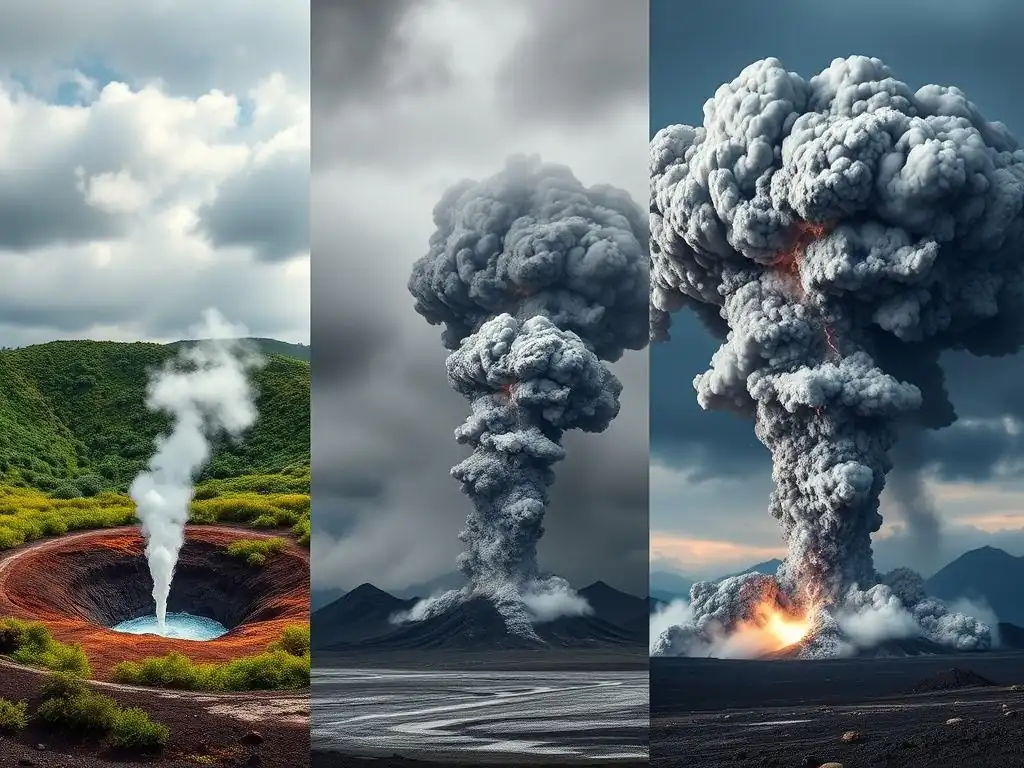
Low-Intensity Phreatic Activity: Steam Jets and Minor Ash Venting
Low-intensity phreatic activity represents the gentler end of the spectrum of steam-driven eruptions. These events are characterized by relatively weak explosions that primarily eject steam and small amounts of fragmented rock and ash. They often occur in hydrothermal areas where heated groundwater or steam vents already exist, indicating an ongoing interaction between heat and water beneath the surface. While less dramatic than larger eruptions, even these minor events can provide valuable insights into the underlying volcanic system and potential for escalation.
Characteristics of Low-Intensity Phreatic Bursts
Low-intensity phreatic bursts typically involve the ejection of steam jets, often accompanied by minor amounts of ash and small rock fragments. The height of these steam plumes is generally low, often only reaching a few tens to hundreds of meters above the vent. Ash production is minimal, and any ashfall is usually localized and thin.
Explosions may be sporadic or intermittent, and the overall duration of activity can range from minutes to hours. These events often occur without significant precursory signals, making them challenging to predict on a short-term basis. The hazard posed by low-intensity phreatic bursts is generally low, primarily limited to areas very close to the vent due to potential steam burns or minor rockfall.
Examples of Mild Phreatic Eruptions Around the World
Examples of mild phreatic eruptions are numerous and occur in various volcanic regions globally. For instance, the numerous geothermal areas in Iceland, like Hveravellir and Landmannalaugar, frequently exhibit small phreatic bursts and steam vents. In Yellowstone National Park in the United States, geysers and hot springs are driven by phreatic activity, and occasionally, minor phreatic explosions occur within these geothermal basins.
Japan, with its abundant hot springs and active volcanoes, also experiences frequent low-intensity phreatic activity. For example, small steam explosions have been observed at Hakone volcano in recent years, highlighting the ongoing hydrothermal activity within this volcanic system. These examples demonstrate that low-intensity phreatic activity is a common feature of many volcanic and geothermal areas and represents a baseline level of steam-driven activity.
Moderate Phreatic Eruptions: Ash Plumes and Localized Impacts
Moderate phreatic eruptions represent a step up in intensity from minor steam bursts. These events produce more substantial ash plumes that can rise several kilometers into the atmosphere and have localized impacts, including ashfall and potential for minor lahars (mudflows) if sufficient water is present on the volcano's slopes. While still not involving fresh magma, moderate phreatic eruptions can pose a more significant hazard to areas closer to the vent and require closer monitoring.
Features of Moderate Phreatic Explosions
Moderate phreatic explosions are characterized by the generation of ash plumes that can reach heights of 2 to 5 kilometers or more above the vent. The ash plumes are typically composed of fragmented country rock, older volcanic debris, and steam. Ashfall can extend several kilometers downwind, potentially affecting nearby communities or infrastructure. The explosions themselves can be loud and felt as ground shaking in the immediate vicinity.
Ejecta, including rock fragments of varying sizes, can be thrown hundreds of meters from the vent. In areas with significant rainfall or snowmelt, moderate phreatic eruptions can trigger small lahars as ash and debris mix with water and flow down drainage channels. The duration of moderate phreatic eruptions can range from hours to days, and they may be preceded by subtle increases in seismic activity or changes in hydrothermal activity.
Case Studies: Ontake Volcano 2014 Eruption
The 2014 eruption of Mount Ontake in Japan serves as a stark example of a moderate phreatic eruption with tragic consequences. On September 27, 2014, without significant precursory activity, Ontake volcano suddenly erupted. The eruption was phreatic, driven by the rapid heating of groundwater.
The explosion produced an ash plume that rose several kilometers high and generated significant ashfall across the summit area, a popular hiking destination. Tragically, the eruption occurred on a weekend with clear weather, and many hikers were caught unprepared. The primary hazards were ballistic projectiles (rock fragments ejected at high velocity) and pyroclastic density currents (hot mixtures of gas and rock fragments that flow rapidly down slope).
The eruption resulted in 58 fatalities, mostly due to ballistic impacts and being caught in pyroclastic density currents near the summit. The Ontake eruption highlighted the rapid onset and the potential for significant hazards even from phreatic eruptions that do not involve fresh magma.
High-Intensity Phreatic Eruptions: Significant Ash Clouds and Potential Hazards
High-intensity phreatic eruptions represent the most explosive end of the phreatic eruption spectrum. These events are characterized by powerful explosions that can generate substantial ash clouds reaching into the stratosphere, widespread ashfall, and significant hazards, including pyroclastic surges, ballistic projectiles, and the potential for lahars. While still steam-driven, these eruptions can mimic the destructive power of larger magmatic eruptions and pose serious risks over a wider area.
Defining Characteristics of High-Intensity Phreatic Events
High-intensity phreatic eruptions are defined by their large explosive force and the scale of their impacts. Ash plumes can reach heights of 10 kilometers or more, potentially affecting air traffic and causing widespread ashfall that can disrupt communities, agriculture, and infrastructure over considerable distances. The explosions are powerful, generating loud sonic booms and significant ground shaking. Pyroclastic surges, which are ground-hugging, fast-moving flows of hot gas and rock debris, are a major hazard associated with high-intensity phreatic eruptions.
These surges can travel several kilometers from the vent and are extremely destructive. Ballistic projectiles, including large rock fragments and blocks, can be ejected to distances of several kilometers, posing a significant impact hazard. High-intensity phreatic eruptions can also trigger large lahars, especially if they occur in areas with significant snow or ice cover, or during periods of heavy rainfall.
The Potential for Phreatic Eruptions to Escalate Quickly
One of the particularly challenging aspects of phreatic eruptions, especially those that become high-intensity, is their potential for rapid escalation. Unlike some magmatic eruptions that may exhibit clear precursory signals over days or weeks, phreatic eruptions can sometimes escalate from minor steam venting to powerful explosions in a very short timeframe, sometimes within minutes or hours. This rapid escalation is due to the complex interplay of factors controlling steam generation and pressure build-up beneath the surface.
Changes in groundwater flow, shifts in the location or intensity of the heat source, or sudden breaches in confining rock layers can trigger rapid increases in steam production and explosivity. This potential for rapid escalation underscores the need for continuous monitoring of volcanoes prone to phreatic activity and rapid response capabilities in case of increased activity.
Examples of Significant Phreatic Explosions in Volcanic History
Throughout volcanic history, there have been several notable examples of significant phreatic explosions that illustrate the potential scale and impact of these events. The 1980 eruption of Mount St. Helens, while primarily a magmatic eruption, included a significant phreatic phase in its early stages. The initial explosions were steam-driven, triggered by the bulging north flank of the volcano and the subsequent landslide that depressurized the hydrothermal system.
More purely phreatic examples include the 1965 eruption of Taal Volcano in the Philippines, which was a powerful phreatic explosion that generated a significant ash plume and pyroclastic surges, causing substantial damage and fatalities. The 1995-1996 eruptions at Karymsky volcano in Kamchatka, Russia, also included periods of intense phreatic and phreatomagmatic activity, with significant explosive bursts and ash plumes. These historical examples highlight that phreatic eruptions can be significant geological events with considerable destructive potential, even in the absence of fresh magma.
Hazards Associated with Phreatic Eruptions: Assessing the Risks
Understanding the Dangers of Steam and Ash Emissions
Even though phreatic eruptions do not erupt fresh magma, they still pose a range of significant hazards. Steam emissions, while seemingly benign, can be scalding and dangerous at close range. The steam ejected in phreatic eruptions is superheated and can cause severe burns. Ash emissions, while composed of fragmented rock rather than volcanic glass, can still be hazardous.
The ash particles, though not hot upon landing, can be abrasive and irritating to the eyes, lungs, and skin. Fine ash can also penetrate buildings and machinery, causing damage and disruption. Heavy ashfall can collapse roofs, contaminate water supplies, and disrupt transportation and communication networks. Furthermore, the ash plumes themselves can pose a hazard to aviation, as volcanic ash can damage aircraft engines.
Pyroclastic Surges and Ballistic Projectiles in Phreatic Eruptions
Pyroclastic surges are among the most dangerous hazards associated with phreatic eruptions, particularly those of moderate to high intensity. These surges are fast-moving, ground-hugging flows of hot gas, steam, and rock debris that can travel at speeds exceeding 100 kilometers per hour. They are generated by the explosive expansion of steam and the collapse of eruption columns. Pyroclastic surges are extremely hot and destructive, capable of incinerating everything in their path, including vegetation, buildings, and vehicles.
Even relatively small pyroclastic surges can be lethal. Ballistic projectiles, which are rock fragments ejected explosively from the vent, are another significant hazard. These projectiles can range in size from small pebbles to large blocks weighing several tons and can be thrown hundreds of meters to kilometers from the vent. Ballistic projectiles pose a direct impact hazard, capable of causing serious injury or death and damaging structures.
Lahar Formation Following Phreatic Activity
Lahars, or volcanic mudflows, are a secondary hazard that can be triggered by phreatic eruptions, especially in areas with steep slopes, significant rainfall, or snow and ice cover. Phreatic eruptions deposit ash and fragmented rock on the volcano's flanks, which can become unstable and easily mobilized by water. Rainfall or snowmelt can mix with the loose volcanic debris, forming dense, fast-flowing lahars that travel down drainage channels.
Lahars can be extremely destructive, capable of eroding riverbeds, destroying infrastructure, and burying valleys in mud and debris. Even relatively small phreatic eruptions can generate lahars if conditions are favorable, and the hazard can persist for months or even years after the eruption as loose volcanic material remains on the slopes.
Monitoring and Predicting Phreatic Eruptions: A Volcanologist's Perspective
Identifying Precursors to Phreatic Activity: Early Warning Signs
Predicting phreatic eruptions presents unique challenges compared to magmatic eruptions, primarily because they are driven by external water interaction rather than the ascent of magma itself. However, volcanologists utilize a variety of monitoring techniques to detect potential precursors to phreatic activity and assess the evolving hazard. Changes in hydrothermal activity are often key indicators.
Increases in steam discharge from fumaroles, changes in hot spring temperatures or chemistry, and the appearance of new steam vents can signal increased heat input and potential for phreatic explosions. Ground deformation, although often subtle, can also be an indicator. Inflation of the ground around a hydrothermal area might suggest increased pressure build-up beneath the surface.
The Role of Seismic Monitoring, Gas Measurements, and Ground Deformation Analysis
Seismic monitoring is a crucial tool for detecting precursory activity to phreatic eruptions. While phreatic eruptions may not always be preceded by strong volcanic earthquakes associated with magma movement, changes in background seismicity, such as increases in low-frequency earthquakes or tremor, can indicate fluid movement and pressure changes within the hydrothermal system. Gas measurements can also provide valuable information.
Changes in the composition or flux of volcanic gases, particularly increases in steam output or changes in the ratios of gases like carbon dioxide and sulfur dioxide, can reflect changes in the heat source or hydrothermal system. Ground deformation monitoring, using techniques like GPS and InSAR (Interferometric Synthetic Aperture Radar), can detect subtle changes in ground elevation that might indicate pressure build-up or fluid migration. Combining these monitoring techniques provides a more comprehensive picture of volcanic activity and improves the ability to detect potential phreatic eruption precursors.
Challenges in Predicting Phreatic Eruptions: The Importance of Continuous Monitoring
Despite advances in monitoring techniques, predicting phreatic eruptions remains challenging due to their often rapid onset and the complex interplay of factors that trigger them. Phreatic eruptions can sometimes occur with little to no clear precursory signals, making short-term prediction difficult. The rapid escalation potential, as seen in the Ontake 2014 eruption, further complicates forecasting efforts.
The subsurface hydrothermal systems that drive phreatic eruptions are often complex and poorly understood, making it difficult to model and anticipate their behavior precisely. Therefore, continuous, multi-parameter monitoring is essential for volcanoes prone to phreatic activity. Real-time data analysis and rapid assessment capabilities are crucial for providing timely warnings and mitigating the hazards associated with these unpredictable steam-driven explosions.
Famous Phreatic Eruptions: Learning from Past Events
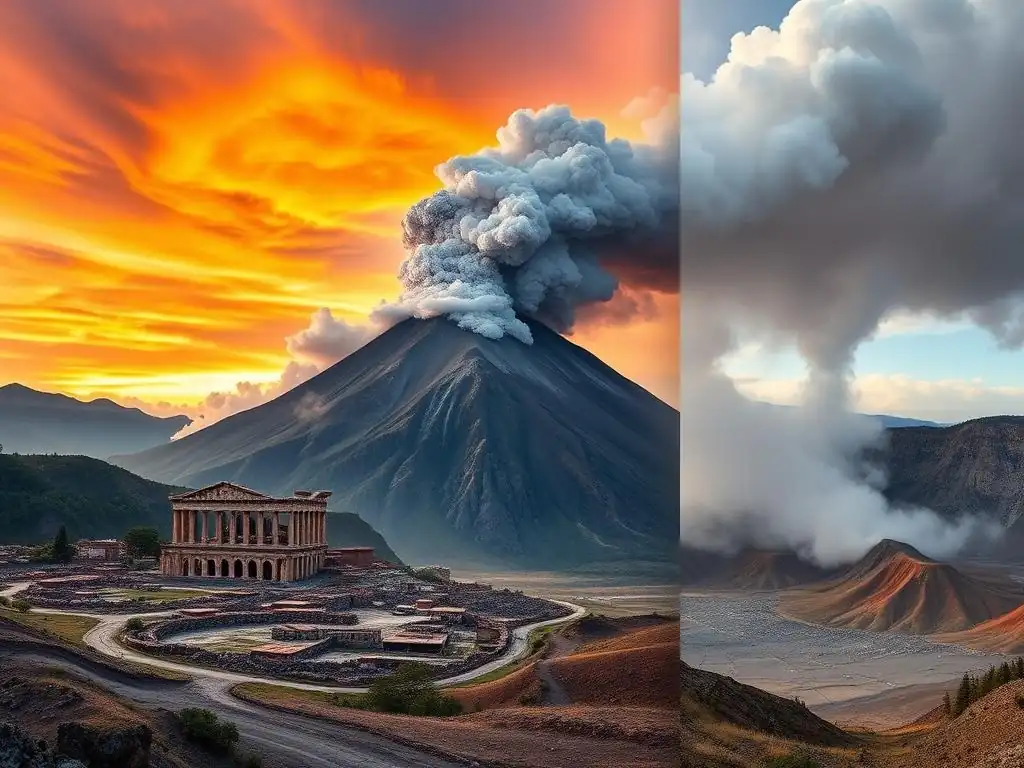
Case Study: Taal Volcano 2020 Eruption
The 2020 eruption of Taal Volcano in the Philippines serves as a recent and well-documented example of a significant phreatic eruption that rapidly escalated and caused widespread disruption. On January 12, 2020, Taal Volcano, located within a lake-filled caldera, began exhibiting increased activity, culminating in a powerful phreatic eruption. The eruption was triggered by the interaction of hot volcanic fluids with the lake water and shallow groundwater within Volcano Island.
The initial phreatic explosions produced a towering steam and ash plume that rose over 15 kilometers into the atmosphere. The eruption generated significant ashfall across surrounding areas, including Metro Manila, causing widespread disruption to air travel, transportation, and daily life.
While initially phreatic, the eruption transitioned to phreatomagmatic activity as magma ascended closer to the surface, further intensifying the explosivity and hazard. The Taal 2020 eruption highlighted the rapid onset and far-reaching impacts of even initially phreatic eruptions, particularly in densely populated areas.
Lessons Learned from Past Phreatic Eruption Events
Studying past phreatic eruption events, like Taal 2020 and Ontake 2014, provides valuable lessons for improving hazard assessment, monitoring strategies, and emergency preparedness. One key lesson is the recognition of the rapid escalation potential of phreatic eruptions. Monitoring systems must be capable of detecting subtle changes in activity and providing timely warnings even with limited precursory signals.
Public education and awareness are crucial, as communities living near volcanoes prone to phreatic eruptions need to understand the potential hazards and be prepared to respond quickly to warnings. Effective communication strategies are essential to disseminate information rapidly and accurately to at-risk populations and relevant agencies. Furthermore, research efforts need to focus on improving our understanding of the subsurface processes that drive phreatic eruptions and developing better models for forecasting their behavior.
Living Near Volcanoes Prone to Phreatic Eruptions: Safety and Preparedness
Understanding Local Phreatic Eruption Risks
For communities living near volcanoes known to be prone to phreatic eruptions, understanding the specific local risks is paramount for safety and preparedness. This involves knowing the history of phreatic activity at the volcano, the potential intensity of eruptions, and the likely hazard zones. Local geological surveys and volcano observatories provide crucial information on past eruptions, potential vent locations, and areas susceptible to ashfall, pyroclastic surges, and lahars.
Understanding the local topography and drainage patterns is also important for assessing lahar hazards. Communities should be aware of designated evacuation routes and shelter locations in case of increased volcanic activity. Participating in community meetings and workshops organized by volcano observatories and emergency management agencies can provide valuable information and opportunities to learn about local risks and preparedness measures.
Developing Emergency Plans and Evacuation Strategies
Developing comprehensive emergency plans and evacuation strategies is essential for communities living near volcanoes prone to phreatic eruptions. These plans should be developed in coordination with local authorities, volcano observatories, and emergency management agencies. Emergency plans should outline clear procedures for responding to different levels of volcanic activity, including phreatic eruptions. Evacuation strategies should be well-defined, with designated evacuation routes, assembly points, and shelter locations.
Regular drills and simulations should be conducted to ensure that communities are familiar with emergency procedures and evacuation routes. Communication protocols should be established to ensure that warnings and information are disseminated rapidly and effectively to all residents. Special consideration should be given to vulnerable populations, such as the elderly, disabled, and those with young children, to ensure their safe evacuation.
Staying Informed: Monitoring Volcano Activity and Official Warnings
Staying informed about volcano activity and official warnings is crucial for residents living near volcanoes prone to phreatic eruptions. Volcano observatories and geological surveys are the primary sources of information on volcano monitoring and hazard assessments. Residents should be familiar with the websites and social media channels of their local volcano observatory and emergency management agencies. Signing up for volcano alert systems, such as SMS text alerts or email notifications, ensures timely receipt of warnings and updates.
Paying attention to official warnings and advisories issued by authorities is essential. Ignoring warnings can have serious consequences. Developing a "go-bag" with essential supplies, including water, food, medications, a flashlight, a radio, and dust masks, is a practical preparedness measure. Regularly checking volcano monitoring updates and being prepared to act quickly in response to warnings are vital for safety in volcanic areas.
Phreatic Eruptions: A Dynamic and Unpredictable Volcanic Phenomenon
The Future of Phreatic Eruption Research
The study of phreatic eruptions is an ongoing and evolving field of volcanology. Future research efforts are crucial for improving our understanding of these dynamic and often unpredictable volcanic phenomena. One key area of research is focused on better characterizing the subsurface hydrothermal systems that drive phreatic eruptions. Advanced geophysical techniques, such as seismic tomography and magnetotellurics, can help to image subsurface structures and fluid pathways.
Developing more sophisticated numerical models of hydrothermal systems and steam-driven explosions is essential for improving our ability to forecast phreatic eruption behavior. Research into the precursory signals of phreatic eruptions is also vital. Analyzing past eruption datasets and developing new monitoring techniques aimed at detecting subtle changes in hydrothermal activity and ground deformation are critical for enhancing early warning capabilities.
The Importance of Continued Monitoring and Education
Continued monitoring of volcanoes prone to phreatic eruptions is paramount for mitigating the associated hazards. Sustained investment in volcano monitoring networks, including seismic, gas, and deformation monitoring, is essential. Maintaining and upgrading monitoring equipment and data analysis capabilities are crucial for providing timely and accurate assessments of volcanic activity.
Furthermore, public education and outreach programs are vital for enhancing community preparedness and resilience to phreatic eruption hazards. Educating residents about the risks, warning signs, and appropriate responses to phreatic eruptions empowers them to take proactive steps to protect themselves and their communities. Collaboration between volcanologists, emergency management agencies, and local communities is essential for building a more resilient society in areas exposed to phreatic eruption hazards.
Frequently Asked Questions
What exactly is a phreatic eruption?
A phreatic eruption is a type of volcanic eruption that is driven by steam explosions. It occurs when magma heats groundwater or surface water, causing it to flash into steam and erupt violently. No magma is directly erupted.
How is the intensity of a phreatic eruption measured?
The intensity of phreatic eruptions isn't measured using a traditional Volcanic Explosivity Index (VEI). Instead, intensity is often judged by the size of the explosion, the height of the steam plume, and the amount of ejected material.
What are some of the hazards associated with phreatic eruptions?
Even without magma, phreatic eruptions can be dangerous. Hazards include steam explosions, ejection of rocks and debris, and the potential for mudflows if the eruption mixes with loose sediment.
Can phreatic eruptions be predicted, and if so, how?
Predicting phreatic eruptions is challenging because they can occur with little warning. Scientists monitor groundwater temperatures, gas emissions, and seismic activity for changes that might indicate an impending event.
Are phreatic eruptions always small, or can they be very powerful?
While often smaller than magmatic eruptions, phreatic eruptions can range in intensity. Some are small steam jets, while others can generate significant ash clouds and powerful explosions, depending on the amount of heated water and the confining pressure.
Final Reflection: Embracing the Volatile Dance of Earth
Understanding the spectrum of phreatic eruption intensity is more crucial than ever, as populations increasingly encroach upon volcanically active regions. This knowledge isn't just academic; it's a vital tool for risk assessment and mitigation, empowering communities to prepare for and respond to these unpredictable events.
The subtle nuances of phreatic eruptions, from gentle steam jets to violent ash clouds, profoundly influence the cultural and social landscape of affected areas. Witnessing the raw power of the earth firsthand fosters a deep respect for nature, but also necessitates careful planning and informed decision-making. The only constant is change,
a sentiment that resonates deeply when considering the ever-shifting dynamics of volcanic activity and its impact on human lives.
Let us not view these eruptions solely as destructive forces, but also as reminders of the planet's dynamic nature and our interconnectedness with it. Consider how you can contribute to a greater understanding of these phenomena, whether through supporting scientific research, advocating for responsible land use planning, or simply educating yourself and others about the risks and wonders of our volcanic world.
Ignite Your Inner Volcanologist: Track Eruptions Like a Pro!
Thanks for diving deep into the fascinating world of phreatic eruptions! We hope you've gained a new appreciation for the subtle signs and explosive potential of these steam-driven events. Now, let's put that knowledge to good use:
- Report any unusual activity to the local geological survey. Remember, citizen science is a powerful tool!
- Dive Deeper: Explore our interactive map of global phreatic eruption hotspots, and compare historical data with current geological reports.
- Share this article with fellow volcano enthusiasts and start a conversation: What’s the most surprising thing you learned about phreatic eruptions?
What signs will you be watching for next time you see a volcano, and how will you use this knowledge to become a more informed explorer?