
The Impact of Plate Tectonics on the Formation of the Andes and Cascades

Welcome to Volcano Explorers!
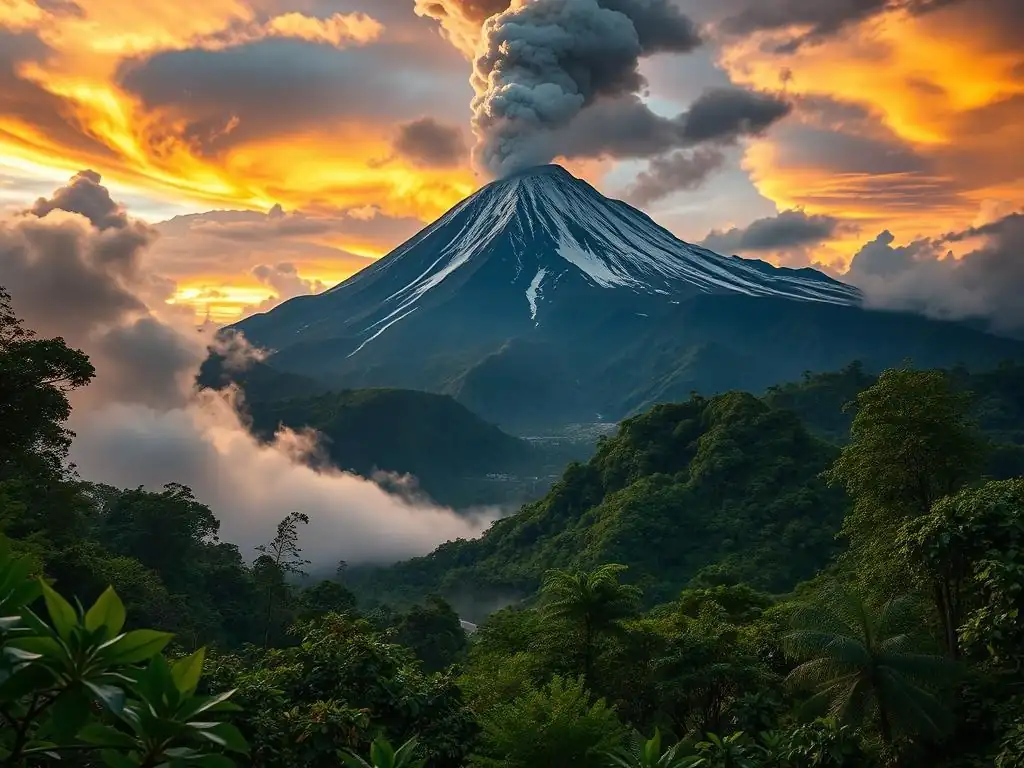
Ever wondered how the Earth's most dramatic landscapes are born? Prepare to uncover the secrets behind the fiery peaks that dot our planet. In this article, we delve into the fascinating relationship between plate tectonics and volcano formation, revealing how these colossal forces shape not only our continents, but also the very air we breathe. What you're about to discover might just change the way you see the world...or at least, the mountains on it.
- Introduction: Plate Tectonics and the Birth of Volcanic Mountain Ranges
- Plate Tectonics: The Engine of Mountain Building and Volcanism
- The Andes Mountains: A Story of Oceanic-Continental Convergence
- The Cascade Range: A Tale of Subduction in the Pacific Northwest
- Comparing and Contrasting Andean and Cascade Volcanism
- The Long-Term Evolution of the Andes and Cascades
- Conclusion: Plate Tectonics - The Architect of the Andes and Cascades
-
Frequently Asked Questions
- How does plate tectonics contribute to volcano formation, specifically in the Andes and Cascades?
- What type of plate boundary is primarily responsible for the volcanoes in the Andes and Cascades?
- What is the role of subduction in the creation of magma that feeds these volcanoes?
- How do the Andes and Cascades differ in terms of the specific tectonic processes involved in their formation?
- Besides plate tectonics, are there any other factors that influence volcano formation in these regions?
- Final Reflection: Earth's Dynamic Dance
- Unearth Your Inner Geologist: Dive Deeper into Plate Tectonics!
Introduction: Plate Tectonics and the Birth of Volcanic Mountain Ranges
Volcano Explorers: Understanding the Driving Forces Behind Volcanic Landscapes
Volcano Explorers embarks on a journey to uncover the fundamental processes that sculpt our planet's most dramatic features – volcanic mountain ranges. These colossal geological formations, often stretching for thousands of kilometers, are not random occurrences but rather the direct result of powerful forces operating deep within the Earth. Understanding these forces is key to comprehending the distribution, characteristics, and potential hazards associated with volcanoes across the globe. Our exploration starts with plate tectonics, the unifying theory that explains the large-scale motions of Earth's lithosphere and their profound impact on shaping volcanic landscapes.
The dynamic nature of our planet is driven by the slow but relentless movement of tectonic plates. These massive slabs of lithosphere, composed of the crust and the uppermost mantle, are constantly interacting, colliding, separating, and sliding past each other. These interactions are not merely surface phenomena; they penetrate deep into the Earth, influencing mantle dynamics, magma generation, and ultimately, the creation of volcanoes and mountain ranges. Volcano Explorers aims to demystify these intricate processes, providing insights into the geological forces that give rise to awe-inspiring volcanic landscapes such as the Andes and the Cascades.
The Andes and Cascades: Prime Examples of Plate Tectonic Influence
The Andes Mountains of South America and the Cascade Range in North America stand as iconic examples of volcanic mountain ranges sculpted by plate tectonics. These two geographically distant yet geologically related systems offer a compelling case study in understanding the link between plate movements and volcano formation. Both ranges are characterized by towering peaks, active volcanoes, and a rich geological history, all rooted in the fundamental principles of plate tectonics and volcano formation.
By examining the Andes and Cascades, we can delve into the specifics of how different types of plate boundaries contribute to the creation of distinct volcanic landscapes. The Andes, the longest continental mountain range in the world, and the Cascades, a prominent feature of the Pacific Northwest, are both products of convergent plate boundaries, specifically subduction zones. However, subtle differences in their tectonic settings lead to variations in their volcanic characteristics, demonstrating the nuanced interplay between plate tectonics and volcano formation.
Plate Tectonics: The Engine of Mountain Building and Volcanism
Convergent Plate Boundaries: Where Mountains and Volcanoes Emerge
Convergent plate boundaries are zones where tectonic plates collide, resulting in intense geological activity. These boundaries are the primary sites for mountain building and volcanism on Earth. When plates converge, immense pressure and friction build up, leading to the deformation of the crust, the uplift of mountain ranges, and the generation of magma. The type of convergence, whether it involves oceanic-continental, oceanic-oceanic, or continental-continental plates, dictates the specific geological features that emerge.
At convergent boundaries, the denser plate typically subducts, or slides beneath, the less dense plate into the Earth's mantle. This subduction process is crucial for both mountain building and volcano formation. The immense forces involved in plate collision and subduction cause the crust to buckle and fold, creating mountain ranges. Simultaneously, the subducting plate releases fluids into the overlying mantle wedge, triggering partial melting and the formation of magma, which eventually rises to the surface to erupt as volcanoes. Therefore, understanding convergent plate boundaries is fundamental to grasping the origins of volcanic mountain ranges.
Subduction Zones: The Key to Understanding Andean and Cascade Formation
Subduction zones are a specific type of convergent plate boundary where an oceanic plate descends beneath another plate, which can be either oceanic or continental. These zones are characterized by deep ocean trenches, volcanic arcs, and intense earthquake activity. The Andes and Cascades are both located above subduction zones, making them prime examples of volcanic mountain ranges formed by this tectonic process. Subduction zones are the key to understanding the specific mechanisms behind plate tectonics and volcano formation in these regions.
The process of subduction involves the oceanic plate sinking into the hotter mantle. As the plate descends, it carries water-rich sediments and hydrated minerals. As depth and temperature increase, these hydrous minerals break down, releasing water and other volatile compounds into the overlying mantle wedge. This introduction of fluids lowers the melting point of the mantle rocks, causing partial melting and the generation of magma. This magma, being less dense than the surrounding solid rock, rises towards the surface, leading to volcanic eruptions and the construction of volcanic arcs like the Andes and the Cascades.
The Andes Mountains: A Story of Oceanic-Continental Convergence
Nazca Plate Subduction: Shaping the Andean Volcanic Belt
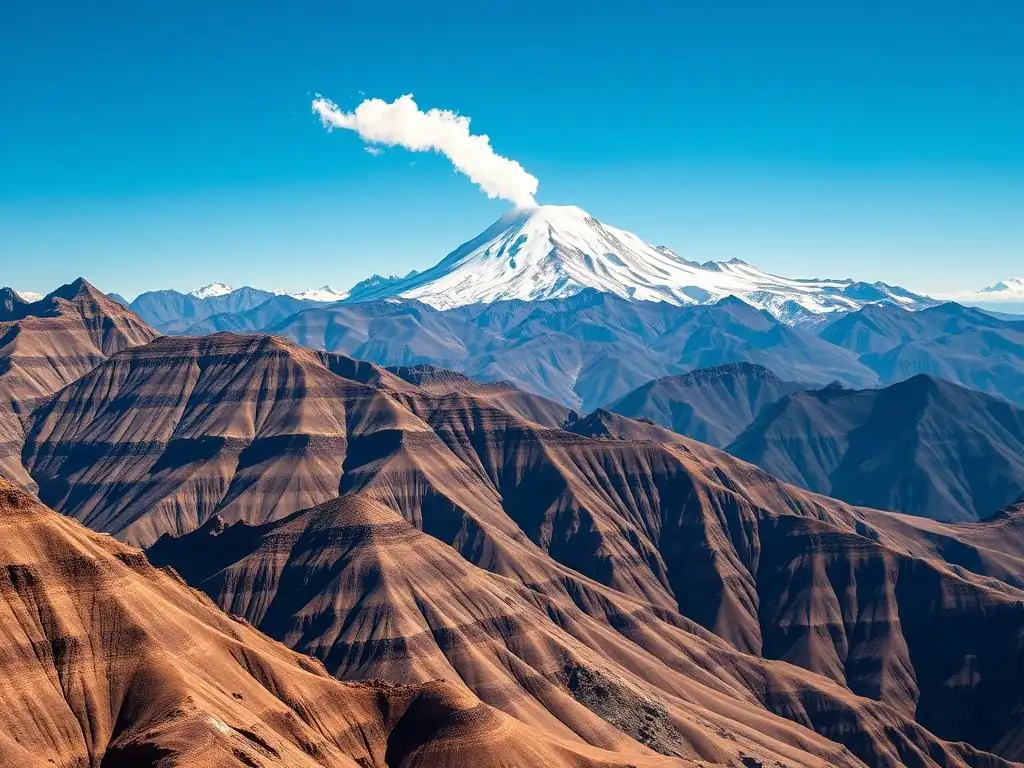
The Andes Mountains owe their existence to the subduction of the Nazca Plate beneath the South American Plate. This oceanic-continental convergence has been ongoing for tens of millions of years, shaping not only the Andes Mountains but also the entire western margin of South America. The Nazca Plate, being denser, is forced under the continental South American Plate along the Peru-Chile Trench, a deep oceanic trench marking the subduction zone. This process is the primary driver of plate tectonics and volcano formation in the Andes.
The angle of subduction of the Nazca Plate, which is relatively shallow in certain segments and steeper in others, influences the location and characteristics of the Andean Volcanic Belt. Regions with steeper subduction angles tend to have volcanic arcs closer to the trench, while shallower angles may result in a wider volcanic belt further inland. The ongoing subduction has resulted in the uplift of the Andes, creating the high-altitude Altiplano plateau and a chain of active volcanoes that stretches for over 7,000 kilometers, making it one of the longest and highest continental mountain ranges on Earth.
Magma Generation and Composition: The Role of Subduction Fluids
The magma that feeds the Andean volcanoes is primarily generated by the flux of fluids from the subducting Nazca Plate into the overlying mantle wedge. As the Nazca Plate descends, it releases water and other volatile elements, such as carbon dioxide and sulfur dioxide, which are derived from hydrated minerals and sediments carried down with the plate. These fluids act as a flux, lowering the solidus temperature of the mantle peridotite and inducing partial melting. This process of fluid-induced melting is crucial for magma genesis in subduction zones and directly impacts plate tectonics and volcano formation.
The composition of the Andean magmas is typically calc-alkaline, characterized by relatively high silica content and enrichment in elements like sodium, potassium, and calcium. This composition reflects the source materials involved in magma generation, including the mantle wedge, the subducting oceanic crust and sediments, and potentially the lower crust of the overriding South American Plate. The specific composition of the magma influences the eruption style of Andean volcanoes, ranging from explosive eruptions of ash and pumice to effusive lava flows.
Crustal Thickening and Orogenesis: The Tectonic History of the Andes
The formation of the Andes Mountains is not solely a volcanic story; it's also a tale of immense crustal thickening and orogenesis, the process of mountain building. The continuous convergence and collision of the Nazca and South American Plates have resulted in significant shortening and thickening of the continental crust. This process involves folding, faulting, and thrusting of the crustal rocks, leading to the uplift of the Andes and the formation of its complex geological structure. Crustal thickening is a direct consequence of plate tectonics and plays a vital role in shaping the landscape alongside volcano formation.
The tectonic history of the Andes is complex and spans millions of years, involving multiple phases of mountain building and deformation. Geological studies reveal evidence of ancient orogenic events predating the current Andean orogeny, indicating a long and dynamic history of plate interactions in the region. The ongoing Andean orogeny is responsible for the present-day elevation and structure of the mountain range, and it continues to shape the landscape through active faulting, earthquakes, and volcanic activity, all driven by the relentless forces of plate tectonics.
Volcanic Activity in the Andes: A Consequence of Plate Convergence
Volcanic activity is a prominent feature of the Andes Mountains, with numerous active and dormant volcanoes dotting the landscape. This volcanism is a direct and inevitable consequence of the Nazca Plate subduction and the associated magma generation.
The Andean Volcanic Belt is segmented into several zones based on volcanic characteristics and tectonic setting, including the Northern Volcanic Zone, the Central Volcanic Zone, the Southern Volcanic Zone, and the Austral Volcanic Zone. Each zone exhibits unique volcanic features and eruption styles, reflecting variations in the subduction process and magma sources, but all are fundamentally linked to plate tectonics and volcano formation.
The volcanic activity in the Andes poses significant hazards to nearby populations and infrastructure. Explosive eruptions can produce ash plumes, pyroclastic flows, and lahars (volcanic mudflows), while effusive eruptions can generate lava flows that threaten settlements and agricultural lands. Monitoring volcanic activity and understanding the eruptive history of Andean volcanoes are crucial for mitigating volcanic risks and ensuring the safety of communities living in the vicinity of these powerful natural forces.
The Cascade Range: A Tale of Subduction in the Pacific Northwest
Juan de Fuca Plate Subduction: Fueling the Cascade Volcanic Arc
The Cascade Range, stretching from British Columbia to Northern California, is another remarkable example of a volcanic arc formed by subduction. In this case, it's the subduction of the Juan de Fuca Plate and its remnants (Gorda and Explorer plates) beneath the North American Plate. This oceanic-continental convergence along the Cascadia Subduction Zone is the driving force behind plate tectonics and volcano formation in the Pacific Northwest. The Cascade Volcanic Arc is a chain of volcanoes that runs parallel to the coastline, marking the surface expression of this subduction process.
The Juan de Fuca Plate is a relatively small oceanic plate that is being subducted at a slow rate compared to the Nazca Plate. Despite the slower rate, the subduction process is still sufficient to generate magma and fuel volcanic activity. The Cascadia Subduction Zone is unique in that it is also capable of producing megathrust earthquakes, in addition to volcanic eruptions, making it a region of significant geological hazards. The interplay between these seismic and volcanic risks highlights the complex and dynamic nature of plate tectonics and volcano formation in the Cascades.
The Cascadia Subduction Zone: A Region of Intense Geological Activity
The Cascadia Subduction Zone is not only responsible for the Cascade volcanoes but also for a wide range of intense geological activity in the Pacific Northwest. This zone is characterized by earthquakes, crustal deformation, and hydrothermal systems, all directly linked to the subduction process. The subduction zone is a region of intense stress and strain accumulation, leading to periodic release of energy in the form of earthquakes. The potential for large megathrust earthquakes along the Cascadia Subduction Zone is a major concern for the region.
In addition to earthquakes, the Cascadia Subduction Zone is associated with active hydrothermal systems, including hot springs and fumaroles, particularly around volcanic centers. These hydrothermal systems are driven by heat from the underlying mantle and magma bodies, as well as by circulating groundwater heated by geothermal gradients. The geological activity in the Cascadia Subduction Zone underscores the profound impact of plate tectonics on shaping the landscape and influencing natural hazards in the Pacific Northwest.
Volcanic Hazards in the Cascades: Understanding the Risks
The Cascade volcanoes pose a range of volcanic hazards to the surrounding communities and environment. These hazards include explosive eruptions, ashfall, pyroclastic flows, lahars, lava flows, and volcanic gases. Mount Rainier, for example, is considered one of the most dangerous volcanoes in the United States due to its proximity to densely populated areas and its potential to generate large lahars that could impact communities like Tacoma and Seattle. Understanding these risks is crucial for effective volcanic hazard mitigation and preparedness, especially considering the influence of plate tectonics and volcano formation in shaping these hazards.
Other Cascade volcanoes, such as Mount St. Helens, have demonstrated the destructive power of explosive eruptions. The 1980 eruption of Mount St. Helens served as a stark reminder of the potential for catastrophic volcanic events in the Cascade Range. Ongoing monitoring of Cascade volcanoes by the U.S. Geological Survey and other agencies is essential for detecting changes in volcanic activity and providing timely warnings to at-risk populations. This monitoring effort is critical for minimizing the impact of volcanic hazards in a region heavily influenced by plate tectonics and volcano formation.
Notable Cascade Volcanoes: Mount St. Helens, Mount Rainier, and Others
The Cascade Range is home to a number of iconic and geologically significant volcanoes. Mount St. Helens, renowned for its dramatic 1980 eruption, is a prime example of a stratovolcano formed by subduction zone volcanism.
Mount Rainier, the highest peak in the Cascade Range, is another prominent stratovolcano, known for its glacial cover and potential for large lahars. These volcanoes, along with others like Mount Shasta, Mount Hood, and Crater Lake (within the caldera of Mount Mazama), are all products of the Juan de Fuca Plate subduction and represent different stages in the volcanic lifecycle, all driven by plate tectonics and volcano formation.
Each of these notable Cascade volcanoes has its own unique geological history and eruptive characteristics. Crater Lake, for instance, is a caldera lake that formed after the climactic eruption and collapse of Mount Mazama around 7,700 years ago. Mount Shasta, a massive stratovolcano, is one of the most voluminous volcanoes in the Cascade Arc. Studying these individual volcanoes provides valuable insights into the diverse manifestations of subduction zone volcanism and the complex interplay between plate tectonics and volcano formation within the Cascade Range.
Comparing and Contrasting Andean and Cascade Volcanism
Similarities in Plate Tectonic Setting
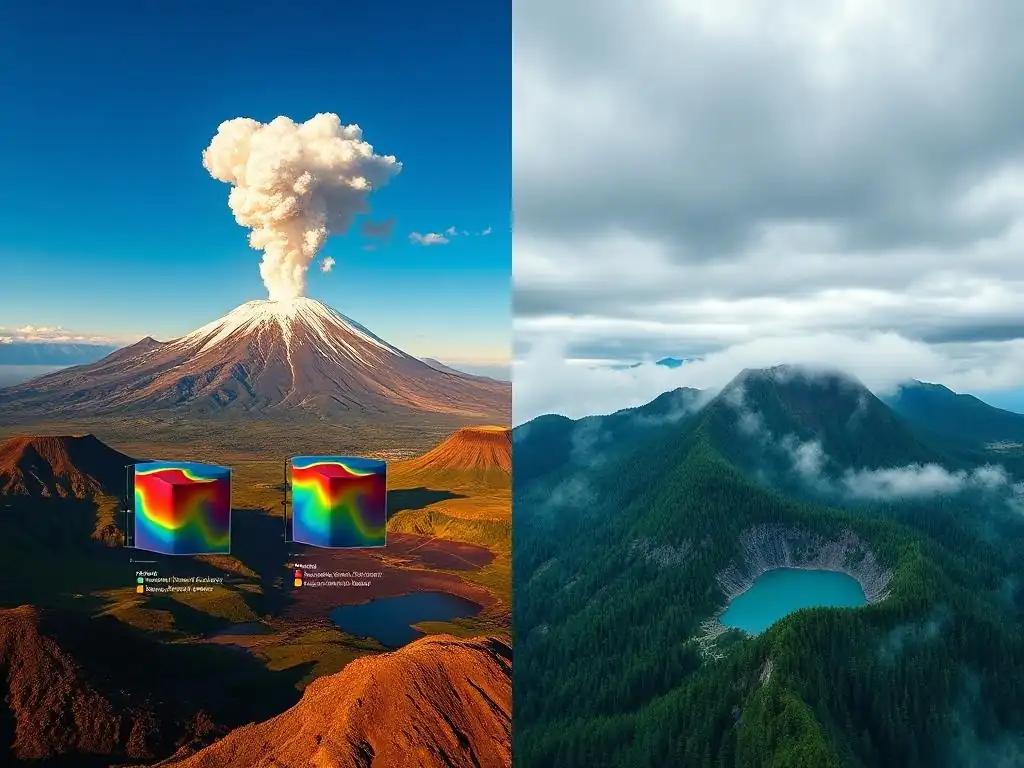
Despite being geographically separated, the Andes and Cascades share fundamental similarities in their plate tectonic setting. Both mountain ranges are volcanic arcs formed at convergent plate boundaries where an oceanic plate is subducting beneath a continental plate. In the Andes, it is the Nazca Plate subducting under the South American Plate, while in the Cascades, it is the Juan de Fuca Plate (and remnants) subducting beneath the North American Plate. This shared tectonic setting is the primary reason for the similarities in their overall volcanic character, both being expressions of plate tectonics and volcano formation in subduction zones.
The subduction process in both regions involves the descent of oceanic lithosphere into the mantle, the release of fluids from the subducting plate, and the subsequent generation of magma in the mantle wedge. This common mechanism of magma generation leads to the formation of volcanic arcs characterized by similar types of volcanoes, predominantly stratovolcanoes composed of andesitic and dacitic lavas and pyroclastic rocks. The fundamental link to subduction zone plate tectonics results in comparable patterns of volcano distribution and overall geological processes.
Differences in Magma Composition and Eruption Style
While the Andes and Cascades share a common tectonic setting, there are also notable differences in their magma composition and eruption styles. Andean magmas tend to be slightly more silica-rich and have higher volatile contents compared to Cascade magmas. This difference in magma composition can influence eruption styles, with Andean volcanoes potentially exhibiting more explosive eruptions on average. These variations, while subtle, highlight the nuances in plate tectonics and volcano formation even within similar tectonic settings.
The differences in magma composition may be attributed to variations in the source materials involved in magma generation, such as the composition of the subducting oceanic crust and sediments, as well as the characteristics of the mantle wedge. For example, the age and alteration of the subducting oceanic crust can influence the amount and type of fluids released, affecting magma composition. Additionally, the thickness and composition of the overriding continental crust can also play a role in modifying magma composition during ascent and differentiation.
Variations in Crustal Structure and Deformation
Another point of contrast between the Andes and Cascades lies in the crustal structure and deformation styles associated with their respective plate tectonic settings. The Andes are characterized by significant crustal thickening and shortening, resulting in a broad and high mountain range with the Altiplano plateau. In contrast, the Cascades exhibit less crustal thickening and a narrower volcanic arc, reflecting differences in the rate and style of plate convergence and crustal response. These variations demonstrate how plate tectonics and volcano formation can manifest differently in terms of broader mountain building processes.
The slower convergence rate and younger age of the Juan de Fuca Plate compared to the Nazca Plate may contribute to the less pronounced crustal thickening in the Cascades. Furthermore, the pre-existing crustal structure and tectonic history of the overriding continental plates can also influence the style of deformation and mountain building. The Andes, for instance, have a longer and more complex tectonic history compared to the region underlying the Cascades, which may contribute to the greater degree of crustal thickening observed in the Andes.
The Long-Term Evolution of the Andes and Cascades
Erosion and Weathering: Shaping the Landscape Over Time
Erosion and weathering are relentless forces that continuously shape the landscapes of the Andes and Cascades over geological timescales. While plate tectonics and volcanism are responsible for the initial uplift and construction of these mountain ranges, erosion and weathering act to sculpt and modify them, carving valleys, eroding peaks, and transporting sediments. These processes are integral to the long-term evolution of volcanic mountain ranges, working in conjunction with plate tectonics and volcano formation to define the present-day landscape.
Glacial erosion has played a significant role in shaping the high-altitude regions of both the Andes and Cascades, carving out U-shaped valleys, cirques, and other glacial landforms. River erosion and mass wasting processes, such as landslides and rockfalls, further contribute to the denudation of these mountain ranges. Weathering, both physical and chemical, breaks down rocks and prepares material for erosion, gradually reducing the overall elevation and relief of the mountains over millions of years.
Future Volcanic Activity: Predicting and Mitigating Risks
Both the Andes and Cascades remain volcanically active regions, posing ongoing risks of future eruptions. Predicting the timing and magnitude of future volcanic events is a major challenge for volcanologists. However, through continuous monitoring of volcanic activity, including seismicity, ground deformation, gas emissions, and thermal changes, scientists can improve their ability to detect unrest and provide warnings of impending eruptions. Understanding plate tectonics and volcano formation is crucial for assessing long-term volcanic hazards and developing effective mitigation strategies.
Long-term volcanic hazard assessments involve studying the past eruptive history of individual volcanoes, analyzing patterns of volcanic activity, and modeling potential eruption scenarios. This information is used to create volcanic hazard maps that delineate areas at risk from different volcanic phenomena, such as pyroclastic flows, lahars, and ashfall. Effective volcanic hazard mitigation involves a combination of monitoring, forecasting, land-use planning, infrastructure development, and public education to reduce the vulnerability of communities to volcanic risks in these tectonically active regions.
Plate Tectonic Evolution: The Ongoing Story of Mountain Building
The story of the Andes and Cascades is not static; it is an ongoing narrative of plate tectonic evolution and mountain building. Plate motions are continuous, and the subduction processes that formed these mountain ranges are still active today. The Andes and Cascades will continue to evolve over millions of years, with ongoing uplift, volcanism, erosion, and deformation shaping their future landscapes. Understanding the long-term perspective of plate tectonics and volcano formation is essential for appreciating the dynamic nature of our planet and the ever-changing surface we inhabit.
Geological research continues to unravel the intricate details of the plate tectonic history and evolution of the Andes and Cascades. Studies of rock ages, deformation structures, and volcanic deposits provide insights into the past and ongoing processes that shape these mountain ranges. By studying these natural laboratories of plate tectonics and volcano formation, we gain a deeper understanding of the fundamental forces that drive Earth's geological evolution and create the dramatic landscapes that inspire awe and wonder.
Conclusion: Plate Tectonics - The Architect of the Andes and Cascades
The Interconnectedness of Plate Tectonics, Volcanism, and Mountain Formation
The formation of the Andes and Cascades stands as a testament to the profound interconnectedness of plate tectonics, volcanism, and mountain formation. Plate tectonics provides the driving force, the engine that powers the entire process. Convergent plate boundaries, specifically subduction zones, create the conditions necessary for magma generation and crustal deformation.
Volcanism is the direct consequence of magma rising to the surface, building volcanic arcs and shaping the mountain ranges. Mountain formation, or orogenesis, is the broader process of crustal thickening and uplift that accompanies plate convergence and volcanism. These three elements are inextricably linked, working in concert to create the majestic volcanic mountain ranges we see today.
Understanding this interconnectedness is crucial for comprehending the geological history, present-day dynamics, and future evolution of the Andes and Cascades. Plate tectonics dictates the overall setting, volcanism builds the volcanic edifices, and mountain formation elevates and deforms the crust. Erosion and weathering then act as sculpting agents, modifying the landscape over time. This holistic perspective, recognizing the interplay of these geological processes, is essential for appreciating the complexity and beauty of volcanic mountain ranges.
Further Exploration: Resources for Learning More about Plate Tectonics and Volcanoes
For those eager to delve deeper into the fascinating world of plate tectonics and volcanoes, numerous resources are available. Websites like the U.S. Geological Survey (USGS) Volcano Hazards Program and the Smithsonian National Museum of Natural History's Global Volcanism Program offer a wealth of information on volcanoes worldwide, including the Andes and Cascades. Educational websites from universities and geological societies provide in-depth explanations of plate tectonics and volcano formation. Books and documentaries offer accessible and engaging ways to learn about these topics.
Exploring these resources can further enhance your understanding of the processes discussed in this article and broaden your knowledge of Earth's dynamic systems. Learning about plate tectonics and volcanoes not only satisfies intellectual curiosity but also fosters a greater appreciation for the powerful forces that shape our planet and the natural wonders they create. Volcano Explorers encourages you to continue your journey of discovery and explore the vast and captivating realm of volcanology and Earth science.
Frequently Asked Questions
How does plate tectonics contribute to volcano formation, specifically in the Andes and Cascades?
Plate tectonics is the primary driver of volcano formation. In the Andes and Cascades, the subduction of oceanic plates beneath continental plates creates magma, which rises to the surface and forms volcanoes.
What type of plate boundary is primarily responsible for the volcanoes in the Andes and Cascades?
The Andes and Cascades are formed at convergent plate boundaries, specifically subduction zones. This is where one tectonic plate slides underneath another, leading to volcanic activity.
What is the role of subduction in the creation of magma that feeds these volcanoes?
Subduction causes the oceanic plate to melt as it descends into the Earth's mantle. This melting generates magma, which is less dense than the surrounding rock and therefore rises to the surface, fueling volcanic eruptions.
How do the Andes and Cascades differ in terms of the specific tectonic processes involved in their formation?
While both are formed by subduction, the specific angles and rates of subduction, as well as the composition of the plates involved, can differ. These variations can lead to differences in the type of volcanic activity and the chemical composition of the erupted materials.
Besides plate tectonics, are there any other factors that influence volcano formation in these regions?
Yes, other factors include the presence of pre-existing weaknesses in the crust, the availability of water in the subducting plate, and the chemical composition of the mantle. These factors can all affect the location and intensity of volcanic activity.
Final Reflection: Earth's Dynamic Dance
The intricate dance of plate tectonics, as explored throughout this article, is not just a geological history lesson; it's a living, breathing force shaping our world today. The Andes and Cascades, majestic testaments to this power, stand as constant reminders of the Earth's restless nature, influencing everything from weather patterns to the distribution of natural resources.
This understanding of plate tectonics and its role in volcano formation profoundly impacts how we perceive our place on this planet. It underscores the interconnectedness of seemingly disparate geological processes and highlights the fragility and dynamism of the landscapes we inhabit. The Earth is a dynamic planet, constantly changing and evolving. Plate tectonics is the driving force behind this evolution.
This quote encapsulates the ongoing influence of these forces, reminding us that the ground beneath our feet is anything but static.
As we conclude this exploration of plate tectonics and volcano formation, particularly in the context of the Andes and Cascades, I invite you to reflect on the immense power that shapes our world. Consider the implications of these geological processes for your own community, your own environment. How can we, as stewards of this planet, better understand and prepare for the ongoing dance of the Earth's plates? Let us strive to appreciate the beauty and power of our planet, and to act responsibly in the face of its ever-changing nature.
Unearth Your Inner Geologist: Dive Deeper into Plate Tectonics!
Thanks for exploring the powerful forces shaping the Andes and Cascades with us! We hope you've gained a newfound appreciation for plate tectonics and its incredible impact on our planet. Now, let's turn that knowledge into action!
- Map Your Own Volcanic Journey: Start researching the geological history of a mountain range near you. What tectonic forces shaped it? What types of volcanoes are present, and why?
- Share your newfound knowledge! Educate your friends and family about plate tectonics using Volcano Explorers as a resource.
- Join the Conversation: Share a photo of your favorite volcano on social media using #VolcanoExplorers and tell us what fascinates you most about its formation.
Ready to put on your metaphorical hard hat and delve deeper into the earth's mysteries?